In Burgundy, vineyard ownership is extremely fragmented. A domaine generally owns a few rows here, half a hectare there, inherited from generations of family divisions.
In this context, owning plots in several of the region's greatest crus is exceptional. This is the case with Domaine Jacques Prieur, based in Meursault. You can browse all the available cuvées directly.
A rare vineyard portfolio
The domaine owns plots across the Côte de Nuits and the Côte de Beaune, in climats that rank among the most prestigious in France.
The most remarkable configuration is owning both Montrachet, the world's premier Chardonnay, and Musigny, one of the finest Pinot Noir vineyards. Very few domaines in the world can claim the same.
This situation is due to the history of the domaine and an acquisition policy pursued throughout the 20th century, at a time when Burgundy's grand crus had not yet reached their current price levels.
A family partnership since the late 1980s
For several decades, the domaine has been run as a partnership between two families, which has enabled long-term investment in the vineyards and the winery.
This period saw a complete overhaul of the work: reduced yields, stricter selection, and a gradual conversion to soil-friendly biodynamic viticulture.
Our pick for this article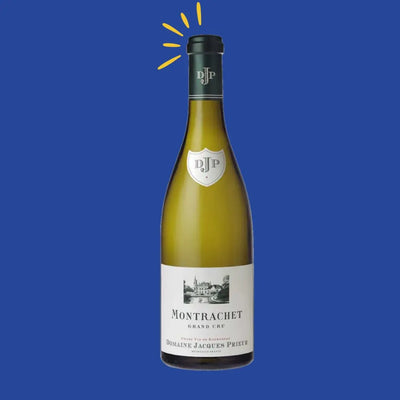
The Burgundy hierarchy
To put these bottles in context, a quick reminder is in order. In Burgundy, the classification is based on the plot, not the producer.
- Regional: Burgundy, with no mention of the commune.
- Village: the name of the commune only.
- Premier cru: the name of the village followed by the climat.
- Grand cru: the name of the climat only, without the village. Montrachet, Musigny, Chambertin.
Grand crus represent a tiny fraction of Burgundy's production, which largely explains their prices and rarity.
The available cuvées
Montrachet Grand Cru
The world's most famous dry white wine, from a climat straddling two communes on the Côte de Beaune. The wine achieves a combination of power, finesse, and length that is found nowhere else.
See the Montrachet Grand Cru 2015 and our article: the Montrachet guide.
Musigny Grand Cru
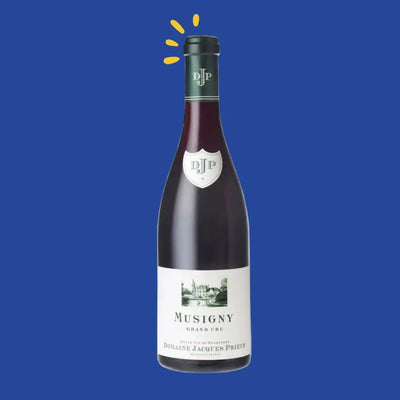
The grand cru of Chambolle-Musigny, renowned as the most aromatic and delicate of the Côte de Nuits grand crus.
See the Musigny 2015 and our article: the Musigny guide.
Échézeaux Grand Cru
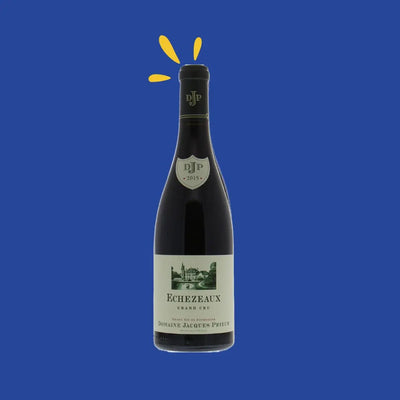
A grand cru from Flagey-Echezeaux, next to Vosne-Romanée, which expresses the aromatic and spicy style of this area.
See the Échézeaux Grand Cru 2015 and our Echezeaux guide.
The 2015 vintage in Burgundy
The three available cuvées come from the same vintage, allowing for an interesting comparison.
2015 was a warm and sunny year in Burgundy, with modest yields, producing concentrated, rich, and generous wines. The reds are colorful and dense, with ripe tannins.
It is a universally acclaimed vintage, immediately appealing, with the best wines having significant aging potential.
The tasting to try
Having a Musigny and an Échézeaux from the same vintage and the same producer is a rare opportunity.
The two climats are in the Côte de Nuits, just a few kilometers apart, and both are known for their aromatic range rather than power. Yet the differences are distinct.
Open them together, served at 15 degrees in large Burgundy glasses. It is the kind of exercise that leaves a lasting impression.
How to serve a grand cru
- The reds: 15 to 16 degrees. One to two hours in a decanter for a young vintage, or open one hour before for a ten-year-old wine.
- The white: 12 to 13 degrees. A great Montrachet served too cold loses most of its complexity.
- The glass: a large Burgundy glass, wide and balloon-shaped, for both colors. With a wine of this level, the glass truly changes the perception.
- The number of guests: two to three people. These wines evolve in the glass for an hour or two.
- The dish: simple. Quality poultry or fine fish lets the wine speak.
Frequently asked questions
Why are Burgundy grand crus so expensive?
The plots are tiny, sometimes just a few hectares for an entire climat, and global demand is incomparable. Montrachet, for example, covers less than ten hectares in total, including all owners.
Is a grand cru always better than a premier cru?
The classification is based on the plot, not the work. A premier cru from a great producer can surpass a neglected grand cru. But when well made, grand crus achieve a dimension that premier crus do not have.
How long to keep these wines?
A red grand cru from the Côte de Nuits lasts fifteen to twenty-five years. A Montrachet lasts ten to twenty years, depending on the vintage.
Should you wait for a 2015?
The vintage is generous and already enjoyable. However, these wines will gain even more complexity in the coming years.
Ordering a grand cru from Le Caveau des Pépites
For this type of bottle, traceability and storage conditions are essential. We work directly to guarantee the origin of every bottle. Stored in our climate-controlled, humidity-regulated warehouses in France, hand-packed and wrapped in reinforced packaging, shipped from mainland France via tracked and insured transport. Free delivery on orders over 300 euros. Customer service available seven days a week, in French and English.
To learn more: our grand crus, our wines from the Côte de Nuits, and our Meursault.