In the unofficial hierarchy that Burgundy enthusiasts maintain among themselves, Musigny holds a special place. It is not the most powerful of the grand crus, nor the most famous, but it is often the one cited when speaking of absolute finesse.
Here is why. To see what is available, visit the Domaine Jacques Prieur collection.
Chambolle-Musigny, the village of lace
Chambolle-Musigny is located in the heart of the Côte de Nuits, between Morey-Saint-Denis and Vougeot. It is the village whose wines are traditionally described as the most delicate and fragrant on the Côte.
This reputation has a geological explanation. The soils there are particularly thin and stony, resting on an outcropping limestone shelf, with little clay. The vines suffer, producing small berries with thin skins, and yield wines with a light structure but intense fragrance.
It is the exact opposite of Pommard or Gevrey, where the deeper and more clay-rich soils produce structured wines.
Our pick for this article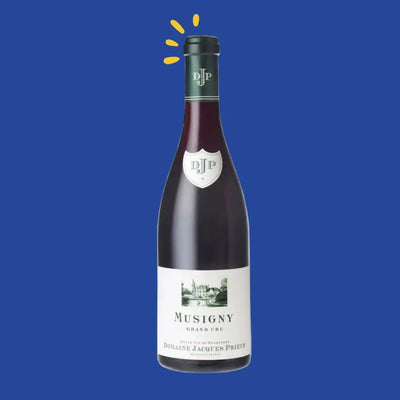
The Musigny climate
The grand cru covers only about ten hectares, south of the village, on the edge of the Clos de Vougeot.
It is divided into several parts, including the Petits Musigny, and benefits from an east-southeast exposure on its upper part, with a regular slope that ensures perfect drainage.
The area is tiny and divided among a small number of owners, so each producer owns only a fraction of it. This is one of the reasons for the extreme rarity of these bottles.
A peculiarity: Musigny blanc
Musigny is one of the few grand crus of the Côte de Nuits that can produce white wine, from a plot planted with Chardonnay. Production is confidential and the bottles are almost impossible to find.
Tasting profile
In its youth
Medium-intensity ruby color, often lighter than that of the grand crus of Gevrey. On the nose, a floral explosion: violet, rose, peony, accompanied by fresh red fruits, raspberry and sour cherry, and a discreet spicy note.
On the palate, the attack is remarkably fine, the tannins almost imperceptible in their delicacy, and the finish lengthens without ever broadening. It is a sensation of verticality and lace.
With maturity
Between ten and twenty years, the wine gains complexity: underbrush, mushroom, truffle, sweet spices, fine leather. The floral fragrance remains present, with a patina.
What is striking is the persistence: the finish of a great Musigny can last a very long time on the palate, without any heaviness.
Musigny and the other grand crus
Comparison helps to situate this wine.
- Musigny: fragrance, finesse, lace, verticality. The most ethereal.
- Chambertin: power, structure, depth. The most architectural. See our guide to the grand crus of Gevrey.
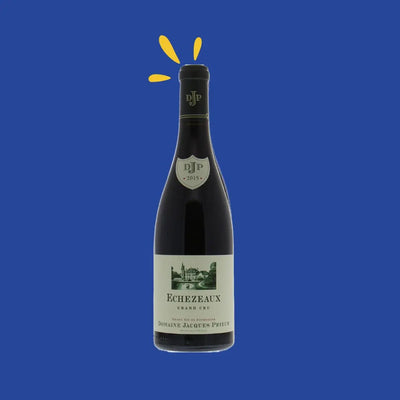
- Échézeaux: fragrance and spices in the Vosne style, with a little more substance than Musigny. See our Echezeaux guide.
If you have a Musigny 2015 and an Échézeaux 2015 from the same producer, opening them together is one of the most instructive tastings there is on the Côte de Nuits.
How to serve it
With a wine of this finesse, serving mistakes are particularly costly.
- Temperature: 15 degrees, not 17. Heat immediately crushes the fragrance, which is the wine's entire appeal.
- Decanter: with caution. One hour maximum for a young vintage, nothing at all for an aged wine. Over-aeration can flatten such a delicate wine.
- Glass: a large Burgundy glass, as wide as possible. The evaporation surface is what reveals the fragrance.
- The dish: simple and delicate. Bresse poultry, pigeon, veal, mushrooms. Above all, no game or powerful dish, which would overpower the wine.
- The setting: for two or three, seated, with time. The wine evolves for an hour or two.
Frequently asked questions
Why is Musigny so rare?
The climate covers a total of about ten hectares, divided among a small number of owners. Annual global production amounts to a few tens of thousands of bottles at most.
Is it the best grand cru in Burgundy?
There is no objective answer. Musigny is generally cited among the top three or four of the Côte de Nuits, along with Chambertin and a few Vosne climats. The ranking depends on what you are looking for: finesse or power.
How long to wait?
Ten years after the vintage to start enjoying it to the fullest, and it lasts twenty-five years or more in great years.
Why is the color light?
Because the thin soils of Chambolle produce grapes with thin skins, so less coloring matter. In Burgundy, a light color has never indicated a lack of quality.
Order your Musigny from Le Caveau des Pépites
We work directly to guarantee the origin and traceability of every bottle. Stored in our climate-controlled, humidity-controlled warehouses in France, hand-packed and wrapped in reinforced packaging, shipped from mainland France via tracked and insured transport. Free delivery on orders over 300 euros. Customer service available 7 days a week, in French and English.
To learn more: Domaine Jacques Prieur and our wines from the Côte de Nuits.