Short answer: with oysters, aim for a dry, lean, mineral white, without oak or roundness: Chablis, Muscadet sur lie, Picpoul de Pinet, Sancerre. Extra-brut or zero-dosage Champagne is the most elegant choice. Avoid any oaked wine, any wine with residual sugar, and all reds, which turn metallic.
To see our selection, browse all our bottles.
What makes the pairing special
- Iodine and salt: they amplify bitterness and harden tannins. This is why red wine is ruled out.
- Texture: fleshy and liquid at the same time, it calls for a lively wine that cuts through.
- Metallic taste: some oysters, especially flat ones, have a coppery note that oak accentuates unpleasantly.
- Fatness: special oysters, which are fleshier, can stand a slightly fuller wine.
The best pairings
Chablis
The most famous pairing, and it has a geological explanation.
The Kimmeridgian subsoil of Chablis consists of marl filled with small fossil oysters dating back 150 million years. The wine's saline minerality comes directly from this.
Choose a Chablis without oak aging: Petit Chablis or Chablis Village are often more balanced than an oaked Premier Cru.
See the Chablis Grand Regnard.
Zero-dosage Champagne
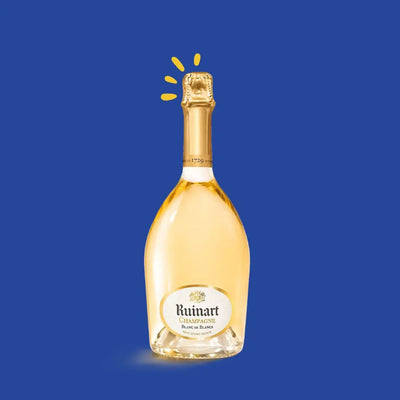
An extra-brut or brut nature, with very little or no added sugar.
The bubbles cleanse, the acidity cuts through, and the salinity complements the iodine. It is the most refined pairing for many tasters.
Note: a classic brut, which has more dosage, creates a sweet-and-salty contrast that not everyone appreciates.
See our Champagnes.
Muscadet Sèvre-et-Maine sur lie
The simplest pairing and undoubtedly the best value for money. Aging on the lees provides a fine texture without ever becoming heavy.
Picpoul de Pinet
Its name means "lip-pricker," referring to its acidity. Produced facing the Thau lagoon and its oyster parks: the ultimate local pairing.
Sancerre and Pouilly-Fumé
Sauvignon brings a lemony tension and flinty notes that work very well, provided you avoid oaked cuvées.
Depending on the type of oyster
- Fines de Claire: Chablis, Muscadet, Picpoul. The classics.
- Spéciales, fleshier and sweeter: a slightly fuller white, a Chablis Premier Cru, or a Blanc de Blancs Champagne.
- Flat oysters, Belon, very iodized and metallic: a very dry and very mineral wine, or a zero-dosage Champagne.
- Hot or au gratin oysters: cooking allows for a richer white, a white Burgundy, or a white Rhône.
What to avoid
- All reds: iodine and tannins create a pronounced metallic taste.
- Oaked whites: the oak overwhelms the delicacy of the oyster.
- Wines with residual sugar: the contrast is jarring.
- Wines that are too alcoholic: they burn on such a delicate dish.
- Round, fruity rosés: they lack tension.
The lemon debate
Lemon and shallot vinegar overwhelm the delicacy of the oyster and clash with the wine.
If you are serving a fine Chablis or Champagne, at least taste the first oyster plain. You will judge for yourself.
The seawater contained in the shell is enough seasoning.
Service
- Temperature: 9 to 11 degrees for whites, 10 to 12 for Champagne.
- Glass: a classic white wine glass, not a flute.
- Quantity: one bottle for three guests on a platter as a starter.
See our seafood platter guide.
Frequently asked questions
Why Chablis with oysters?
The soil of Chablis consists of marl with fossil oysters. The salinity of the wine and that of the dish complement each other naturally.
Is a brut Champagne suitable?
Yes, but an extra-brut or brut nature is better: less sugar, more tension.
Can you drink beer?
A white beer or a stout works very well; it is a tradition in Ireland. But a mineral white remains more precise.
And with hot oysters?
Cooking changes everything: a fuller white, or even one that is slightly oaked, becomes possible.
Ordering from Le Caveau des Pépites
We work directly with producers to guarantee the origin and traceability of every bottle. Stored in our climate-controlled, humidity-regulated warehouses in France, hand-packed and wrapped, shipped from mainland France via tracked and insured transport. Free delivery on orders over 300 euros. Customer service available 7 days a week, in French and English.
To learn more: the Kimmeridgian of Chablis.