
For a vegetarian Christmas, opt for an aged Blanc de Blancs, dosed between 7 and 9 g/l, served at 10 to 12 °C. Its acidity balances sweet roasted vegetables, while its autolysis notes complement the umami of mushrooms and Parmesan.
Why a vegetarian meal is harder to pair
With poultry or fish, champagne has a simple benchmark: neutral flesh, medium fat, and a sauce that ties it all together. A festive vegetarian meal removes this benchmark and replaces it with four much more pronounced parameters: bitterness, umami, caramelization sugar, and the acidity of seasonings.
Bitterness comes from cabbage, endives, artichokes, and bitter greens. It adds to the natural bitterness of a low-dosage champagne, and the result becomes metallic. Umami comes from mushrooms, Parmesan, sun-dried tomatoes, soy sauce, and miso, which are increasingly found in vegetarian festive dishes: it amplifies the perceived acidity and can make a very tight wine seem downright aggressive. Caramelization sugar appears as soon as you roast a squash, parsnip, or carrot: the sugars concentrate and call for a wine with a minimum of roundness. Finally, a vinaigrette with strong vinegar or a dash of lemon can sharply cut through a champagne.
Hence a single rule that applies to the entire meal: avoid extra bruts and brut nature, and prefer a brut dosed around 8 g/l, with a little age behind it.
Our pick for this article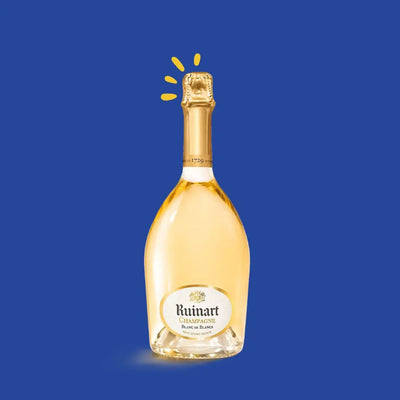
The pairing chart, dish by dish
| Dish | Difficulty | Champagne profile |
|---|---|---|
| Squash velouté, roasted parsnips | Caramelization sugar | Brut dosed 8 to 9 g/l, with substance |
| Mushroom risotto | Intense umami | Aged Blanc de Blancs, brioche notes |
| Cheese puff pastry or tart | Fat and salt | Taut Chardonnay, clean acidity |
| Brussels sprouts, braised endives | Bitterness | Brut with dosage, never extra brut |
| Truffle, porcini mushrooms, sunchokes | Earth and umami | Grand crus with at least 4 years in the cellar |
| Citrus tart, tangy dessert | Dessert acidity | Young Blanc de Blancs, lemony structure |
Mushrooms, the central case
In most vegetarian Christmas menus, mushrooms serve as the main course: porcini risotto, mushroom puff pastry, lentil parmentier, and oyster mushrooms. Mushrooms bring natural glutamate, which is precisely the molecule that puts tight white wines in difficulty. The solution is not to add sugar but age: a chardonnay that has spent four years or more on the lees develops notes of toasted bread, hazelnut, and butter that speak the same language as the mushroom.
Roasted vegetables
A butternut squash roasted at 200 °C loses water and concentrates its sugars: it can reach a perceived sweetness close to that of fruit. A champagne with 3 g/l of dosage then feels dry and hollow by comparison. Two solutions: increase the dosage to 8 or 9 g/l, or balance the plate with a salty element, Parmesan shavings, capers, or olives, which brings the dish back toward the savory.
Three bottles for a meat-free menu
Ruinart Blanc de Blancs Ruinart, from €97.50
One hundred percent chardonnay, aged in the crayères of Reims by the oldest champagne house, founded in 1729. The nose plays on citrus and white flowers, while the palate retains a very clean chalky structure that holds up puff pastries, cheese tarts, and egg-based dishes. This is the bottle for the table that wants a single premium cuvée for the entire meal. Serve it at 11 °C, no colder.
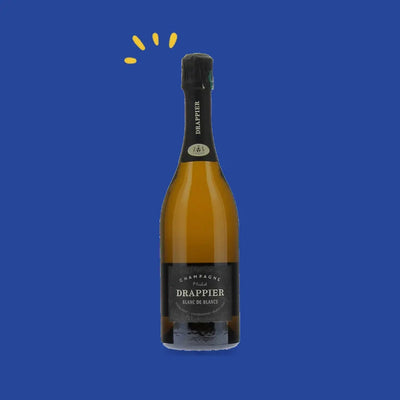
Drappier Blanc de Blancs Drappier, from €48.50
A Blanc de Blancs from the Aube, where the house of Urville works with measured dosages and very reduced sulfur. The style is sunnier and broader than that of the Côte des Blancs, which makes it comfortable with roasted squash or a root vegetable gratin. At this price, it is the rational choice to serve several bottles without changing wines. For a table of six to eight people.
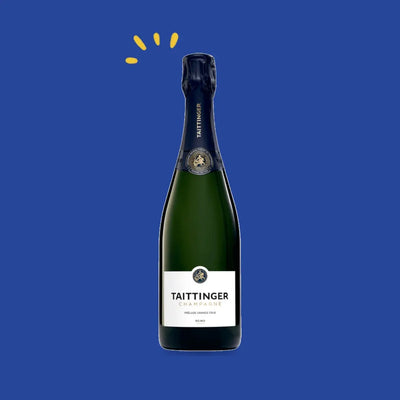
Taittinger Prélude Grands Crus Taittinger, from €62.90
Half chardonnay, half pinot noir, exclusively grand cru grapes, with about four years in the cellar. The share of pinot noir gives it the substance needed for a truffle dish, porcini risotto, or legume parmentier. This is the champagne to reserve for the main course, when the plate becomes rich. Open it fifteen minutes before serving.
The cheese board, a point to check
Often forgotten detail: a large part of French AOP cheeses is made with animal rennet, so it is not suitable for a strict vegetarian guest. If the question arises at your table, orient the board toward lactic coagulation or microbial rennet cheeses, and check the label on the packaging.
On the pairing side, a fresh goat cheese or a lactic cheese calls for a taut chardonnay. A cooked pressed paste cheese like young comté, if it is microbial rennet, pairs very well with an aged Blanc de Blancs: the hazelnut notes complement each other. Avoid blue cheese, which requires sugar and puts any brut in difficulty.
Service and quantities
A vegetarian meal is often less fatty than a meat-based meal, which changes two things. First, the champagne is easier to drink: plan for half a glass more per person. Then, a service that is too cold is noticed more, because there is no fat on the plate to compensate for the harshness of the acidity.
| Guests | Aperitif and starter | Full meal |
|---|---|---|
| 4 people | 2 bottles | 3 bottles |
| 6 people | 3 bottles | 4 bottles |
| 8 people | 3 to 4 bottles | 5 bottles |
Serve between 10 and 12 °C in a 25 to 30 cl tulip glass filled to one-third. Chill for 3 to 4 hours in the refrigerator, or 20 to 30 minutes in a bucket half water half ice. Our packages are carefully wrapped, with good protection to guarantee the condition of your bottles upon arrival.
Three mistakes not to make
First mistake: choosing a brut nature because it seems purer. On bitter or roasted vegetables, the absence of dosage accentuates the bitterness and leaves a dry finish.
Second mistake: seasoning with a classic vinaigrette on the evening you serve champagne. Replace part of the vinegar with citrus juice or, better, with a drizzle of the champagne itself in the sauce: the pairing becomes immediate.
Third mistake: multiplying hot spices, cumin, curry, smoked paprika, on the main course. They dry out the champagne. If your menu is spicy, keep the champagne for the aperitif and starters, and switch to a rounder white wine for the main course.
To go further
- What champagne for the December 24 aperitif
- New Year's Eve in a small group: the half-bottle and formats
- Champagne and Christmas Yule log: the demi-sec is essential
Frequently asked questions
What champagne to serve with a mushroom dish?
A Blanc de Blancs or a blend that has spent at least four years on the lees. The toasted bread and hazelnut notes from autolysis complement the umami of the mushroom. Avoid a young extra brut, which will seem harsh.
Does champagne go with cabbage and endives?
Yes, provided you choose a brut dosed around 8 to 9 g/l. A brut nature, between 0 and 3 g/l, adds its bitterness to that of the vegetable. A light honey glaze or a touch of cream in the cooking also helps a lot.
Is a Blanc de Blancs enough for an entire vegetarian meal?
For a menu based on eggs, cheeses, and green vegetables, yes. As soon as there is truffle, porcini mushrooms, or legumes, a blend with pinot noir brings the substance that is missing from a chardonnay alone.
Are the cheeses on the board vegetarian?
Not always: many AOP cheeses use animal rennet. Check the label on the packaging and favor lactic coagulation or microbial rennet cheeses if a guest is strictly vegetarian.
A meat-free menu, a champagne that follows
Blanc de Blancs and grand crus blends, selected for vegetables, mushrooms, and cheeses.
See all champagnesMore than 1,000 customers have already trusted us, with a rating of 4.9 out of 5. Shipping from France, payment in installments available with Klarna.
The prices and availability mentioned are those observed at the date of publication and may change. Alcohol abuse is dangerous to health, consume in moderation. Sale prohibited to minors.