
A blend brut between €36 and €55, served at 8–10°C. Allow two to three 12.5 cl flutes per person, or one 75 cl bottle for two to three guests. Avoid prestige cuvées and vintage champagnes at this stage of the meal.
The Christmas Eve aperitif is not a tasting occasion
Christmas Eve has a specific constraint: guests arrive at different times, they are standing, they are talking, and the kitchen is busy at the same time. No one is focusing on the wine. This is exactly the situation where a €150 prestige cuvée is wasted: its complexity requires calm and a large glass, not a hand that is also holding a bite of salmon.
The right choice is a blend brut, fruity enough to please without explanation, crisp enough to whet the appetite, and affordable enough to open a second without hesitation. Save the large bottle for the main course or for Christmas Day at noon, when everyone is seated at the table.
Our pick for this article
The quantities, calculated
A 75 cl bottle fills six 12.5 cl flutes, or five tulip glasses filled to one-third. At an aperitif, the average consumption observed is two to three glasses per person over one to one and a half hours.
| Number of guests | Short aperitif (1 h) | Long aperitif (1 h 30 to 2 h) | Recommended format |
|---|---|---|---|
| 4 people | 2 bottles | 2 bottles | 75 cl |
| 6 people | 2 bottles | 3 bottles | 75 cl |
| 8 people | 3 bottles | 4 bottles | 75 cl or a magnum |
| 12 people | 4 bottles | 6 bottles | Two 1.5 L magnums |
| 2 people | 1 half-bottle | 1 bottle | 37.5 cl |
Two practical notes. The 1.5 L magnum is not just for show: the ratio between the volume of wine and the surface area exposed to air under the cork is more favorable, and the wine ages more slowly. However, it takes about 30 minutes in an ice bucket compared to 20 for a standard bottle. And the 37.5 cl half-bottle, or three flutes, solves the problem of an aperitif for two without leaving half a bottle.
The chilling schedule
The target temperature is 8 to 10°C. This is the point most often missed on Christmas Eve evening because the refrigerator is full.
- The evening before. Place the bottles upright in a cool place, between 10 and 14°C, so they start from a low base.
- 4 p.m. on the 24th. Put the first two bottles in the refrigerator: allow 3 to 4 hours to reach the right temperature.
- 7 p.m. Prepare a bucket filled halfway with water and halfway with ice. Water is essential: ice alone cools poorly and slowly. A handful of coarse salt speeds up the cooling.
- During service. Take the bottle out of the bucket to serve, then put it back. A bottle left permanently in the ice drops below 6°C and loses its aromas.
- Never in the freezer. Cooling is harsh and uneven, and a forgotten bottle can burst.
If the bottles have just been delivered, let them rest upright for 48 hours before opening. Transport agitates the wine, and champagne served too soon after being shipped will foam more and seem more carbonated.
Four bottles for the Christmas Eve aperitif
Champagne Brut La Vallée, Famille Tribaut La Malaurie - Famille Tribaut, from €36.96
The choice of volume: a grower's brut at a price that allows you to buy four or six for a large table. Direct fruit, clean bubbles, no difficulty for guests to appreciate. This is the first bottle to open, when everyone arrives at the same time.
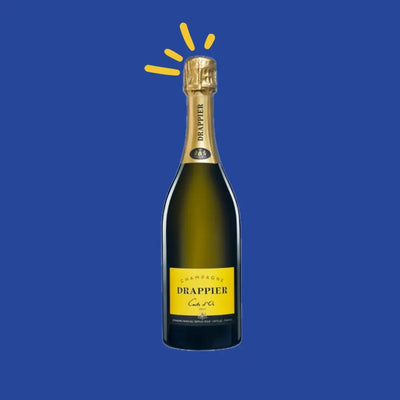
Drappier Carte d'Or Drappier, from €38
Pinot Noir dominance, ripe fruit, broad texture: a champagne that holds up against substantial bites, foie gras on gingerbread or duck rillettes. It also works if the aperitif drags on and turns into the first course, which often happens on the 24th.
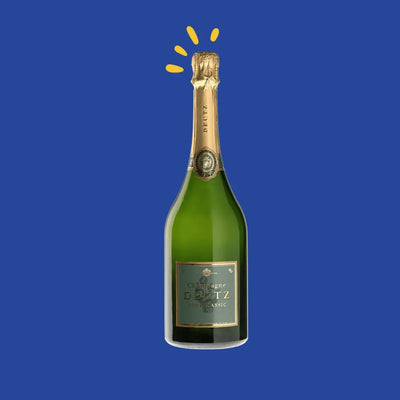
Deutz Brut Classic Deutz, from €42.50
The blend of the three grape varieties, with the fine bubbles that make the house in Aÿ famous. Fresh start, clean finish, nothing that saturates the palate before the meal. The safe choice when you don't know who is drinking what around the table.
R de Ruinart Brut Ruinart, from €54.95
The brut from the oldest champagne house, founded in 1729, with a presence of Chardonnay that brings freshness and a fine finish. Best reserved if the aperitif is focused on seafood: oysters, shrimp, tarama, raw scallops. It is also the most recognizable label of the four, which counts when you are hosting.
The pairings that really work
The Christmas aperitif is often a collection of heterogeneous small bites. A few simple rules help avoid faux pas.
| Bite | What to serve | Why |
|---|---|---|
| Oysters, shrimp, tarama | Crisp brut, Chardonnay dominance | Acidity matches the iodine and cleanses the palate |
| Gougères, Comté, Parmesan | Blend brut | The richness of the cheese calls for bubbles and freshness |
| Smoked salmon | Brut or rosé | Smoked richness supports a slightly more winey wine |
| Foie gras on gingerbread | Demi-sec, or Pinot Noir-dominant brut | The sweetness of the base calls for dosage or body |
| Vinegary bites, gherkins, pickles | Serve without champagne | Vinegar destroys the wine's balance |
The most common trap is an aperitif that is too salty and too vinegary, which makes the wine taste harsher. If your bites are acidic, simply choose a dosé brut at the top of the category, around 9 to 12 g/l.
Open and serve without incident
Remove the foil, then keep your thumb on the cork while unwinding the cage: the internal pressure reaches 5 to 6 bars. Tilt the bottle at 45 degrees, hold the cork, and turn the bottle, not the cork. A well-opened champagne makes a sigh, not a bang: the noise is wasted gas.
Pour in two stages, a little at a time, to let the foam settle. Fill a tulip glass to one-third rather than to the brim in a flute. If a bottle remains open, an airtight seal in the refrigerator will keep it for 24 to 48 hours; the small spoon in the neck is useless.
For more
- One champagne per course: the Christmas meal from start to finish
- Champagnes for December 31 and New Year's
- Champagne and raclette: the surprising pairing
Frequently asked questions
How many bottles to allow for ten people at an aperitif?
Three to four 75 cl bottles for a one-hour aperitif, five if the evening drags on before sitting down to eat. One bottle corresponds to six 12.5 cl flutes.
Should you open a prestige cuvée at an aperitif?
It is rarely a good idea: guests are standing, talking, and the wine's complexity goes unnoticed. Save it for table service, with large glasses.
How long does it take to bring a bottle to the right temperature?
Three to four hours in the refrigerator, or 20 minutes in a bucket filled halfway with water and halfway with ice. Allow 30 minutes for a magnum.
Can you serve the same champagne at an aperitif and during the meal?
Yes, provided you choose a full-bodied blend brut rather than a very crisp blanc de blancs. A Pinot Noir dominance holds up better with a main course.
Plan your Christmas Eve aperitif
Blend bruts, magnums, and half-bottles: everything is ready to ship.
View all champagnesMore than 1,000 customers have already trusted us, with a rating of 4.9 out of 5. Shipped from France, payment in installments available with Klarna.
The prices and availability mentioned are those observed at the time of publication and may change. Excessive alcohol consumption is harmful to health; consume in moderation. Sale prohibited to minors.