
Alcohol amplifies the chili burn, while sugar soothes it. For a spicy dish, choose a champagne with at least 17 g of sugar per litre, labelled sec or demi-sec, served very chilled at 8 °C and sipped in small mouthfuls.
Spiciness is not a taste, it is pain
Capsaicin in chili peppers does not activate taste buds but a sensory receptor called TRPV1, the same one that signals heat. The brain therefore receives a burning sensation, not a flavour. This has a direct consequence on the choice of wine: the usual pairing rules, based on sugar, acidity and tannins, only partially apply.
The problem is that ethanol also activates the TRPV1 receptor and lowers its activation threshold. In other words, drinking alcohol with a spicy dish does not soothe the burn, it reignites it. With a champagne at 12 or 12.5% ABV, the sensation rises instead of falling. The bubbles add their own part: dissolved carbon dioxide forms carbonic acid, which is slightly irritating to an already stressed mucous membrane.
What really soothes is fat, sugar and cold. Capsaicin is fat-soluble, not water-soluble: this is why yoghurt works and a glass of water does not. A champagne has almost no fat, but it can have sugar and it is served cold. These are the two levers at our disposal.
Our pick for this article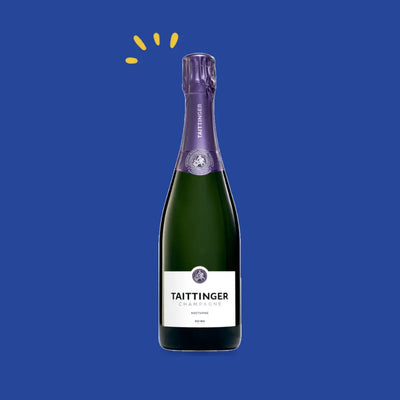
Aromatic spices and hot spices: two distinct problems
The most common confusion is to treat all spices the same way. Cinnamon, cardamom or ras-el-hanout do not burn: they add flavour. A bird's eye chili adds almost no flavour: it burns. Between the two, fresh ginger and pepper act on different receptors than capsaicin and produce a shorter burn.
| Spice | Heat | Effect in the mouth | Recommended champagne |
|---|---|---|---|
| Cinnamon, nutmeg, cardamom | Non-spicy | Aromatic, warming | Mature brut or sec |
| Mild curry, ras-el-hanout | Non-spicy | Complex aromatic | Sec or demi-sec |
| Black pepper, pink peppercorns | Mildly spicy | Brief tingling | Brut vineux or sec |
| Fresh ginger | Mildly spicy | Short, sharp burn | Sec |
| Espelette pepper | 1,500 to 2,500 Scoville units | Moderate, gradual heat | Sec or demi-sec |
| Jalapeño, harissa | 2,500 to 8,000 units | Sharp burn | Demi-sec |
| Bird's eye chili | 50,000 to 100,000 units | Long and widespread burn | No champagne |
Beyond approximately 10,000 Scoville units, no dosage is enough: the burn covers everything and the wine is no longer useful. A low-alcohol beer, a lassi or an iced tea will do a better job, and you will avoid opening a bottle for nothing.
The three settings that save the pairing
Increase the dosage above 17 g per litre
This is the main setting. Residual sugar reduces the perception of burning and rounds off the attack. In practice, this means choosing the sec label, between 17 and 32 g per litre, for a moderately spicy dish, and the demi-sec label, between 32 and 50 g, as soon as the chili becomes sharp. The brut nature, extra-brut and brut labels should be ruled out: they leave the alcohol alone against the capsaicin.
Serve colder than usual
Cold reduces the activity of the TRPV1 receptor. For a spicy dish, therefore serve at 8 °C rather than 10 or 11 °C, which is the exception to the usual rule for a main course. Keep the bottle in a bucket half-filled with water and half with ice during the entire service, because a glass that warms up quickly becomes unpleasant.
Drink in small sips and provide a palate cleanser
A large gulp brings more alcohol at once and reignites the burn. Two or three centilitres at a time are enough. Also place a palate cleanser on the table: plain rice, Greek yoghurt, flatbread. Fat and starch do the work that wine cannot do, and champagne then finds its place.
Three bottles for a spicy dish
Taittinger Nocturne Sec Taittinger, from €54.90
Dosé in the sec category, therefore above 17 g per litre, with a floral profile and fine bubbles that do not overload the palate. This is the bottle for a fragrant but mildly spicy dish: mild curry, tagine, spiced gravlax salmon. Serve at 8 °C.
Deutz Demi-Sec Deutz, from €54.68
One step higher in dosage, with more substance and a finish that remains fresh. Bring out when the chili is sharp: harissa, spicy stir-fried noodles, five-spice duck. It retains fruit where a brut would leave only an impression of alcohol.
Drappier Carte d'Or Demi-Sec Drappier, from €41.50
Pinot Noir base, ripe fruit and round texture: the most accessible demi-sec in the lot, and the logical choice if you are serving a spicy buffet and need to provide several bottles. It also works with gingerbread served with foie gras.
The festive dishes concerned
Spicy cuisine is not reserved for exotic meals: a Christmas table often contains it without us thinking about it. Gingerbread served with foie gras combines sugar and warm spices, and puts a brut in difficulty from the first bite. Salmon gravlax marinated with pepper and coriander calls for a sec rather than an extra-brut. Five-spice duck, mango chutney accompanying a terrine, spiced cashews for the aperitif fall under the same logic.
One common case deserves to be mentioned: mustard. Its spiciness comes from allyl isothiocyanate, which acts on a different receptor than capsaicin and produces a brief, nasal sensation. It bothers a champagne much less than a chili, and a brut vineux supports it without any problem.
Conversely, if your menu includes a genuinely spicy dish, the simplest thing is not to impose champagne on it. Serve the champagne with the aperitif and the starter, then move on to something else with the spicy dish, and return to champagne for dessert with a demi-sec. Alternating pairing is better than a forced pairing.
To go further
- Champagne and oysters: the right dosage changes everything
- Champagne and game: how far can we go
- Budget champagne: what a €20 bottle hides
Frequently asked questions
Why does champagne accentuate the spicy sensation?
Because ethanol activates the same sensory receptor as capsaicin, TRPV1, and lowers its activation threshold. Alcohol therefore reignites the burn instead of extinguishing it, and carbon dioxide adds a slight irritation.
What champagne with a curry or tagine?
A sec champagne, dosé between 17 and 32 g per litre, if the dish is fragrant without being burning. A demi-sec, between 32 and 50 g, as soon as the chili becomes sharp. In both cases, serve at 8 °C.
Is rosé a good choice with a spicy dish?
A low-dosage rosé brings nothing more than a brut blanc, and its tannins can even harden the whole. A rosé dosé as sec or demi-sec, on the other hand, works very well with a dish with mild spices and fruit.
Should it be served colder with a spicy dish?
Yes. Cold reduces the activity of the receptor responsible for the burn. Serve at 8 °C and keep the bottle in the bucket during the entire meal, unlike a classic main course where we go up to 11 or 12 °C.
A spicy dish requires dosage
Secs and demi-secs selected for spicy dishes and sweet-and-sour dishes, shipped from France in a carefully packaged parcel.
See all champagnesMore than +1,000 customers have already trusted us, with a rating of 4.9 out of 5. Shipping from France, payment in several installments possible with Klarna.
The prices and availabilities mentioned are those observed at the date of publication and may change. The abuse of alcohol is dangerous for health, consume in moderation. Sale prohibited to minors.