
The easiest thing is to stick with champagne by stepping up: a vintage or prestige cuvée served at 12 to 14 °C takes over from the brut for aperitifs. If you change wines, follow the order: from lightest to fullest, from driest to sweetest.
The problem: you never go back down
The palate retains the memory of the previous glass for several minutes. This is why a wine served after a more powerful wine always seems weaker than it is. After a well-made house brut, a light and neutral still white will seem thin, even if it is very good on its own.
Three rules of succession are enough to avoid most mistakes. From lightest to fullest. From driest to sweetest. From youngest to oldest. They sometimes conflict, and in that case power wins: a dense and young wine is served after a light and aged wine.
Fourth point often forgotten: change glasses, or at least rinse them with a small amount of the new wine, which you then discard. A residue of fresh brut in a glass where you pour a vintage dilutes exactly what you paid for.
Our pick for this article
Option 1: stick with champagne, changing style
This is the safest and, ultimately, the most logical solution: champagne is a sparkling white wine, it has its place with a dish. It is not a matter of reserving the same cuvée, but of moving from an aperitif brut to a denser champagne: a vintage, a prestige cuvée, or a rich blanc de noirs.
The change happens on three parameters: the temperature rises by about 10 to 13 °C, the glass widens, and the wine has more substance. The guest clearly perceives that the wine has changed, without having to switch regions.
Deutz Brut Millésimé 2019 Deutz, from €80.66
A vintage is only produced in years deemed sufficient, and the appellation imposes at least 36 months in the cellar on it, compared to 15 months for a non-vintage. This extra aging is immediately noticeable: the palate is broader, the bubbles more integrated, the finish longer. This is the champagne to serve at 12 to 13 °C with roasted poultry, lobster, or fish in sauce. Allow one bottle for four guests for this course alone.
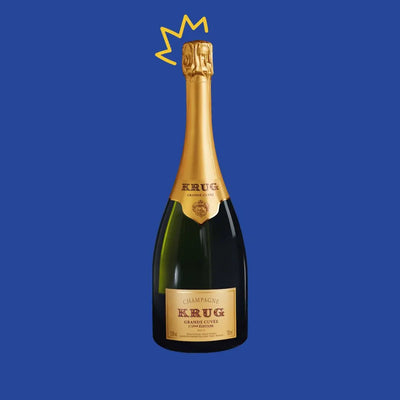
Krug Grande Cuvée Krug, from €255
Here, champagne does not take the place of white wine: it fills it better. The blend of more than a hundred wines from at least ten years, aged for at least six years in the cellar, gives a dense and buttery palate that holds up to a creamy sauce, stuffed poultry, or a truffle dish. Serve it at 13 °C in a white wine glass, not a flute. For the table that wants a single great wine with the main course.
Option 2: move to a still white wine
If you change families, the white must have at least as much substance as the champagne that precedes it. A crisp and light white will not hold up. Look for a wine aged on the lees, with volume, served at 11 to 13 °C and not chilled.
The classic trap is to serve the white too cold to "be like champagne". Result: the wine closes up and the transition seems failed. Take it out of the cold 20 minutes before.
Option 3: red wine, on three conditions
Moving from champagne to red is possible, but it is the most abrupt jump. Three conditions make it pleasant.
| Condition | Why |
|---|---|
| Soft, not astringent tannins | After bubbles, harsh tannins immediately dry out the mouth |
| Service at 15 to 16 °C | A red at 20 °C seems heavy and alcoholic after champagne |
| A transitional dish | A fatty bite or a hot dish resets the palate |
In practical order, this gives: champagne for aperitifs and the seafood starter, vintage or full-bodied white with the fish, soft red with the meat, then off-dry with the dessert. Each step goes up a notch in intensity.
The complete order of a Christmas meal
| Course | Wine | Temperature | Quantity per person |
|---|---|---|---|
| Aperitif | Non-vintage brut | 10 to 11 °C | 1 to 2 glasses |
| Seafood starter | Blanc de blancs or brut | 10 to 11 °C | 1 glass |
| Main course | Vintage, prestige or full-bodied white | 12 to 14 °C | 1 to 2 glasses |
| Cheeses | Aged white or soft red | 14 to 16 °C | 1 glass |
| Dessert | Off-dry, 32 to 50 g/l | 8 to 10 °C | 1 small glass |
In total, allow 4 to 6 glasses per guest for a full meal, which is about one bottle per person and a half when adding up all the wines. Also plan one large glass of water per glass of wine: it is the most effective measure to keep the table going until dessert.
Two bad ideas
The Normand gap with strong alcohol first. A calvados or a vodka in the middle of the meal saturates the palate and makes everything that follows flat. If you want a break, prefer an alcohol-free citrus sorbet.
Returning to brut after the main course, next. Once you have served a dense wine, going back to an aperitif brut gives a sensation of thin and acidic wine. If you want champagne with dessert, increase the dosage rather than going back down in intensity.
Our packages are carefully packed, with good protection to guarantee the condition of your bottles on arrival, and the shipments leave from France.
To go further
- What champagne for the December 24th aperitif
- The champagne for the day after the holidays
- Champagne and fruit desserts
Frequently asked questions
Can you keep the champagne until the main course then switch to a red?
Yes, provided that the red has soft tannins and is served between 15 and 16 °C. A tannic and too warm red after bubbles dries out the mouth. A bite of the dish before the first glass makes the transition much easier.
Should you change glasses between two wines?
Yes, or rinse the glass with a residue of the new wine, which you then discard. A residue of fresh brut dilutes a vintage and makes it lose its texture. Allow two glasses per guest for a meal with two or three wines.
What order between a non-vintage brut and a vintage?
Non-vintage brut first, vintage next. The vintage has at least 36 months in the cellar compared to 15 months for a non-vintage, so more substance and length. The reverse would make the brut seem thin.
How many different wines for a Christmas meal?
Two are enough in most cases: a champagne for the aperitif and starter, a denser wine for the main course. Three if you add an off-dry with dessert. Beyond that, the table loses the thread and the palate becomes saturated.
Champagne does not stop at the aperitif
Vintages and prestige cuvées to serve with the main course, selected for their substance.
See all champagnesMore than +1,000 customers have already trusted us, with a rating of 4.9 out of 5. Shipping from France, payment in installments possible with Klarna.
The prices and availability mentioned are those observed on the publication date and may change. Alcohol abuse is dangerous for health, consume in moderation. Sale prohibited to minors.