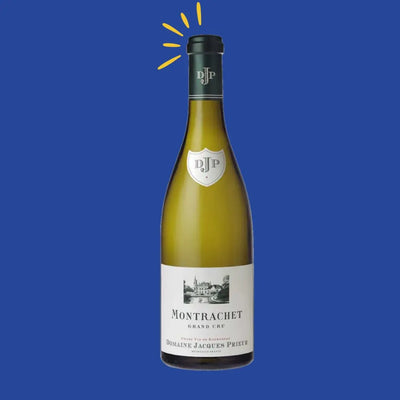
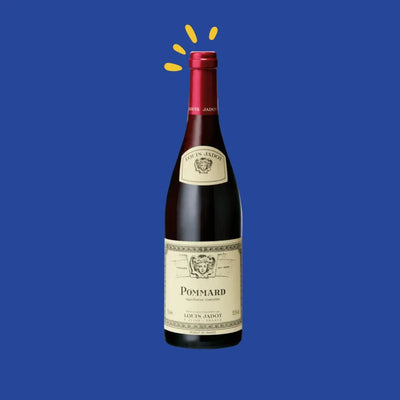
Short answer: Pinot Noir is a thin-skinned grape with compact, early-ripening, and fragile bunches that only yield its best results on cool, limestone-rich soils. It produces pale-colored wines that are complex on the nose, with fine tannins and lively acidity. Burgundy remains its global benchmark, while Champagne is its other great territory.
To see our selection, visit all our bottles.
A difficult grape
Pinot Noir is often described as the most temperamental grape in the world, and for good reason.
- Thin skin: highly susceptible to grey rot as soon as it rains before harvest.
- Compact bunches: air circulates poorly between the berries, which increases the risk.
- Early budburst: it is exposed to spring frosts.
- Genetic instability: it mutates easily, which has produced hundreds of clones with very different characteristics.
- Intolerance to heat: beyond a certain threshold, it loses its acidity and becomes jammy.
This is why it succeeds in a narrow climatic band and fails so often elsewhere.
Our pick for this article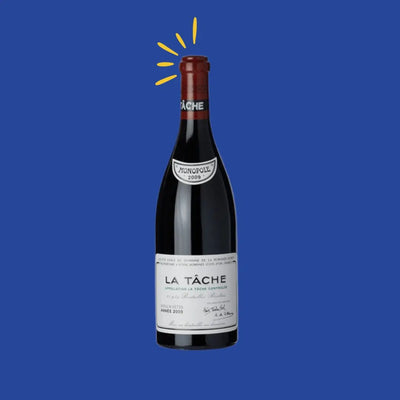
Its preferred terroirs
Burgundy
Its birthplace and absolute benchmark. The clay-limestone soils of the Côte d'Or, combined with a cool climate, give it a precision that no one has matched.
This is also where the concept of a climat—a delimited plot—takes on its full meaning: Pinot Noir expresses differences in soil with unique sensitivity.
See our guide to Vosne-Romanée Grand Crus.
Champagne
The region's most widely planted grape, especially on the Montagne de Reims and the Côte des Bar.
When vinified as a white wine, it brings structure, body, and length to blends. Blanc de noirs is its purest expression.
See our Champagnes.
Elsewhere
- Alsace: the only red grape permitted in the AOC, and one that is steadily improving.
- The Loire: Sancerre rouge and Menetou-Salon, fine and taut.
- Jura: often blended with Trousseau and Poulsard.
- Germany: under the name Spätburgunder, with remarkable successes.
- Oregon, New Zealand, Tasmania: the cool regions of the New World.
Aromatic profile
Young
Cherry, raspberry, wild strawberry, redcurrant. Floral notes of rose and peony.
Mature
The fruit becomes more jammy. Sweet spices, truffle, forest floor, mushroom, and leather emerge.
This evolution toward tertiary aromas is what gives the grape its reputation.
Structure
- Color: light ruby, rarely opaque. A very dark Pinot Noir should give you pause.
- Tannins: fine, silky, present but never drying.
- Acidity: high, which is what gives the wine its longevity.
- Alcohol: moderate, generally 12.5 to 13.5% ABV.
Service and pairings
- Temperature: 14 to 16 degrees Celsius. Served too warm, it loses its freshness and fragrance.
- Glass: large, Burgundy-style, to allow the aromas to express themselves.
- Decanting: with caution. A delicate Pinot Noir tires quickly when exposed to air.
- Poultry: roast chicken, guinea fowl, capon.
- Game birds: the ultimate pairing, with an aged wine.
- Mushrooms: a natural affinity, with a wine ten years or older.
- Fish in a red sauce: the finesse of the tannins makes this possible.
- Cheeses: soft cheeses, Époisses, Soumaintrain.
Frequently asked questions
Why is Pinot Noir so expensive?
Low yields, high climatic risks, limited acreage on the best terroirs, and strong global demand.
Can Pinot Noir be aged for a long time?
A Burgundy Village wine can be drunk within 5 to 10 years, a Premier Cru within 8 to 20, and a Grand Cru well beyond that.
Why is its color so light?
The skin is thin and contains little coloring matter. A pale color does not at all indicate a lack of power.
Where to start?
A Burgundy Village wine from a good producer, or a more accessible Pinot Noir from Alsace or the Loire.
Ordering from Le Caveau des Pépites
We work directly with producers to guarantee the origin and traceability of every bottle. Bottles are stored in our climate-controlled, humidity-regulated warehouses in France, hand-packed and cushioned, and shipped from mainland France via tracked and insured transport. Free delivery on orders over 300 euros. Customer service is available seven days a week in French and English.
To learn more: the Domaine de la Romanée-Conti.