There is a rare consensus in the wine world: Montrachet is generally considered the greatest dry white wine on the planet. This reputation is long-standing, stable, and very little disputed.
Here is what justifies it. To see what is available, visit the Domaine Jacques Prieur collection and our Montrachet.
A climat spanning two communes
Montrachet is located in the Côte de Beaune, spanning the communes of Puligny-Montrachet and Chassagne-Montrachet. In fact, both villages added the climat's name to their own in the 19th century, a common practice in Burgundy to benefit from the reputation of a grand cru.
The climat covers about eight hectares. It is tiny: the annual global production amounts to a few tens of thousands of bottles at most, divided among a handful of owners.
The Montrachet family
Several other grand crus orbit Montrachet itself, their names derived from its own: Chevalier-Montrachet above, Bâtard-Montrachet below, Bienvenues-Bâtard-Montrachet and Criots-Bâtard-Montrachet.
Each has its own character, linked to its position on the slope. But it is Montrachet that occupies the central position, considered the most perfect.
Our pick for this article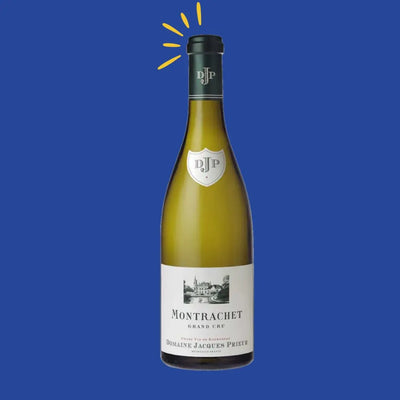
Why this terroir
Several factors combine, and it is their conjunction that makes it exceptional.
- Exposure: east-facing, slightly southeast, which catches the morning sun and avoids the excesses of the afternoon.
- The slope: gentle and regular, ensuring perfect drainage without excessive erosion.
- The position on the slope: mid-slope, where the soils are neither too deep at the bottom nor too thin at the top.
- The soil: Jurassic limestone marls, deep enough to nourish the vine, stony enough to constrain it.
None of these elements is unique. It is their combination, on these few precise hectares, that produces a result that cannot be obtained elsewhere.
The tasting profile
What characterizes a great Montrachet is a combination that was once thought contradictory: considerable power associated with extreme finesse.
On the nose
Ripe yellow fruits, roasted hazelnut, fresh butter, white flowers, acacia honey, and with age, notes of white truffle, wax, and mushroom.
On the palate
The attack is broad and dense, the texture almost oily. But unlike a simply rich Chardonnay, this substance is cut through by a mineral tension that prevents it from becoming heavy.
The finish is what truly distinguishes this wine: it is long, it lingers, and it leaves an impression of salinity and stone.
See the Montrachet Grand Cru 2015.
Service, critical for this wine
This is the white wine for which service mistakes cost the most.
- Temperature: 12 to 13 degrees. Not 8, not 10. A great Montrachet served cold is pure and simple waste: you will only perceive a fraction of its complexity.
- Glass: a large glass, more like a red Burgundy glass than a standard white wine glass. The surface area matters enormously.
- Decanter: for a young and closed vintage, half an hour can help. For a mature wine, serve directly.
- Patience: this wine unfolds over one to two hours. Pour a little and refill.
- The dish: simple. Pan-seared noble fish, poultry in cream, lobster. Or nothing.
Aging
A Montrachet can be kept for ten to twenty years, sometimes longer in great vintages.
One thing to know: great white Burgundies often go through a closed phase between four and eight years, during which they seem mute. This is normal, and patience is required.
Storage conditions: laid flat, in total darkness, at a stable temperature between 12 and 14 degrees, without vibrations.
The 2015 vintage
A warm and sunny year in Burgundy, which produced rich and generous whites, with full ripeness.
On a terroir like Montrachet, capable of providing the tension that warm years sometimes lack, this profile produces wines that are both ample and balanced.
Frequently asked questions
Why is this wine so expensive?
Eight hectares in total, divided among a handful of owners, facing considerable global demand. The rarity is absolute and structural.
What is the difference with a Meursault?
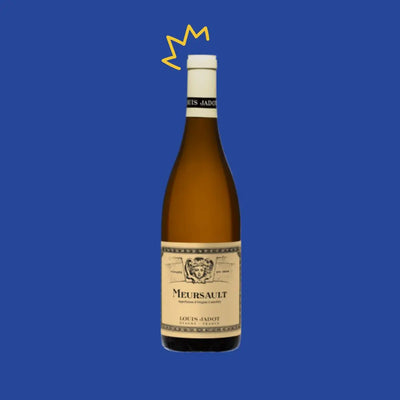
Meursault is a village, with excellent first growths but no grand cru. Its wines are generally richer and more buttery, whereas Montrachet adds superior tension and length. See our Meursault.
Should I wait before opening it?
Five to ten years allow the wine to develop. Be aware of the closed phase that great white Burgundies often go through in their early years.
Why do we speak of several Montrachets?
Because several neighboring grand crus bear a derived name: Chevalier, Bâtard, Bienvenues and Criots. Only the central climat bears the name Montrachet alone.
Order your Montrachet from Le Caveau des Pépites
For this type of bottle, traceability and storage conditions are decisive. We work directly to guarantee the origin of each bottle. Stored in our climate-controlled, humidity-controlled warehouses in France, hand-packed and packaged in reinforced packaging, shipped from mainland France via tracked and insured transport. Free delivery from 300 euros. Customer service available 7 days a week, in French and English.
To learn more: Domaine Jacques Prieur and our white wines.