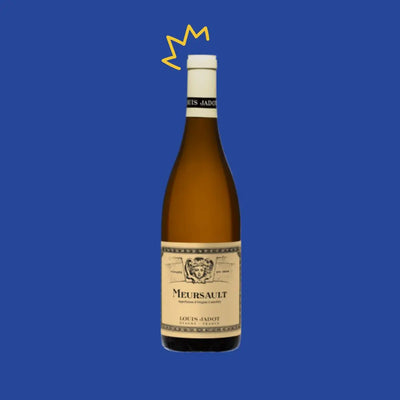
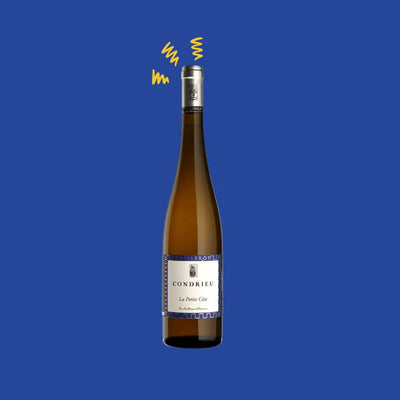
At the heart of the Cote de Beaune, a handful of Chardonnay parcels rank among the most famous terroirs in the world. Montrachet, Chevalier-Montrachet and Batard-Montrachet: their names resemble each other, their vines sometimes touch, but their wines do not tell quite the same story. How do you tell them apart? This exceptional neighbourhood makes for fascinating comparisons.
Montrachet Grand Cru: a vineyard between two villages
Montrachet straddles Puligny-Montrachet and Chassagne-Montrachet, in the Cote-d'Or. Its Grand Cru appellation, recognised in 1937, is reserved for white wines made from Chardonnay. The vineyard covers a tiny area: 7.79 hectares in production according to 2022 figures from the Burgundy wine board.
Its reputation also rests on exposure, limestone, soils and the work of the growers. What they are aiming for is a wine that combines breadth, freshness, aromatic complexity and length on the palate.
Our pick for this article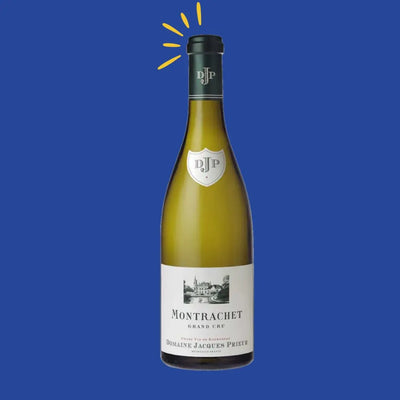
Five grands crus, one family of terroirs
Around Montrachet lie four distinct appellations: Chevalier-Montrachet, Batard-Montrachet, Bienvenues-Batard-Montrachet and Criots-Batard-Montrachet. All produce white wine exclusively from Chardonnay. Each has its own boundaries and its own identity.
Montrachet and Batard-Montrachet are shared between Puligny and Chassagne. Chevalier-Montrachet and Bienvenues-Batard-Montrachet sit in Puligny, while Criots-Batard-Montrachet belongs to Chassagne. This is the principle of the Burgundian climats: every parcel has an identity of its own.
Chevalier-Montrachet: finesse from higher up
Sitting higher on the slope, Chevalier-Montrachet rests on thin, stony soils shaped by limestone and marl. Its altitude, roughly between 265 and 290 metres, sets its environment apart from the lower-lying Batard-Montrachet.
On tasting, Chevalier-Montrachet wines are often described through their tension, their precision and their elegance. Vintage and the choices of each estate nonetheless shade that profile.
Batard-Montrachet: another face of Chardonnay
Lower down the slope, the soils generally become deeper and more clay-rich. Batard-Montrachet occupies that lower band, around 240 to 250 metres. The position favours an expression often associated with richness, substance and an enveloping texture.
Here you find aromas of ripe fruit, butter, hazelnut or spice, depending on the ageing and the age of the bottle. Power and finesse can coexist perfectly well.
Bienvenues and Criots: two grands crus to discover
Less familiar to the wider public, Bienvenues-Batard-Montrachet and Criots-Batard-Montrachet deserve the same attention. Their small size naturally limits the quantities available. According to 2022 production figures, they accounted for 3.69 and 1.57 hectares in production respectively.
Their existence is a reminder that the prestige of white Burgundy does not stop at Montrachet. For lovers of Chardonnay, comparing them is the best way to grasp the diversity of a very concentrated landscape.
Why are Montrachet prices so high?
The size of the vineyard limits how many bottles are made each year, while international demand can be considerable. The price of a Montrachet also depends on the estate, the vintage, storage conditions and availability. A famous grand cru therefore has no single price: two producers can offer very different expressions and very different figures.
Scarcity on its own does not explain value, nor does it guarantee that prices will rise. The history and the quality of the producers count too.
How to choose between these Burgundy grands crus
To get to know this family of wines, it pays to look beyond the label. Check the exact appellation first, then the name of the estate and the vintage. Find out about the producer's style, the ageing and the storage conditions. Finally, bear in mind that Chardonnay evolves: the fruit of youth can give way to more complex aromas after a few years.
Montrachet, Chevalier-Montrachet and Batard-Montrachet are not a fixed podium. They offer different readings of an exceptional terroir, where a few metres of slope and soil help create singular identities. That diversity, as much as their reputation, is what makes white Burgundy grands crus so rewarding.