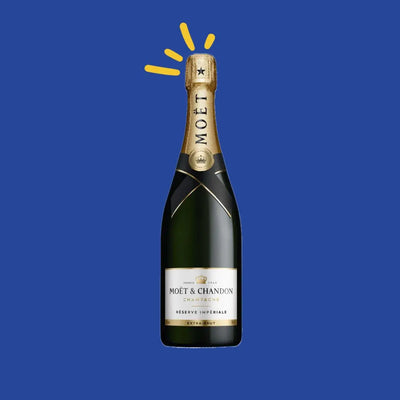
To speak of Moët & Chandon is to evoke one of the most prestigious Champagne houses in the world. Founded in 1743 by Claude Moët, the house quickly established itself as a symbol of elegance, celebration, and success. Located in Épernay, in the heart of the Champagne terroir, Moët & Chandon embodies French refinement through legendary cuvées such as Brut Impérial and Grand Vintage.
A history of prestige and tradition
For nearly three centuries, the house of Moët & Chandon has cultivated exceptional expertise. Napoleon Bonaparte made it his favorite Champagne, helping to forge its legend. Today, the house still belongs to the LVMH group, ensuring continuity between tradition and modernity.
The founding vision remains unchanged: to produce Champagnes that combine quality, finesse, and universal pleasure. Through its cuvées, Moët & Chandon pays tribute to the art of celebration and the pursuit of perfection.
Our pick for this article
The terroir of Épernay: a living heritage
The Moët & Chandon vineyards span more than 1,000 hectares, making them the largest Champagne vineyards. The plots are located in Grand Cru and Premier Cru areas of the Marne Valley, Côte des Blancs, and Montagne de Reims.
The limestone and chalky soils provide ideal drainage and contribute to the freshness and minerality characteristic of the house's wines. It is this rich terroir that allows each cuvée to reflect the diversity of Champagne: fruity, full-bodied, structured, and luminous.
The grape varieties and the art of blending
Moët & Chandon Champagnes are based on the combination of the three great Champagne grape varieties: Chardonnay, which provides finesse and elegance; Pinot Noir, which gives structure and power; and Meunier, which adds softness and roundness.
Blending these grape varieties requires master craftsmanship. Under the direction of the cellar master, each vintage is carefully crafted to preserve the house's distinctive style: balance, harmony, and consistency.
The iconic cuvées of Moët & Chandon
Brut Impérial
Created in 1869, Brut Impérial is the house's most famous cuvée. It embodies the Moët & Chandon style: fine bubbles, a creamy texture, and beautiful vivacity. Its aromas of white-fleshed fruit, brioche, and dried flowers make it a versatile Champagne, perfect for all celebrations.
Grand Vintage
Each Grand Vintage is a unique expression of the climate of an exceptional year. Unlike Brut Impérial, it is made from wines from a single harvest, offering a more complex and gastronomic profile.
Aged for several years in the historic cellars of Épernay, this Champagne captivates with its depth, toasted notes, and long finish.
Rosé and prestige cuvées
Rosé Impérial captivates with its aromas of red fruit and its balance of freshness and indulgence. As for the MCIII prestige cuvée, it illustrates the house's creativity and modernity, combining still wines and vintage Champagnes in an avant-garde blend.
The cellars and chalk caves: the house's underground heart
Beneath Épernay, the Moët & Chandon cellars and chalk caves span more than 28 kilometers. These galleries dug into the chalk offer ideal aging conditions: constant coolness, darkness, and perfect humidity. It is there, sheltered from time, that the house's legendary bubbles are born.
This underground heritage, a UNESCO World Heritage site, bears witness to the link between history, nature, and expertise.
A symbol of luxury and elegance
More than just a wine, Moët & Chandon is a symbol of luxury. Present at the world's finest tables, the house embodies celebration, joie de vivre, and French elegance. Each flute reflects a simple philosophy: to share happiness in its most sparkling form.
Conclusion
From its vineyards in Épernay to its historic cellars, the house of Moët & Chandon remains an absolute benchmark of Champagne. Through its iconic cuvées Brut Impérial, Grand Vintage, and Rosé Impérial, it perpetuates a heritage of excellence and innovation.
Three centuries after its creation, Moët & Chandon continues to embody the spirit of accessible luxury, a Champagne where every bubble tells the story of the terroir, time, and the French art of living.