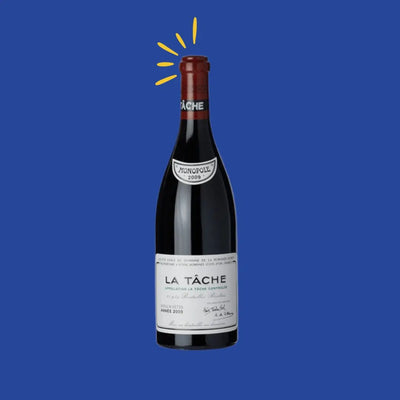
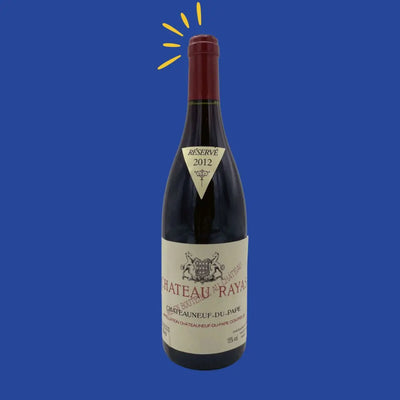
Investing in wine appeals to more and more individuals looking for an alternative asset. Yet buying a prestigious bottle and waiting several years is not enough to expect a capital gain.
The wine market rests on several criteria: entry price, rarity, liquidity, provenance, storage, vintage, demand and resale strategy.
For a beginner, some mistakes can significantly reduce potential returns. Here are the main ones to avoid.
Buying only because a wine is prestigious
A great name does not guarantee good performance.
Some bottles are already highly valued at the time of purchase. If the entry price is too high, the room for growth can become limited.
You therefore need to look at real value on the secondary market and compare recent transactions.
A famous bottle can be interesting, but only if its price remains consistent with its demand and appreciation potential.
Our pick for this article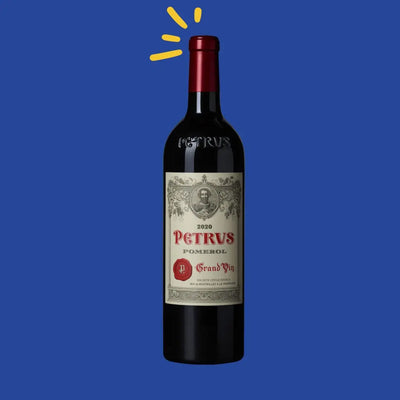
Confusing personal taste with investment
A wine you love to drink is not necessarily a good asset.
Personal taste can guide a cellar for pleasure, but an investment cellar must follow another logic.
Demand, rarity, the estate's reputation, the vintage and resale capacity must be analysed.
The central question is therefore not just "Do I like this wine?"
But rather "Will the market still want it in several years?"
Neglecting liquidity
Liquidity is often underestimated by beginners.
A rare bottle may seem attractive, but if nobody wants to buy it, its value remains largely theoretical.
Check whether the wine is regularly traded.
Good liquidity makes resale easier and helps assess a bottle's real price.
In an investment strategy, rarity must always be accompanied by real demand.
Forgetting provenance
Provenance directly influences a wine's value.
A bottle bought from a recognised professional with an invoice reassures future buyers more.
The storage history is also important.
The more prestigious a bottle, the more essential traceability becomes.
Uncertain provenance can lead to a discount or make resale harder.
Keep your supporting documents from the moment of purchase.
Storing bottles poorly
Poor storage can destroy the value of a great wine.
Excessive temperature, large swings, light or vibration can damage the product.
Storage should therefore be treated as a genuine investment cost.
A suitable cellar or professional storage protects the bottle and its value.
In some cases, being able to prove storage conditions also makes resale easier.
Ignoring costs
Real returns also depend on costs.
Storage, insurance, transport, commissions or platform fees can reduce a capital gain.
A bottle bought for 500 euros and sold for 600 euros does not necessarily generate 100 euros of net profit.
Calculate the total cost before buying.
The selling price must be high enough to offset all the costs.
Buying after a sharp rise
When some bottles become popular, their price can climb quickly.
The risk then is buying too late.
A big rise often attracts new investors, but it can also reduce future potential.
Avoid buying just because a wine is fashionable.
Hype can be temporary.
Lasting growth generally rests more on quality, rarity and steady demand.
Putting everything on one region
Diversification is important.
A portfolio concentrated solely on Bordeaux, Burgundy or Champagne depends heavily on the evolution of a single market.
Regions do not always progress at the same pace.
Diversifying spreads risk across several estates, vintages and geographical areas.
The aim is not to buy as many different bottles as possible, but to build a coherent portfolio.
Neglecting the vintage
The estate's name is not enough.
The vintage can strongly influence demand and value.
Some years become particularly sought after, while others interest collectors less.
Look at the weather conditions, the reviews and the general reputation of the vintage.
Rigorous selection helps you avoid buying a prestigious bottle from a less attractive year.
Not thinking about resale
Many beginner investors think mainly about buying.
Yet the exit strategy is essential.
You need to know where to sell: specialist platform, auction house, merchant or another intermediary.
You should also anticipate resale times and fees.
A bottle can show a high value yet be hard to sell at the desired price.
The exit strategy should therefore be considered before you even buy.
Looking for returns too quickly
Wine is generally a long-term investment.
Value can rise when supply falls and demand remains strong.
But this process takes time.
Markets also go through corrections.
It is therefore risky to buy with the idea of selling quickly.
Patience gives rarity and the natural evolution of the market more time to work.
Investing with method
Ultimately, investing in wine requires more strategy than passion.
Prices, demand, liquidity, provenance, storage and resale potential must be analysed.
Diversification and vintage choice must also be built in.
For a beginner, the best approach is to start gradually, with a controlled budget and well-documented bottles.
Wine can be an interesting alternative asset, but prestige must not be confused with performance.
The best investment bottle is not always the most expensive.
It is the one whose demand, rarity, liquidity and entry price are consistent with a long-term strategy.