
The six classic mistakes: serving at 5°C instead of 10 to 12°C, using a narrow flute, popping the cork, allowing less than half a bottle per person, and storing the bottle upright in the refrigerator door.
Mistake 1: serving champagne too cold
This is the most common and damaging mistake. A bottle taken from a refrigerator set at 4°C reaches about 5 or 6°C in the glass. At this temperature, the cold numbs the aromas, the acidity feels harsh, and the effervescence becomes aggressive. You are drinking gas and cold, not champagne.
The right range depends on the type of cuvée. The more substance and age the wine has, the warmer it needs to be to express itself.
| Type of champagne | Temperature in the glass | Mistake to avoid |
|---|---|---|
| Young blanc de blancs | 8 to 10°C | Serving it at 12°C makes it lose its tension |
| Non-vintage brut | 10 to 11°C | Taking it directly from a 4°C refrigerator |
| Vintage or prestige cuvée | 12 to 14°C | Chilling it too much makes its aromas disappear |
| Demi-sec dessert champagne | 8 to 10°C | Serving it lukewarm makes the sweetness feel heavy |
The right way to chill
Allow 3 to 4 hours in the refrigerator, or 20 to 30 minutes in a bucket half-filled with water and half with ice. Water conducts cold much faster than ice alone, which is why a bucket without water takes twice as long. The freezer is an emergency solution: 15 minutes maximum, never for a prestige cuvée, and never forgotten. A frozen bottle loses its cork and its wine.
Our pick for this article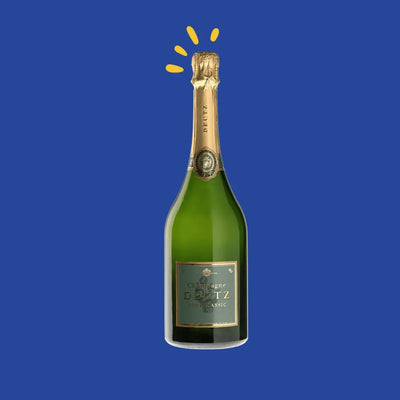
Mistake 2: the narrow flute and the coupe
The flute was designed to show off the bubbles, not to smell the wine. Its narrow neck concentrates the carbon dioxide right under the nose, which saturates the sense of smell and masks the aromas. The coupe does the opposite: its wide surface disperses the effervescence in a few minutes and the wine becomes flat.
The right glass is a tulip glass of 25 to 30 cl, filled to one-third, or about 10 to 12 cl. It offers enough volume for the aromas to gather and enough height to retain the effervescence. A slightly narrow white wine glass also works very well, much better than a 15 cl flute.
Two details that change the taste
Never rinse glasses with improperly rinsed dishwashing detergent: soap residue breaks down the foam. A rinse with hot water and drying with a lint-free cloth is enough. And pour in two steps: a little at the bottom, wait for the foam to settle, then top up to one-third. You will avoid spills and preserve the carbonation.
Mistake 3: popping the cork
A bottle of champagne contains 5 to 6 bars of pressure, about three times that of a car tire. A released cork travels at over 40 km/h, which is enough to injure an eye or break a ceiling light. And in the process, the bottle suddenly loses part of its effervescence.
The right sequence consists of four steps. Remove the foil, keep your thumb on the cork while unscrewing the cage, tilt the bottle at 45 degrees, then turn the bottle, not the cork, while holding it. The sound should be a sigh, not a bang. If the cork resists, a cage pliers or a cloth for a better grip is enough; there is no need to force it by pulling straight.
Mistake 4: keeping the same brut from start to finish
A brut, dosed at less than 12 g/l of sugar, works from the aperitif to the main course. On a dessert, it falls short. The sugar from the Yule log or pastry cream overwhelms the little sugar in the wine, and the champagne tastes acidic and short. It is the most unpleasant contrast of the evening, and the easiest to avoid.
The basic rule of sweet pairings: the wine must be at least as sweet as the dessert. A demi-sec, dosed between 32 and 50 g/l, fills this role. A dry champagne, between 17 and 32 g/l, is suitable for a lightly sweetened dessert or foie gras.
Deutz Brut Classic Deutz, from €42.50
A brut from Aÿ made with three grape varieties in nearly equal proportions, with a measured dosage and several years in the cellar. Its clean palate and well-integrated acidity make it a reliable champagne for aperitifs, seafood starters, and the main course. It is the type of bottle to buy several of to last through the first half of the meal. For those who want a reliable benchmark without making a mistake.
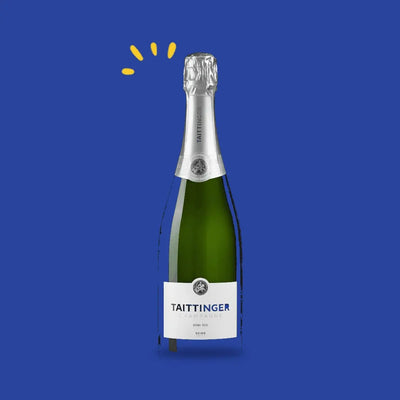
Taittinger Demi-Sec Taittinger, from €49.90
Dosed in the demi-sec range, between 32 and 50 g/l, it provides the sugar needed to stand up to a Yule log, fruit tart, or entremets. The house's Chardonnay structure prevents a syrupy effect and retains freshness on the finish. Serve it at 8 to 10°C, in the same tulip glass as the rest of the meal. For the half-hour of dessert, half a bottle for two guests is enough.
Mistake 5: the false storage remedies
A spoon in the neck preserves nothing. The gas escapes through the surface of the liquid, and a metal utensil suspended above it changes nothing: several blind tests conducted by wine professionals have confirmed that the bottle degasses at the same rate with or without a spoon.
What works: a hermetic champagne stopper, spring-loaded or screw-top, and immediately returning the bottle to the cold. An opened bottle will thus last 24 to 48 hours with still decent effervescence. Beyond that, the wine remains drinkable but becomes flat, and it is better to reserve it for cooking, deglazing, or a sabayon.
Storage before the party
Two mistakes recur every December. The first: storing the bottles upright in the refrigerator door for three weeks. The air in the refrigerator is dry, the cork contracts, the compressor vibrations fatigue the wine, and refrigerator odors eventually seep in. The second: leaving the bottles near a heat source or in direct light. Lay them down, away from light, between 10 and 14°C, and only chill them 3 to 4 hours before serving. Our bottles are stored in climate-controlled warehouses with controlled humidity before shipping from France, then shipped in carefully packed parcels, with good protection to guarantee the condition of your bottles.
Mistake 6: miscalculating quantities
A 75 cl bottle yields 6 glasses of 12.5 cl. Many tables plan one bottle for four people, which corresponds to only one and a half glasses per person: far too little as soon as champagne also accompanies the starter.
| Guests | Aperitif only | Aperitif and starter | Dessert (demi-sec) |
|---|---|---|---|
| 4 people | 1 bottle | 2 bottles | 1 half-bottle |
| 6 people | 2 bottles | 3 bottles | 1 bottle |
| 10 people | 3 bottles | 4 to 5 bottles | 1 to 2 bottles |
One last often overlooked point: plan for a backup bottle of the same reference. If a cuvée is popular and the table asks for more, it is better to continue with the same wine than to change styles in the middle of the evening.
Learn more
- Which champagne for the December 24 aperitif
- Champagne and a vegetarian Christmas: the best pairings
- Champagne and a cheese board
Frequently asked questions
At what temperature should champagne be served on New Year's Eve?
Between 8 and 10°C for a young blanc de blancs, 10 to 11°C for a non-vintage brut, 12 to 14°C for a vintage or prestige cuvée. A refrigerator set at 4°C makes the wine too cold: take the bottle out 10 to 15 minutes before serving.
How long does an opened champagne last?
24 to 48 hours with a hermetic champagne stopper and an immediate return to the cold. Without a suitable stopper, the effervescence disappears in a few hours. A spoon in the neck has no demonstrated effect.
Should you really give up the flute?
Yes, if you want to taste a champagne. The narrow flute concentrates the gas under the nose and masks the aromas. A tulip glass of 25 to 30 cl filled to one-third provides much more aromatic clarity.
Can you serve a brut with dessert?
Only if the dessert is lightly sweetened, such as a citrus salad. On a Yule log or entremets, the sugar from the dessert makes the brut taste acidic. Switch to a demi-sec, dosed between 32 and 50 g/l.
A New Year's Eve without a false note
Bruts for the aperitif and meal, demi-secs for dessert: the complete selection is all in one place.
View all champagnesMore than 1,000 customers have already trusted us, with a rating of 4.9 out of 5. Shipping from France, payment in installments available with Klarna.
The prices and availability mentioned are those observed at the time of publication and may change. Excessive alcohol consumption is dangerous to health; consume in moderation. Sale prohibited to minors.