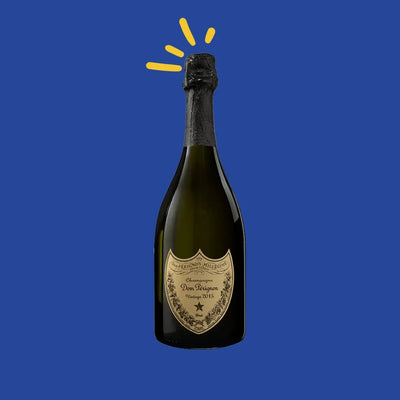
Dom Pérignon is one of the most prestigious names in Champagne. Associated with luxury, ageing and great vintages, this cuvée has a unique identity rooted in the story of Pierre Pérignon, the Abbey of Hautvillers and an exacting approach to blending.
Unlike many champagnes, Dom Pérignon only produces vintage cuvées. Each bottle is therefore tied to a specific year, with its own weather, balance and ageing potential.
This philosophy partly explains why some vintages are now highly sought after by enthusiasts and collectors.
Pierre Pérignon and Hautvillers
The history of Dom Pérignon is directly linked to Pierre Pérignon, a Benedictine monk at the Abbey of Hautvillers in the 17th century.
He worked notably on grape selection, winemaking methods and blending.
Even if he did not simply invent champagne, his role in improving wine quality was essential.
This pursuit of precision has become one of the symbols of the house.
Even today, Hautvillers remains an iconic place in the history of Dom Pérignon.
Our pick for this article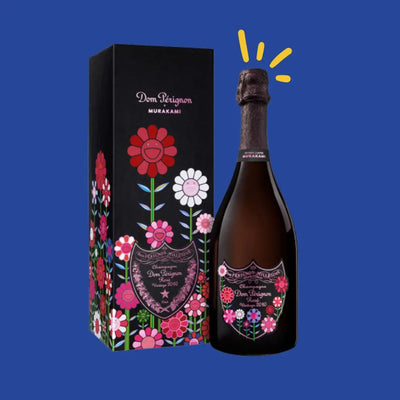
A vintage-only champagne
Dom Pérignon stands out above all for its exclusively vintage production.
Each cuvée is made from grapes harvested in a single year.
The house therefore does not try to reproduce exactly the same style with each release.
Instead, it seeks to express the character of the vintage.
Some years bring more richness, others more tension or freshness.
When grape quality is not judged sufficient, the house can choose not to declare a vintage.
This selectivity directly contributes to rarity.
Chardonnay and Pinot Noir at the heart of the blend
The blend relies mainly on two grapes: Chardonnay and Pinot Noir.
Chardonnay often brings finesse, freshness and elegance.
Pinot Noir brings more structure, depth and power.
The proportions change with each vintage.
The aim is to create a balance capable of evolving for many years.
This complementarity between the two grapes is one of Dom Pérignon's main signatures.
Ageing as a real tool
Ageing is essential to the house philosophy.
Bottles spend several years in the cellar before release.
During this time, the champagne gains complexity.
The aromas evolve gradually and can develop notes of brioche, dried fruit, spice or toast.
The texture also becomes more harmonious.
This ageing potential explains why some older vintages are particularly sought after.
Plénitude and the P2 and P3 cuvées
Dom Pérignon uses the term Plénitude to describe different stages of maturation.
A first version is released after several years of ageing.
Some bottles then stay longer in the cellar.
P2 corresponds to a second phase of evolution.
The champagne then develops greater intensity and complexity.
P3 represents an even longer maturation.
These bottles are much rarer and particularly attract collectors.
Why do some vintages gain value?
The value of a Dom Pérignon depends on several factors.
The vintage obviously plays an important role.
A year recognised for its quality can attract more buyers.
Rarity also comes into play.
Once a vintage is released, available quantities gradually decrease as bottles are drunk.
If demand remains strong, this falling supply can support prices on the secondary market.
Prestige drives demand
Dom Pérignon also enjoys considerable international renown.
This recognition fuels demand among enthusiasts, restaurants, collectors and international markets.
Its prestige rests on a combination of elements: history, know-how, vintage selection, ageing and rarity.
It is this consistency that has made Dom Pérignon a world reference.
The importance of provenance
For an older bottle, provenance is essential.
Proper storage can directly influence its value.
A stable temperature, low exposure to light and quality storage preserve the champagne.
The condition of the label, capsule and gift box can also matter to a collector.
A bottle with a clear storage history generally inspires more confidence.
Dom Pérignon and investment
Some vintages can interest investors because of their rarity and resale potential.
But prestige alone does not guarantee an increase in value.
The entry price, demand, liquidity and storage must all be analysed.
A bottle that is very expensive at purchase may offer more limited potential.
Investing in Dom Pérignon should therefore remain selective and long-term.
An icon between tasting and collecting
Dom Pérignon ultimately holds a unique place in the world of champagne.
Its history linked to Pierre Pérignon and Hautvillers, its blend of Chardonnay and Pinot Noir, its exclusively vintage production and its long ageing build a strong identity.
For enthusiasts, each vintage offers a different expression.
For collectors, rarity and Plénitude make certain bottles particularly sought after.
And for investors, Dom Pérignon perfectly shows how history, prestige, quality and rarity can contribute to the value of a great champagne over time.