
For festive poultry, you need a winey champagne: a brut with a Pinot Noir majority or a vintage brut aged for at least 36 months. Serve between 11 and 12°C in a white wine glass, not a flute.
Why an aperitif wine can't stand up to a main course
The champagne that works as an aperitif is light, taut, and served very chilled. The one that stands up to a stuffed capon must have three different qualities: body, length, and age-related aromas. A main course brings fat, a sauce, a stuffing, and sometimes 20 minutes of presence on the palate. A light brut disappears at the second bite and only plays the role of a palate cleanser.
The main lever is the time spent on the lees. A non-vintage brut must legally age for a minimum of 15 months, including 12 on the lees. A vintage must age for at least 36 months, and many houses go well beyond that. This aging transforms the wine: the autolysis of the yeast brings notes of brioche, roasted hazelnut, and fresh butter, and above all, a denser texture. These are the notes that dialogue with roasted skin and chestnut stuffing, where a young wine has only lemon and white flowers to offer.
The second lever is the grape variety. Pinot Noir and Pinot Meunier produce wines that are fleshier, broader in the middle of the palate than Chardonnay. On meat, this breadth counts more than the finesse of the bubbles. A blanc de noirs or a Pinot-majority blend is almost always more convincing than a young blanc de blancs.
Our pick for this article
Four poultry dishes, four nuances
| Poultry | Average weight | Guests | Flesh | Recommended champagne |
|---|---|---|---|---|
| Capon | 3 to 4 kg | 8 to 10 | Fat, melting, gamey | Vintage brut |
| Turkey | 4 to 5 kg | 10 to 12 | Lean, white, slightly dry | Mature brut |
| Quail | 1.2 to 1.4 kg | 3 to 4 | Gamey, slightly wild | Blanc de noirs, vintage |
| Pullet | 1.8 to 2 kg | 5 to 6 | Fine and fat at the same time | Vintage, aged blanc de blancs |
| Goose | 4 to 5 kg | 8 to 10 | Very fat, pronounced taste | Only winey vintage |
Two cases require special attention. Turkey, because its lean flesh absorbs the acidity of the wine and can make a young brut taste metallic: a wine with a little age and roundness is essential. Goose, because its fat is very present and you need a wine of another dimension so as not to be overwhelmed.
The stuffing and sauce decide more than the poultry
This is the point most often missed. Two identical capons, one stuffed with chestnuts and the other with truffles, do not call for the same wine. Here are the four common configurations of a Christmas table.
Chestnut and dried fruit stuffing
Sweet, slightly sugary, with notes of chestnut and dried apricot. It requires an evolved champagne, whose notes of dried fruits and pastry respond to the stuffing. A six or seven-year-old vintage brut is in the right place here.
Truffle or mushroom stuffing
Earthy and highly aromatic register. You need Pinot Noir and long aging: these wines develop notes of the forest floor that prolong the truffle instead of clashing with it. Avoid young blanc de blancs, too lemony.
Cream sauce or white wine sauce
Dairy fat calls for acidity and bubbles. A classic brut with maturity does the job, and it is the only case where an aged blanc de blancs on the lees becomes the best choice, because its tension cuts through the sauce.
Full-bodied jus, deglazed roast, reduced poultry stock
This is the most demanding configuration. A reduced jus concentrates the juices and umami, and crushes a light champagne. A winey vintage, served at 12°C in a large glass, is the minimum here.
Three bottles for a main course
Deutz Brut Millésimé 2019 Deutz, from €80.66
Coming from a single year and aged for at least 36 months, it has the density needed for a chestnut-stuffed capon or a cream-based pullet. Notes of brioche and ripe white fruits, long finish. Serve at 11 or 12°C in a white wine glass, opened 15 minutes before.
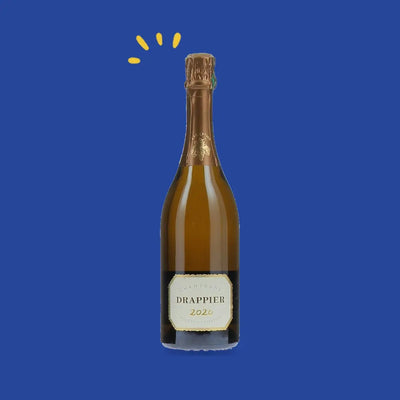
Drappier Millésime Exception 2019 Drappier, from €60.80
Pinot Noir majority from the Côte des Bar, so a winey profile and ripe fruit that stand up to a roasted quail or a truffle stuffing. The best compromise of the lot between a reasonable vintage price and the substance of a main course wine. Large glass mandatory.
Gosset Grande Réserve Brut Gosset, from €48.50
A non-vintage brut but aged well beyond the legal minimum, from a house that does not use malolactic fermentation: the acidity remains lively under a full-bodied wine flesh. It is the bottle for a turkey or poultry in cream sauce, and the most logical choice if you need to provide three or four bottles for the table.
Service: temperature, glass and quantities
For a main course, serve between 11 and 12°C, which is 3 to 4°C more than for an aperitif. Below 9°C, a vintage remains closed and you only pay for the bubbles. Take the bottle out of the refrigerator 15 to 20 minutes before serving, or remove it from the bucket as soon as it reaches 10°C: it warms up in the glass.
The glass matters as much as the temperature. A flute concentrates the gas and closes the nose. A 35 to 45 cl white wine glass, filled to a third, allows the age-related notes to open up. For a vintage of more than eight years, a Burgundy glass is not an exaggeration.
For the quantities on the main course, count 2 glasses of 12 cl per person, which is one 75 cl bottle for 3 guests. For a table of 10 at the main course, plan 3 bottles, 4 if the champagne also accompanies the starter. A 150 cl magnum covers 6 people and presents two advantages: slower aging, therefore finer bubbles, and one less bottle to open in the middle of service.
Last useful detail: keep a little at the bottom of the bottle for the end of the course. A winey champagne often reveals itself after 20 minutes in the glass, just when most guests have already finished it.
To go further
- Champagne and oysters: the right dosage changes everything
- Champagne and spicy cuisine
- How much to spend on a Christmas champagne
Frequently asked questions
Can a blanc de blancs accompany a capon?
Only if it is aged for a long time and served at 12°C, and especially if the poultry is in cream sauce. On a capon roasted with jus or stuffed with chestnuts, a Pinot Noir-majority blend will be significantly more convincing.
Is a vintage necessary for a main course?
It is not mandatory, but maturity is needed. A long-aged non-vintage brut does the job very well. The vintage, aged for at least 36 months, simply brings more density and a longer finish.
At what temperature should champagne be served with the main course?
Between 11 and 12°C, compared to 8 to 10°C for an aperitif. A wine that is too cold remains closed and expresses neither its age-related notes nor its texture, that is to say everything that justifies opening it with poultry.
How many bottles for 10 people at the main course?
Three 75 cl bottles, based on 2 glasses of 12 cl per person. Count a fourth bottle if the champagne also accompanies the starter, or a 150 cl magnum for 6 guests.
A main course requires a real wine
Vintages and winey bruts selected for the Christmas table, shipped from France in a carefully packaged parcel.
See all champagnesMore than +1,000 customers have already trusted us, with a rating of 4.9 out of 5. Shipping from France, payment in installments possible with Klarna.
The prices and availability mentioned are those observed at the date of publication and may change. Alcohol abuse is dangerous for health, consume in moderation. Sale prohibited to minors.