

With smoked salmon, serve a low-dosage champagne, between 0 and 8 grams of sugar per litre, at 10-12 degrees. A rosé de saignée from Pinot Noir absorbs the fat and smoke. A Blanc de Blancs from Chardonnay provides the sharpness that refreshes the palate between two bites.
What smoked salmon does to a champagne
A slice of smoked salmon brings together three elements in the same bite that are rarely found together. Salt first: dry salting removes between 2 and 4% of the flesh's weight and leaves a salinity that immediately amplifies the perception of the wine's acidity. Fat next: farmed salmon from Scotland, Ireland or Norway contains between 10 and 15 grams of lipids per 100 grams of flesh, and this fat coats the palate after two or three bites. Smoke finally, loaded with phenolic compounds such as guaiacol and syringol, which persists long after swallowing.
Result: a champagne dosed at 12 grams of sugar per litre appears sweet, almost pasty, from the second slice. Conversely, a lean extra-brut, vinified in a single year and with little aging, becomes metallic and sharp against the salt. The pairing therefore cannot be adjusted on a single slider. It requires a low dosage and sufficient substance to stand up to the fat.
This is why a brut assemblage aged four years on the lees often succeeds better than a two-year nature brut sold for more. The autolysis of the yeast during aging on the lees brings volume, notes of brioche and hazelnut, and it is exactly this volume that is missing when facing fatty flesh.
Our pick for this article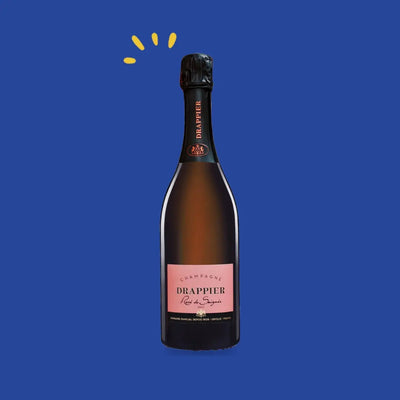
Dosage, the first selection criterion
The appellation's specifications fix numbered categories, useful for deciding in a store or in front of a menu. Brut nature or non-dosage: less than 3 grams of sugar per litre, without the addition of liqueur. Extra-brut: from 0 to 6 grams. Brut: up to 12 grams. Extra-dry: from 12 to 17 grams. Dry: from 17 to 32 grams. Demi-sec: from 32 to 50 grams. Sweet: more than 50 grams.
For smoked salmon, aim for the 0 to 8 grams range. Beyond 10 grams, the residual sugar and salt contradict each other, the smoke takes center stage and the wine loses its palate-cleansing function. The dosage is almost always indicated on the back of the label or on the house's technical sheet: take ten seconds to check it, it is the most valuable information on the entire label.
Second useful adjustment: the proportion of Chardonnay. A wine dominated by Chardonnay gives malic and lemon acidity, very effective on light smoke. A wine dominated by Pinot Noir gives flesh and a broader structure, preferable as soon as the smoke intensifies or crème fraîche enters the plate.
Cold smoking, hot smoking, gravlax: three distinct pairings
The preparation method changes the texture of the flesh and the aromatic intensity much more than the origin of the fish. Cold-smoked salmon and hot-smoked salmon do not call for the same bottle.
| Preparation | Smoking temperature | Texture and taste | Recommended champagne | Service |
|---|---|---|---|---|
| Classic cold smoking | 20 to 28 degrees | Soft flesh, medium smoke, clean salt | Blanc de Blancs or low-dosage brut | 10 degrees |
| Hot smoking | 70 to 80 degrees | Cooked flesh, flaky, intense smoke | Rosé de saignée, Pinot Noir dominant | 11 to 12 degrees |
| Marinated gravlax, no smoking | None | Dill, sugar, lemon, firm flesh | Vivid extra-brut with Chardonnay dominance | 9 to 10 degrees |
| Beechwood smoking | 22 to 26 degrees | Soft smoke, discreet woodiness | Brut assemblage with reserve wines | 10 to 11 degrees |
| Peat or whisky smoking | 20 to 25 degrees | Powerful phenolic smoke, iodine | Winey rosé or mature Pinot Noir champagne | 12 degrees |
Remember the logic: the more pronounced the smoke, the more flesh and color you need in the glass. The fresher and more lemon-forward the preparation, the more the tense Chardonnay takes the lead.
Four champagnes that stand up to smoked salmon
Drappier Rosé de Saignée Drappier, from €48.30
A rosé obtained by saignée, that is, by the short maceration of black grapes then draining the juice, and not by the addition of red wine. The color is deep, the red fruit frank, the substance broad. It is the safest choice for hot-smoked salmon or served with crème fraîche. At the table, it also handles buttered blinis without faltering.
Billecart-Salmon Rosé Billecart-Salmon, from €75
The opposite of the previous one: a very pale color, almost onion skin, and an approach based on finesse rather than demonstrative fruit. The house in Mareuil-sur-Aÿ works with long fermentations at low temperatures, which gives a very fine bubble. Serve it over a delicate cold smoke, as an appetizer, when you want a wine that accompanies without overpowering.
Gosset Blanc de Blancs Gosset, from €70
Gosset does not practice malolactic fermentation: the malic acid is preserved, which gives a straight and lemon-forward acidity that is very recognizable. On a dill gravlax or a lightly salted smoked salmon, it is the knife that cuts through the fat. For those who like tense champagnes and want a single wine from the beginning to the end of the appetizer.
Deutz Brut Rosé Deutz, from €73.82
The house in Aÿ builds its rosés around Pinot Noir, with a clean mouthfeel and a restrained dosage. More winey than a pale assemblage rosé, less demonstrative than a rosé de saignée. The ideal compromise if your platter mixes smoked salmon, smoked trout and fish rillettes, because it works with all three.
Service, quantities and order at the table
Count 80 to 100 grams of smoked salmon per person as an appetizer, 120 to 150 grams if the fish is the main course. A 75 centiliter bottle fills six 12.5 centiliter glasses, or eight small flutes. A 150 centiliter magnum fills twelve glasses and ages better, because the ratio between the volume of wine and the surface of contact with the air under the cork is more favorable.
For the temperature, forget the freezer. Thirty minutes in a bucket half filled with water and half with ice brings a bottle at 12 degrees of ambient temperature to about 8 degrees. The wine then naturally rises to 10 or 11 degrees in the glass, which is the right zone. Taken out of a refrigerator set at 4 degrees, a champagne is anesthetized: you perceive neither the dosage nor the aromas, only the bubble and the acidity.
On the glassware side, prefer a tulip glass wide enough to a narrow flute. The flute preserves the cordon of bubbles but crushes the aromas. Open the bottle fifteen minutes before serving and tilt the glass to limit the foam. No carafe: you would lose the effervescence without aromatic gain.
If your New Year's Eve dinner goes from oysters to smoked salmon, the same blanc de blancs can cover both services. If you go from smoked salmon to roasted poultry, plan a second more winey bottle rather than stretching the first.
The mistakes that break the pairing
Serving too cold, as we have seen, is the most frequent and easiest mistake to correct. Then come three classic traps.
Excess lemon. A drizzle is enough. Beyond that, the citric acid superimposes itself on the acidity of the wine and the pairing becomes aggressive. If you like lemon, choose a champagne more dosed in the high range, around 8 grams, to compensate.
Double fat. Buttered blinis plus thick crème fraîche at 30% fat, that is a lot for a light extra-brut. In this case, switch to a rosé de saignée or replace the cream with a less rich whipped fresh cheese.
The demi-sec. With 32 to 50 grams of sugar per litre, it is built for desserts. On smoked salmon, the salty-sweet contrast becomes dissonant and the smoke takes on a bitter turn.
Last point, less known: a very evolved vintage, with oxidative notes of nuts and baked apple, does not handle peat smoke well. The two bitternesses add up. Keep these old bottles for poultry or a hard cheese.
To go further
- Champagne and oysters: the right dosage changes everything
- Champagne and caviar: what you really need to serve
- Giving a champagne for less than €60
Frequently asked questions
What champagne to serve with smoked salmon and blinis?
Buttered blinis and crème fraîche add fat. Choose a rosé de saignée from Pinot Noir or a brut assemblage dosed between 6 and 8 grams per litre, which will have enough substance to hold the whole together.
Is a rosé champagne really suitable for smoked salmon?
Yes, provided it is low-dosage. Pinot Noir brings a flesh that absorbs the fat and smoke, where a very tense white can appear lean on an intense smoke.
At what temperature to serve champagne with smoked salmon?
Between 10 and 12 degrees in the glass. Thirty minutes in a bucket half water half ice is enough. At 4 degrees, taken out of the refrigerator, the wine is mute.
How many bottles to plan for eight people?
A 75 centiliter bottle serves six 12.5 centiliter glasses. For eight guests and two glasses each, count three bottles, or a magnum plus a bottle.
A champagne that really stands up to smoked salmon
Rosé de saignée, tense blanc de blancs and low-dosage bruts, selected for festive appetizers.
See all champagnesMore than +1,000 customers have already trusted us, with a rating of 4.9 out of 5. Shipping from France, payment in installments possible with Klarna.
The prices and availabilities mentioned are those observed at the date of publication and may change. The abuse of alcohol is dangerous for health, consume in moderation. Sale prohibited to minors.