




In just thirty years, Japanese whisky has gone from an exotic curiosity to a global benchmark, with prices sometimes exceeding those of the finest Scotch whiskies.
Here is how it happened. To see what is available, browse our whiskies.
A century of history
The story begins in the 1920s, when a Japanese entrepreneur decided to produce whisky in his country and partnered with a young chemist who had studied distillation in Scotland.
The latter had worked in several distilleries there and brought back detailed notebooks, which provided the technical foundation for the project.
The first Japanese distillery was thus founded in the 1920s near Kyoto, on a site chosen for the quality of its water and its humid climate, which is favourable to ageing.
The two men later parted ways, with the latter founding his own company in the north of the country. The two groups that emerged from this venture still dominate Japanese production today.
Our pick for this article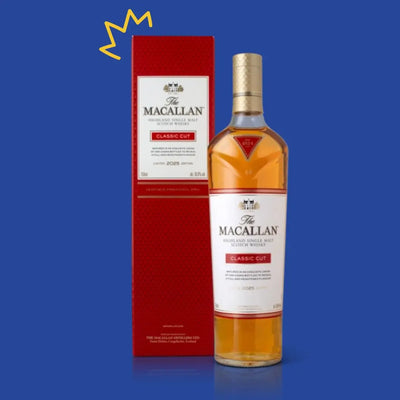
What sets Japanese whisky apart
The independence of each group
This is the most fundamental difference from Scotland.
In Scotland, distilleries have always exchanged casks with one another. A blender therefore has access to the production of dozens of distilleries to create their blends.
In Japan, these exchanges do not exist. Each company must produce all the variety it needs itself.
As a result, Japanese distilleries are designed to produce multiple styles. Different-shaped stills, various sizes, multiple yeast strains, different levels of peat, and numerous types of casks. A single distillery can produce several dozen distinct distillates.
The pursuit of harmony
This is a cultural characteristic that is reflected in the glass. Where some Scotch whiskies embrace bold, contrasting characters, Japanese whisky generally seeks balance and fluidity.
Nothing stands out; everything flows together. This is what makes them very approachable whiskies, sometimes criticised by thrill-seekers for their restraint.
Mizunara oak
A Japanese oak used for cooperage since the mid-20th century, initially out of necessity due to a lack of access to European and American casks.
It is a very difficult wood: porous, brittle, requiring decades of drying, and prone to leaking. But it imparts unique aromas of sandalwood, incense, and coconut, which take years to emerge.
The climate
Japan experiences much greater seasonal temperature fluctuations than Scotland. Whisky ages faster there, and the wood works more.
A twelve-year-old Japanese whisky can therefore show a maturity comparable to that of an older Scotch. In return, annual evaporation is greater, which reduces volumes.
The shortage
This is the central issue in the current market, and it deserves an explanation.
In the 1990s and 2000s, Japanese whisky sold poorly, including in Japan, where consumption had fallen sharply. Producers reduced their production accordingly.
Then, from the 2010s onwards, international awards and global enthusiasm caused demand to explode.
The problem: aged whisky cannot be made on demand. The available stocks reflected production decisions made fifteen or twenty years earlier, in a completely different context.
The result: many age-statement expressions were withdrawn, non-age-statement versions were developed, and prices soared on the secondary market.
A recent clarification
Another important point: until recently, Japanese regulations were very permissive regarding the designation of Japanese whisky. Products containing imported spirits could be marketed as such.
Stricter rules have since been adopted by the industry, notably requiring that production and ageing take place in Japan. This is a major step forward for the buyer.
The main styles
- Blends: mixtures of malt and grain whiskies, seeking harmony. See our Hibiki.
- Single malts: expressions from a single distillery, with highly varied profiles depending on the site.
- Peated whiskies: some Japanese distilleries produce heavily peated expressions.
- Special finishes: mizunara, cherry, Japanese wine casks, which create profiles found nowhere else.
How to enjoy it
- Tulip glass, as the aromas are generally delicate.
- Room temperature for a careful tasting.
- The highball: whisky and sparkling water, very cold, over ice. This is the dominant way of drinking whisky in Japan, and it is by no means inferior: a good whisky reveals different aromas this way.
- Mizuwari: whisky heavily diluted with water, served with a meal. Another traditional way of drinking.
Frequently asked questions
Is Japanese whisky worth the price?
Current prices reflect a genuine shortage rather than an objective difference in quality compared to the finest Scotch whiskies. For the same budget, a good Scotch single malt often offers more.
How can I tell if a whisky is truly Japanese?
Since stricter rules were adopted, reputable producers state this clearly. Be wary of very cheap bottles with a Japanese aesthetic.
Why are there so few age statements?
Because aged stocks are scarce. A non-age-statement expression allows older whiskies to be blended with younger ones, maintaining production.
Where to start?
A quality blend, which offers the signature of Japanese harmony at a more reasonable price than a rare single malt.
Order your Japanese whisky from Le Caveau des Pépites
We work directly with producers to guarantee the origin and traceability of every bottle. Stored in our climate-controlled, humidity-regulated warehouses in France, carefully packed by hand, and shipped from mainland France via tracked and insured transport. Free delivery on orders over 300 euros. Customer service available seven days a week, in French and English.
To learn more: the House of Hibiki and our guide to peated whisky.





