Short answer: three options work. A Sauternes for the classic complementary pairing, an extra-brut or blanc de blancs champagne for the contrasting pairing, or a great dry white from Burgundy or Alsace for a modern pairing. Avoid tannic red wine.
To see our selection, browse our champagnes and our white wines.
The problem posed by foie gras
Foie gras is very fatty, very dense, and coats the palate.
A wine must therefore do one of two things:
- Complement the richness with sweetness and roundness: this is the complementary pairing.
- Cut through the richness with acidity or bubbles: this is the contrasting pairing.
Both work, but they offer completely different experiences.
Our pick for this article
Option 1: Sauternes, the classic pairing
The sweetness of the wine and the richness of the foie gras complement each other, while the acidity of the sweet wine prevents the combination from becoming cloying.
Why it works
A great Sauternes is not just sweet: it has very high acidity, inherited from the noble rot process. It is this combination of sweetness and acidity that makes the pairing work.
See our Sauternes guide and our article on Château d'Yquem.
The downside
Two rich products combined can become overwhelming after a few bites, especially as the first course of a long meal.
More affordable alternatives
A sweet Jurançon, Coteaux du Layon, Monbazillac, or Alsatian Vendanges Tardives offers the same type of pairing at a much lower price.
Option 2: Champagne, the contrasting pairing
This is the option increasingly favored by sommeliers.
Why it works
- The bubbles cleanse the palate between each bite.
- The acidity cuts through the richness without adding richness.
- The saline finish prolongs the pairing.
- It keeps things light at the start of a festive meal.
Choose a brut, extra-brut, or blanc de blancs. Avoid demi-sec, which would approach the sweet pairing without having the same depth.
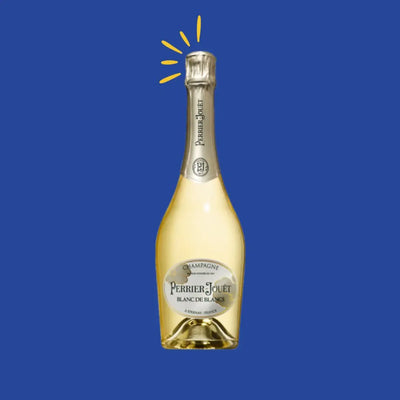
See the Champagne Salon 2013 and the Perrier-Jouët Blanc de Blancs.
Option 3: a great dry white
The most modern option, and often the most successful at the table.
- A Meursault or Chassagne-Montrachet: the richness of the wine complements the richness of the dish, while the acidity holds it all together.
- A dry Grand Cru Alsatian Riesling: the tension clearly cuts through the richness.
- An Alsatian Pinot Gris: somewhere in between, with a hint of sweetness.
- A white Châteauneuf-du-Pape: full-bodied and rich, an original and highly successful pairing. See the Clos La Roquète blanc 2023.
Adapt to the preparation
- Plain semi-cooked foie gras: all three options work.
- With chutney or fig confit: the sweet wine takes the lead, as it pairs with the sweetness.
- Pan-fried and hot: opt for a full-bodied dry white or a supple, low-tannin red wine.
- As a terrine with gingerbread: sweet wine without hesitation.
- On a brioche toast: Champagne, for lightness.
What to avoid
- A tannic red: tannin and richness create a metallic and drying sensation.
- A demi-sec Champagne: too sweet without the acidity of a sweet wine.
- A bright, lean white: a Muscadet or simple Chablis will seem hollow next to foie gras.
- Serving the sweet wine ice-cold: at 6 degrees, only the sweetness will come through.
Serving temperatures
- Sauternes and sweet wines: 9 to 11 degrees. No colder, or only the sweetness will stand out.
- Champagne: 10 to 12 degrees.
- Great dry white: 12 to 13 degrees.
- The foie gras itself: take it out of the refrigerator fifteen minutes before serving.
Frequently asked questions
Sauternes or Champagne?
Sauternes for a traditional and indulgent pairing, Champagne to keep things light at the start of a festive meal.
Is red wine really impossible?
With pan-fried foie gras, a supple, low-tannin red can work. Avoid it with semi-cooked foie gras.
Can you keep a Sauternes open?
Yes, it can be kept in the refrigerator for a week without any problem. The sugar protects it.
What budget should you plan for?
A Jurançon or Monbazillac offers eighty percent of the pairing of a great Sauternes for a fraction of the price.
Ordering from Le Caveau des Pépites
We work directly with producers to guarantee the origin and traceability of every bottle. Stored in our climate-controlled, humidity-regulated warehouses in France, hand-packed and wrapped, and shipped from mainland France via tracked and insured transport. Free delivery on orders over 300 euros. Customer service available seven days a week, in French and English.
For more ideas: our gift ideas.