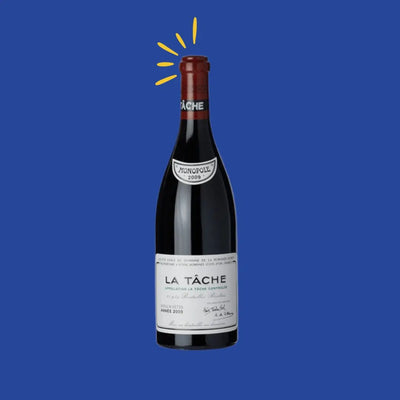
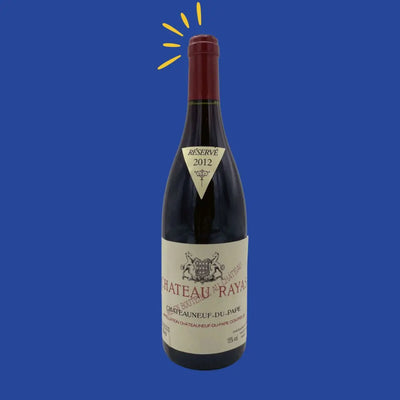
When discovering the world of wine, one idea often comes up: the more expensive a bottle, the better it is. This belief is understandable. In many sectors, price is associated with quality. Yet in the wine world, reality is far more nuanced.
Some bottles cost several thousand euros while others, much more affordable, offer an exceptional tasting experience. So how can these gaps be explained? What really distinguishes a great wine from a merely expensive one?
To answer this question, you need to understand the real criteria that define excellence.
A wine's price does not always reflect its quality
Contrary to what one might think, the price of a bottle is not determined solely by its level of quality.
Many factors come into play:
- The estate's reputation
- The rarity of production
- Global demand
- Speculation
- The vineyard's history
- Critics' scores
- Fashion
Some wines enjoy a reputation built over several generations. Their prestige attracts collectors and investors from all over the world, which helps drive prices up.
This does not mean these wines are not excellent. However, their market value does not rest exclusively on how they taste.
Our pick for this article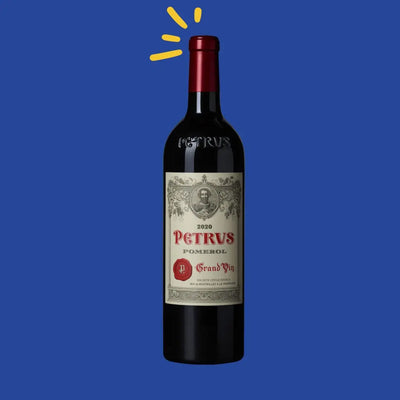
What is a great wine?
Before talking about price, you need to understand what really defines a great wine.
A great wine is above all a wine able to convey emotion while showing an exceptional level of quality.
This excellence rests on several fundamental pillars:
- Balance
- Complexity
- Length on the palate
- Expression of terroir
- Structure
- Ageing potential
These elements matter far more than the figure on the label.
Terroir: the soul of wine
Terroir is one of the foundations of winegrowing.
It encompasses:
- Soil
- Subsoil
- Climate
- Exposure
- Altitude
- Weather conditions
A great wine faithfully reflects its terroir. It has its own identity, found nowhere else.
It is precisely this singularity that makes the difference between a standardised wine and a truly exceptional one.
The world's greatest vineyards are renowned for their ability to express their terroir with precision and authenticity.
Balance: the invisible quality
During a tasting, some wines immediately impress with their power. Yet power alone is not enough.
Balance is often considered the number one criterion by professionals.
A great wine shows perfect harmony between:
- Tannins
- Acidity
- Alcohol
- Aromas
- Fruit
When all these elements work together without any one dominating, the wine seems natural and elegant.
This sense of harmony is often harder to achieve than mere concentration.
Aromatic complexity
Complexity is another marker of quality.
An ordinary wine generally offers a few easily identifiable aromas.
A great wine, on the other hand, keeps evolving.
On the nose and then on the palate, it successively reveals:
- Fresh fruit
- Ripe fruit
- Floral notes
- Spices
- Touches of oak
- Mineral aromas
- Tertiary notes from ageing
Each tasting reveals new facets.
This aromatic richness contributes strongly to the reputation of great wines.
Length on the palate
Length is the persistence of flavours after swallowing the wine.
The longer the aromas linger, the higher the perceived quality generally is.
A simple wine fades quickly.
A great wine keeps expressing itself for several seconds, sometimes several tens of seconds after tasting.
This aromatic persistence is one of the best indicators of quality.
Structure: the wine's backbone
Structure can be compared to the frame of a building.
It rests mainly on:
- Tannins
- Acidity
- Concentration
- Alcohol
A solid structure allows the wine to keep its balance over time.
The greatest wines have a structure strong enough to evolve for many years.
This is what explains their remarkable ageing potential.
Ageing potential
A great wine does not always reveal its full potential in its youth.
Some bottles need several years to reach their peak.
During this evolution, the aromas gain complexity, the tannins soften and the whole becomes more harmonious.
Ageing potential depends notably on:
- The grape variety
- The terroir
- The vintage
- The structure
- The acidity
This ability to age is one of the signatures of great wines.
The role of the vintage
The vintage directly influences the quality of a bottle.
Each year brings different weather conditions.
A hot season will favour certain characteristics, while a cooler year will develop other aromatic profiles.
Great winemakers know how to adapt their work to the particularities of each vintage to preserve the quality of their wines.
The vintage thus contributes to the wine's identity and singularity.
Why do some bottles reach record prices?
Some bottles sell for several thousand, even several tens of thousands of euros.
In most cases, these high prices are explained by:
- Very limited production
- Strong international demand
- A historic reputation
- Growing rarity
- Collector interest
- Investor interest
Beyond a certain level, price is often linked more to rarity than to pure quality.
Two great wines can offer comparable experiences while their prices differ considerably.
The prestige trap
Many consumers automatically associate prestige with excellence.
Yet some lesser-known estates produce remarkable wines able to rival prestigious references.
Marketing, history and reputation sometimes play as important a role as taste.
That is why experienced enthusiasts seek above all to assess the wine itself rather than its image.
Emotion: the ultimate criterion
In the end, what really distinguishes a great wine is neither its price nor its prestige.
It is the emotion it creates.
An exceptional wine leaves a lasting impression.
It tells a story.
It reflects a winemaker's work, a terroir's identity and the unique characteristics of a vintage.
This emotion cannot be measured by a score or a price.
It is experienced in the glass.
Conclusion
The most expensive wine is not necessarily the best.
A great wine is defined above all by its balance, aromatic complexity, length, structure, ageing potential and ability to express its terroir.
Price can reflect rarity, reputation or demand, but on its own it is never proof of excellence.
Next time you come across a prestigious bottle, remember that a truly exceptional wine is not just its label. What really counts is the experience it offers, the emotions it conveys and the story it tells in every glass.