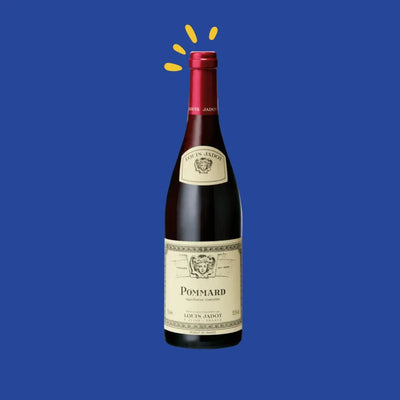
Pinot Noir is one of the most famous and oldest grape varieties in French wine heritage. Closely linked to Burgundy, it produces some of the most prestigious red wines in the world. Its history, natural mutations and ability to express terroir make it a unique variety, sought after by winemakers and fine wine lovers alike.
The exact origin of Pinot Noir is hard to establish with absolute certainty. Burgundy is nevertheless considered its main historical and cultural cradle. This ancient grape is thought to have been grown since Gallo-Roman times, long before today's appellations and Grands Crus structured the Burgundy vineyard.
Where does Pinot Noir come from?
Pinot Noir is deeply associated with Burgundy. The first historical traces of its cultivation appear in this region, where it gradually became the main grape for red wines.
Its presence may date back to Antiquity. In Gallo-Roman times, vines were already grown in several areas corresponding to today's Burgundy. It remains difficult, however, to prove that the varieties mentioned in ancient texts were exactly the modern Pinot Noir.
In the Middle Ages, monks and vineyard owners helped develop Burgundian winegrowing. They observed the differences between plots, soils and exposures. This growing knowledge of terroir made it possible to select the areas best suited to Pinot Noir.
The grape thus became inseparable from the Côte de Nuits, the Côte de Beaune and the great red wines of Burgundy.
Our pick for this article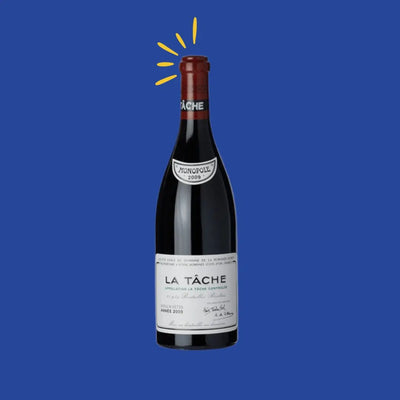
Why is it called Pinot Noir?
The name Pinot is thought to come from the shape of its bunches. These are generally small, compact and tight, resembling a pine cone.
The word "Noir" refers to the dark colour of the grape skins. The juice, however, remains clear, as with many red grapes. The wine's colour comes from maceration, when the skins stay in contact with the juice.
This family also includes Pinot Gris and Pinot Blanc. These grapes are not entirely independent of Pinot Noir: they result from natural mutations mainly affecting berry colour.
Pinot Noir, Pinot Gris and Pinot Blanc: one genetic family
The Pinot family is a remarkable example of genetic diversity in the vine.
Pinot Noir can undergo spontaneous mutations as it grows. Some cells partly or completely lose their ability to produce the pigments responsible for the red or black colour of the grapes.
A partial mutation can give rise to Pinot Gris, whose berries are pink, grey or slightly purple. A more complete loss of pigment can lead to Pinot Blanc.
Winegrowers then preserve these mutations through cuttings or grafting. Since the vine is propagated vegetatively, the characteristics of the original plant can be reproduced.
Pinot Meunier also belongs to this large family. It is notably used in Champagne alongside Pinot Noir and Chardonnay.
The role of clones in growing Pinot Noir
Pinot Noir has a great diversity of clones. A clone is a selection taken from a plant with particular characteristics.
Some clones produce small bunches and low yields, which can favour concentration. Others are chosen for their consistency, resistance or suitability to a specific terroir.
Winemakers select plants according to the style of wine they want, the climate, the soil and the conditions of the plot.
This genetic diversity partly explains why Pinot Noir can offer very different expressions from one vineyard to another. The same grape can produce a light, fruity wine or, on the contrary, a deep Grand Cru able to age for several decades.
Pinot Noir and the terroirs of Burgundy
Pinot Noir is often described as a grape particularly sensitive to terroir. It reacts strongly to variations in soil, exposure, altitude and climate.
In Burgundy, plots are called climats. Each has a precise identity, shaped by its history and natural characteristics.
In the Côte de Nuits, Pinot Noir produces renowned wines in appellations such as Gevrey-Chambertin, Chambolle-Musigny, Vosne-Romanée, Morey-Saint-Denis and Nuits-Saint-Georges.
The Côte de Beaune also produces great red wines, notably in Pommard, Volnay, Aloxe-Corton and Beaune.
Limestone and clay-limestone soils, combined with a relatively cool climate, allow Pinot Noir to keep freshness, acidity and great aromatic precision.
The characteristic aromas of Pinot Noir
Pinot Noir wines are often appreciated for their finesse and elegance.
In their youth, they can show red fruit aromas such as cherry, strawberry, raspberry and redcurrant. Depending on terroir and vintage, notes of black fruit, flowers and spices can also appear.
With age, the aromas evolve towards forest floor, leather, mushroom, truffle and dead leaves.
Pinot Noir generally has marked acidity and finer tannins than grapes such as Cabernet Sauvignon. This structure can produce delicate wines, but also deep cuvées with significant ageing potential.
A difficult grape to grow
Pinot Noir is considered a demanding grape. Its thin skin makes it sensitive to disease, rot and weather variations.
Its compact bunches can retain moisture, which increases health risks. The winegrower must therefore watch the vines closely and control yields.
The grape generally prefers cool or temperate climates. Excessive heat can lead to ripening that is too fast, a loss of acidity and heavier aromas.
Conversely, a climate that is too cold can prevent the grapes from ripening sufficiently.
Choosing the harvest date is therefore essential to achieve balance between fruit, freshness, tannins and concentration.
Pinot Noir in Champagne and Alsace
Although it remains strongly associated with Burgundy, Pinot Noir is grown in several other French regions.
In Champagne, it is used with Chardonnay and Pinot Meunier to make sparkling wines. It generally brings structure, fruit and power to the blend.
It can also be vinified alone in some champagnes known as Blancs de Noirs.
In Alsace, Pinot Noir is the main grape used to make red and rosé wines. Styles can be light and fruity, but some producers now make more structured wines meant for ageing.
Pinot Noir around the world
Pinot Noir has gradually spread to many international wine regions.
It is grown in Germany, Switzerland, Italy, the United States, Australia and New Zealand.
Oregon and some cool areas of California have become famous for their Pinot Noir wines. New Zealand also produces acclaimed cuvées, notably in Central Otago and Marlborough.
Each region offers a different expression. Depending on the climate and winemaking methods, the wines can be riper, fruitier or more powerful than those of Burgundy.
This worldwide spread confirms Pinot Noir's reputation, but Burgundy remains its historical reference.
Conclusion
The origin of Pinot Noir is closely tied to the history of Burgundy and to several centuries of winegrowing. Probably grown since Gallo-Roman times, this ancient grape has evolved through natural mutations, clonal selection and the work of winemakers.
Pinot Gris and Pinot Blanc belong to the same genetic family, while Pinot Meunier plays a major role in Champagne blends.
Today, Pinot Noir is grown in many countries, but it remains the emblematic grape of Burgundy's great red wines. Its finesse, elegance, red fruit aromas and ability to translate differences in terroir explain its exceptional place in the world's wine heritage.