In wine, whisky and spirits, limited editions immediately attract attention. A numbered bottle, a single cask, an anniversary series or a cuvée produced in small quantities can quickly become a collector's item. But not all limited editions gain value.
Some become highly sought after on the secondary market, while others stay close to their launch price.
To understand the difference, you need to look at several criteria.
Real rarity
The first thing to check is the number of bottles produced.
A series limited to a few hundred bottles does not have the same profile as an edition of several tens of thousands.
The words "limited edition" are therefore not enough.
You need to know the quantity actually released.
The smaller that quantity, the greater the potential for rarity.
Our pick for this article
Rarity does not mean value
A bottle can be extremely rare without being sought after.
Value always depends on demand.
If few collectors are interested in a reference, its price can remain stable despite very small production.
Conversely, a more widely produced series can appreciate well if demand is strong.
Rarity must therefore always be weighed against buyers' real interest.
The house's reputation
The reputation of the distillery or estate plays an important role.
Some houses already have a strong community of collectors.
When they launch a new limited edition, interest can be immediate.
A recognised brand also has a sales history that reassures buyers.
But prestige alone does not guarantee a rising price.
The launch price
The entry price strongly influences future potential.
A bottle can be rare and sought after, but if it is already very expensive at release, the room for growth may be limited.
Compare the launch price with the rarity, the house's reputation and the levels seen on the secondary market.
Buying too expensively quickly reduces potential returns.
The secondary market
The secondary market shows whether a bottle really finds buyers.
Auctions and specialist platforms give an indication of prices achieved after launch.
Above all, look at transactions actually completed.
A bottle listed at a high price but never sold does not necessarily have that value.
The real price is the one at which buyer and seller meet.
Liquidity
Liquidity is how easily a bottle can be resold.
A very well-known limited edition can quickly attract several buyers.
A more confidential reference can remain on the market for a long time.
For an investor, this difference matters.
A rare bottle that is very hard to resell can be less interesting than a more liquid reference.
Single cask
In whisky, the single cask represents a genuine form of rarity.
The spirit comes from a single cask.
The number of bottles available is therefore naturally limited.
Some series amount to only a few hundred bottles.
If the distillery is sought after and the cask has a particular profile, collector interest can be strong.
Numbered bottles
Numbering reinforces the perception of exclusivity.
A bottle marked 145/500 immediately shows that the series is limited.
But the individual number alone does not create value.
The total number of bottles and demand matter much more.
Original packaging
In spirits, the original gift box, case or accessories can affect resale.
A complete bottle is generally more attractive to collectors.
Conversely, a missing or damaged box can reduce interest.
For some limited editions, the packaging is an integral part of the collector's piece.
Bottle condition
Overall condition also influences price.
Label, capsule, cork and fill level are all scrutinised.
A rare but poorly stored bottle can be discounted.
The more valuable it becomes, the more attentive buyers are to detail.
Storage is therefore essential.
Provenance
Clear provenance reassures buyers.
Invoices, certificates and storage history can make resale easier.
This is particularly important for old or highly sought-after bottles.
As the rare wine and spirits market is exposed to counterfeits, traceability can make a real difference.
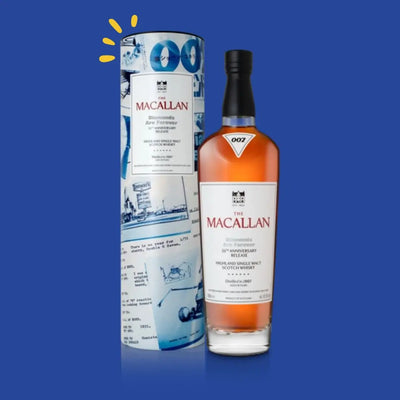
Anniversary editions
Houses often use anniversaries to create special series.
They may celebrate a historic date, a distillery or an important event.
Some become sought after thanks to their story.
Others remain mainly marketing operations.
Always look at quantity, price and real demand.
The hype effect
A limited edition can see a sharp rise just after release.
Media coverage and the fear of missing out can push prices up.
But this enthusiasm can be temporary.
When attention shifts to a new release, prices can stagnate or fall.
A rapid rise therefore does not guarantee lasting growth.
Closed distilleries
A distillery's closure can create a particular kind of rarity.
Production stops permanently and the remaining bottles gradually become harder to find.
Some closed distilleries strongly attract collectors.
But here again, everything depends on reputation and demand.
Wine and spirits: different markets
In wine, the estate, vintage, appellation and storage play a major role.
In whisky, the distillery, age, cask type, single cask and bottling are often decisive.
Each market therefore has its own criteria.
A limited edition must always be analysed in context.
How to recognise an interesting limited edition
Before buying, check several points:
quantity produced, the house's reputation, launch price, demand, liquidity, condition, provenance and activity on the secondary market.
Also ask whether the rarity is real or mainly marketing.
Limited editions: look beyond the word "limited"
A limited edition can become a sought-after collector's bottle.
But simply being produced in small quantities guarantees nothing.
Value depends above all on the combination of rarity, demand, reputation, provenance and liquidity.
Before investing, always look at the facts.
The real question is not only how many bottles exist.
It is how many people will still want to buy them in several years' time.