The classification of Bordeaux wines is an essential reference for understanding the prestige of the great wine estates. Premier Cru Classé, Grand Cru Classé, Cru Bourgeois, Saint-Émilion Grand Cru: the distinctions are many and sometimes hard to tell apart. Yet these classifications tell the story of the Bordeaux vineyard and help explain the reputation of certain châteaux. Discover the main classifications of Bordeaux's great wines, their particularities and their influence on bottle value.
Why are there several classifications in Bordeaux?
Contrary to some preconceptions, Bordeaux wines are not organised according to a single hierarchy. Several classification systems coexist and cover different wine areas.
The main ones are the 1855 classification, the Graves Crus Classés, the Saint-Émilion Grands Crus Classés, the Crus Bourgeois and the Crus Artisans of the Médoc.
These distinctions should not be confused with appellations d'origine contrôlée (AOC), which define the geographical origin and production conditions of the wines.
A château can therefore produce an excellent wine without belonging to an official classification.
Our pick for this article
The 1855 classification: the benchmark for Bordeaux grands crus
Created for the Paris Universal Exhibition, the 1855 classification remains one of the most prestigious wine classifications.
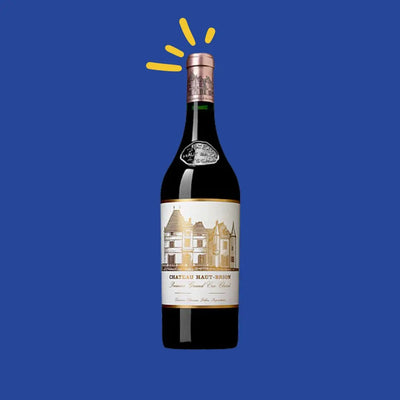
It mainly ranks the red wines of the Médoc, with one exception: Château Haut-Brion, located in the Graves.
The properties are divided into five categories, from First Growth (Premier Cru Classé) to Fifth Growth.
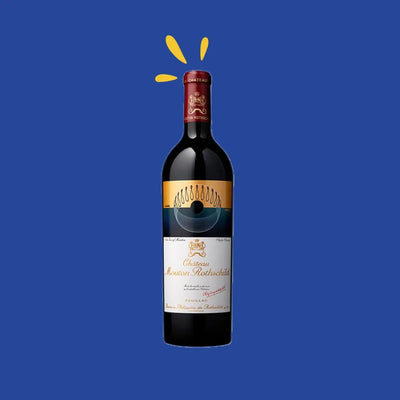
The five current First Growths are Château Lafite Rothschild, Château Latour, Château Margaux, Château Haut-Brion and Château Mouton Rothschild.
Mouton was promoted to First Growth in 1973, joining the four estates historically at the top.
Today, these grands crus enjoy an international reputation that adds to their prestige and appeal for collectors.
Saint-Émilion: Grand Cru versus Grand Cru Classé
The Saint-Émilion classification works differently. Created in 1955, it is regularly revised to reassess the properties.
It has two main categories, Grand Cru Classé and Premier Grand Cru Classé, with an A distinction for some estates in the latter.
In the 2022 classification, Château Figeac and Château Pavie are among the Premiers Grands Crus Classés A.
This recognition must be distinguished from the Saint-Émilion Grand Cru appellation.
The latter is an AOC, whereas Grand Cru Classé is a distinction awarded within the official classification.
Not all Saint-Émilion Grand Cru wines are therefore Grands Crus Classés.
The Graves Crus Classés and the Pessac-Léognan appellation
The Graves classification was established in the 1950s to distinguish properties renowned for their red or white wines.
Unlike the 1855 classification, it has no hierarchical levels.
The estates concerned now belong to the Pessac-Léognan appellation, south of Bordeaux.
Among the distinguished properties are Château Haut-Brion, Château La Mission Haut-Brion and Domaine de Chevalier.
This classification highlights the diversity of Graves wines and their importance in Bordeaux's winegrowing heritage.
Crus Bourgeois and Crus Artisans: the Médoc's other distinctions
The Crus Bourgeois are an important classification for discovering other Médoc estates.
The system has three categories: Cru Bourgeois, Cru Bourgeois Supérieur and Cru Bourgeois Exceptionnel.
These designations rest on assessment procedures designed to recognise the quality and consistency of the properties.
The Crus Artisans are a separate classification, historically associated with estates where the owner works directly in the vineyard.
These distinctions help show the diversity of Médoc châteaux beyond the famous 1855 classified growths.
Sauternes: a classification for sweet wines
The sweet wines of Sauternes and Barsac also have their own ranking within the 1855 classification.
Three categories distinguish them: Premier Cru Supérieur, Premier Cru and Deuxième Cru.
Château d'Yquem holds a unique place as the only estate classified Premier Cru Supérieur.
Its historical reputation contributes to its prestige among lovers of great sweet wines.
This classification illustrates the richness of the Bordeaux vineyard, whose distinctions cover white wines as well as reds.
Do classifications influence the price of fine wines?
The price of Bordeaux grands crus depends on several factors: the château's reputation, vintage quality, rarity, provenance and international demand.
A prestigious classification can strengthen an estate's renown and appeal on the collector's wine market.
However, it does not automatically guarantee higher quality or rising value.
Some unclassified estates produce highly sought-after wines, while two properties in the same category can show very different prices.
Classification is therefore an important historical reference, but it must be considered alongside each bottle's other characteristics.
Understanding the classifications to better appreciate Bordeaux
Bordeaux's classifications reflect several centuries of history, know-how and recognition.
From the 1855 classification to the distinctions of Saint-Émilion, the Graves and the Médoc, each system has its own identity.
Understanding these differences helps you read labels, identify prestigious properties and appreciate the diversity of Bordeaux's great wines.
A bottle's value ultimately rests on much more than its classification: its terroir, vintage, history and the quality of the winemaker's work also contribute to its uniqueness.