Chardonnay is the most widely planted and consumed white grape in the world. It is also the most versatile.
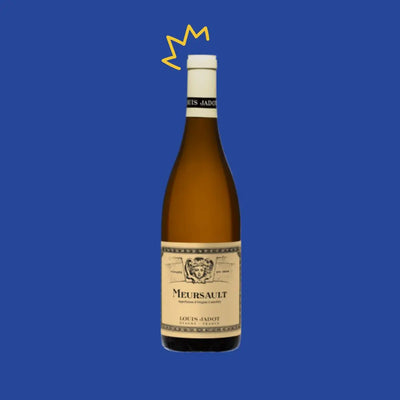
Chablis and Meursault come from the same grape, yet they have almost nothing in common. To see our selection, visit our white wines.
A neutral grape, and that is its strength
Unlike Sauvignon Blanc, Riesling, or Gewürztraminer, Chardonnay does not have a dominant aromatic marker.
It does not impose its own signature: it conveys that of the place, the climate, and the winemaking. This is exactly what explains its diversity and global success.
Its agronomic qualities
- It adapts to almost all climates: from northern Champagne to Australia.
- It ripens easily: it is an early and consistent grape.
- It lends itself to all winemaking methods: tank, barrel, sparkling, long or short aging.
- It buds early: its main drawback, as it is exposed to spring frost.
The great faces of Chardonnay
Chablis
Northern climate, Kimmeridgian soil, generally no-oak winemaking. Result: lemon, green apple, chalk, a sharp acidity, and a saline finish.
See our Chablis guide.
Côte de Beaune
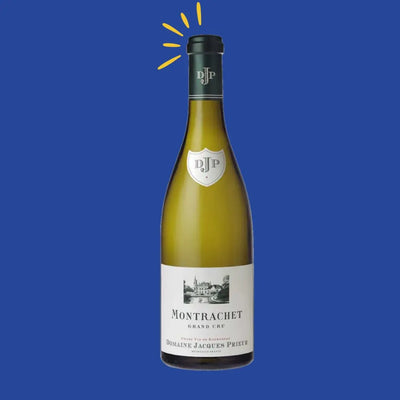
Meursault, Puligny-Montrachet, Chassagne-Montrachet. Limestone soils, barrel aging, lees stirring.
Result: hazelnut, fresh butter, yellow fruits, a full and rich texture. It is the world's pinnacle of dry Chardonnay.
See our Montrachet guide.
Mâconnais
Further south, a milder climate. Round and fruity wines, often the best value for money in Burgundy today.
See our Mâconnais guide.
Champagne
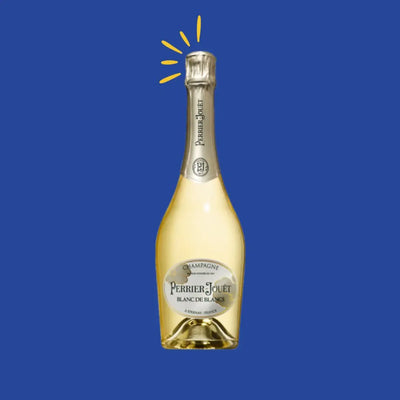
Harvested early, at low maturity, to preserve the high acidity essential for sparkling wine. It produces Blanc de Blancs.
See the Perrier-Jouët Blanc de Blancs.
Outside France
California, Australia, South Africa, Chile, Oregon. Warmer climates produce riper wines, with exotic fruits, sometimes marked by new oak.
The role of winemaking
With this grape, the winemaker's choices weigh as heavily as the terroir.
Stainless steel tank
It preserves the purity of the fruit and the tension. It is the choice for Chablis and most modern-style dry whites.
Oak barrel
It provides micro-oxygenation that rounds out the wine, and aromas of vanilla, hazelnut, or toast when the oak is new.
New oak is a trend that has largely subsided: the current trend favors old barrels and large containers.
Malolactic fermentation
It transforms malic acid, lively and sharp, into lactic acid, which is softer. It rounds out the wine and adds creamy notes.
Some producers block it to retain more tension. See our malolactic guide.
Lees stirring
Re-suspending the fine lees in the barrel. This adds richness, volume, and a creamy texture. It is one of the keys to the Côte de Beaune style.
How to choose your Chardonnay
- You want tension: Chablis, or a Champagne Blanc de Blancs.
- You want richness: Côte de Beaune.
- You are looking for value for money: Mâconnais, Côte Chalonnaise.
- With oysters: young Chablis, without oak.
- With creamy poultry: a barrel-aged white Burgundy.
- For the cellar: a Premier Cru or Grand Cru from Côte de Beaune, or a vintage Blanc de Blancs Champagne.
Service
- A lively Chardonnay: 10 to 12 degrees.
- A barrel-aged Chardonnay: 12 to 13 degrees. Too cold, and it will seem closed.
- The glass: large for full-bodied wines, medium for lively wines.
- The decanter: useful for a closed great white, unnecessary for a lively wine.
Frequently asked questions
Why is Chardonnay everywhere?
Because it adapts to all climates, is consistent, and lends itself to all styles.
Chablis and Meursault, really the same grape?
Yes. The difference comes entirely from the climate, the soil, and the winemaking.
Is Chardonnay necessarily oaked?
Not at all. Chablis and most Champagne Blanc de Blancs are vinified without new oak.
Can you age Chardonnay?
Yes, and sometimes for a very long time. A Grand Cru from Côte de Beaune or a vintage Champagne easily lasts fifteen to twenty years.
Order your Chardonnay from Le Caveau des Pépites
We work directly to guarantee the origin and traceability of every bottle. Stored in our climate-controlled, humidity-regulated warehouses in France, hand-packed and wrapped, shipped from mainland France via tracked and insured transport. Free delivery on orders over 300 euros. Customer service available 7 days a week, in French and English.
To learn more: our Burgundy wines and our Champagnes.