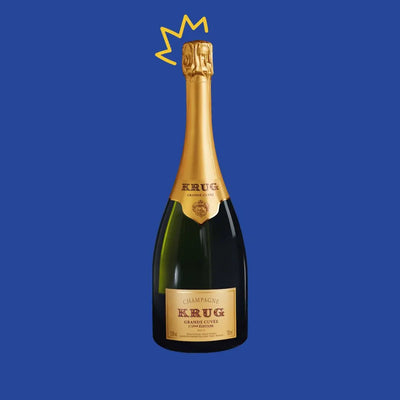
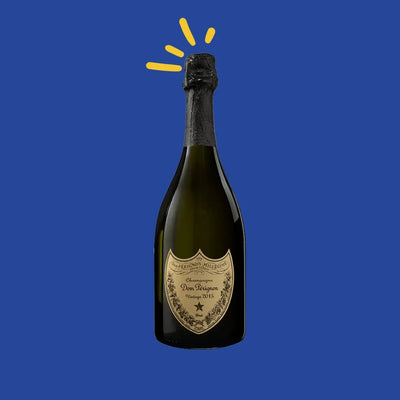
In thirty years, the south of England has become a sparkling wine region to be taken seriously. Seriously enough for Champagne houses to plant their own vines there: Taittinger in Kent, Vranken-Pommery in Hampshire. When a house from Reims buys land in Kent, it is not a public relations exercise.
So the question is no longer which is better, but what really sets them apart. And the answer is subtler than it looks, because the two regions share far more than they differ.
What they have in common
The same grapes
Chardonnay, Pinot Noir, Meunier: the Champagne trio is also the English trio. The best sparkling wines of Sussex, Kent and Hampshire are planted to exactly those three varieties, often in the same proportions.
The same chalk
This is the most fascinating part. The chalk of the South Downs and the chalk of Champagne belong to the same Upper Cretaceous geological formation. The Channel cut a single chalk bed into two pieces. The white cliffs of Dover and the chalk cellars of Reims tell the same story.
That chalk does two things: it drains excess water and it releases moisture back in dry spells. It is the technical reason English growers chose those particular slopes rather than others.
The same method
Second fermentation in bottle, ageing on laths, riddling, disgorgement: the traditional method is identical. No difference in process.
Our pick for this article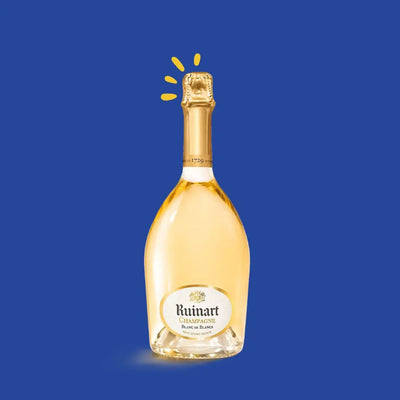
What really separates them
1. A degree and a half of latitude
The English vineyard lies further north than Champagne. Grapes ripen more slowly there and keep higher acidity. That single fact structures everything else: an English sparkling wine is generally tauter and brighter, with fruit leaning towards green apple and lemon rather than ripe pear and brioche.
Until the 1990s, that acidity was simply too high to make a balanced wine. Warming has moved the ripening line north: that is the real cause of the English rise.
2. Time on the lees
This is where the difference in taste opens up. The Champagne appellation requires a minimum of fifteen months of ageing for a non-vintage brut and three years for a vintage, and the major houses often go well beyond. That time on the lees produces the toast, hazelnut and cream notes that signal a Champagne.
English producers are not bound by the same durations. Many choose to observe them, but part of the production is released younger, which gives more fruit-driven wines with less aromatic complexity.
3. Reserve wines
A Champagne non-vintage brut is a blend of several harvests, drawn from reserves built up over decades. That is what gives it consistency from one year to the next. English estates, being younger, hold thinner reserves: their cuvees vary more from vintage to vintage.
4. Dosage
To balance more pronounced acidity, English dosage is often slightly higher than that of today's Champagne bruts, which have fallen markedly over twenty years. Yet an English sparkling wine at 9 or 10 grams of sugar will taste drier than a Champagne at 8 grams, because acidity masks sugar.
5. Scale
Champagne produces around three hundred million bottles a year. England produces a few million. That difference in scale explains the prices: a quality English sparkling wine often costs as much as, or more than, a Champagne from a major house, because it cannot spread its costs over large volumes.
At the table: which for what?
The tension of the English wine makes it a remarkable aperitif and an ideal partner for oysters, raw shellfish and smoked fish. Its briskness cleans the palate.
The depth of Champagne, particularly a vintage or a long-aged cuvee, lets it go further into the meal: roast poultry, hard cheeses, mushrooms. A blanc de blancs is the most natural bridge between the two worlds: same single grape, same pursuit of precision.
For a British wine lover who wants to understand the gap in one tasting, the protocol is simple: an English sparkling wine from Sussex, a Champagne blanc de blancs and a non-vintage brut from a major house, served blind at 10 degrees. The order of preference is often a surprise.
Why the Champenois are planting in Kent
Taittinger planted at Chilham in Kent from 2017, under the name Domaine Evremond. Vranken-Pommery makes Louis Pommery England in Hampshire. The two reasons are clear: the chalk is right, and today's English climate resembles that of Champagne in the 1980s.
This movement is not a threat to Champagne, it is an insurance policy. Above all it says something useful to any wine lover: the geography of wine is not fixed.
Our selection of champagnes covers both the major houses and grower cuvees, including Taittinger, the very house that bet on Kent.