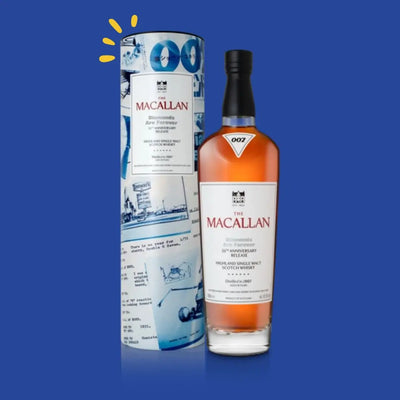
Collaborations between artists and great houses have become essential in the world of luxury. Champagne, spirits, fashion or watchmaking: brands regularly team up with artists to create limited editions, exclusive packaging and objects designed to attract enthusiasts and collectors alike.
These collaborations are not just about aesthetics. They play on rarity, desirability, storytelling, renown and perceived value.
A meeting of two strong identities
A great house already has its history, know-how and brand image.
The artist brings their universe, style and creativity.
When the two identities work together, the collaboration becomes coherent and credible.
The consumer no longer simply sees a bottle or a luxury product. They discover a new interpretation of the brand.
This meeting also helps modernise the house's image without erasing its heritage.
Our pick for this article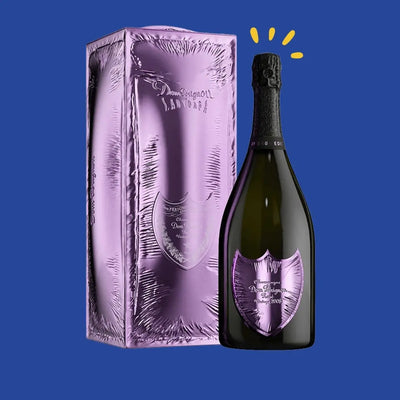
Storytelling gives meaning
A successful collaboration must tell a story.
Why this artist? Why this house? What links their two worlds?
Storytelling answers these questions.
It can draw on shared notions such as creation, blending, time, transmission or innovation.
When this story is clear, the product gains depth.
The collaboration then becomes more than a simple marketing operation.
Design increases perceived value
Design is often one of the most visible elements.
Label, gift box, bottle, colours or patterns can be completely reimagined.
Packaging then becomes an integral part of the creation.
It no longer simply presents the product.
It becomes an aesthetic object in its own right.
This transformation can increase perceived value and strengthen the desire to buy.
A classic bottle can thus become a true collector's piece.
Limited editions create rarity
Most of these collaborations are released as limited editions.
This limitation heightens the sense of exclusivity.
The consumer knows the product will not be available forever.
This can reinforce desirability and create a sense of urgency.
But rarity is not enough.
A rare bottle with little demand can remain hard to resell.
Demand therefore remains essential.
Renown is multiplied
A collaboration also brings two communities together.
The house has its customers, enthusiasts and collectors.
The artist has their own audience.
By working together, they increase each other's visibility.
The artist's fans can discover the brand.
The house's enthusiasts can discover a new artistic universe.
This cross-exposure strengthens the collaboration's impact.
An additional cultural dimension
Art also allows the product to go beyond its primary function.
A bottle can become linked to a period, a work or an artistic movement.
It then takes on a cultural dimension.
This dimension is particularly important in luxury, where emotion and story play an essential role.
The product becomes more than an object to consume.
It becomes a symbol or a keepsake.
Collectors play a central role
Artistic collaborations naturally interest collectors.
Several criteria can strengthen this interest:
the house's reputation,
the artist's renown,
rarity,
design,
packaging,
condition.
A complete bottle with its gift box can, for example, be more sought after than a bottle on its own.
Provenance can also become important on the secondary market.
But here again, no collaboration automatically guarantees an increase in value.
Desirability comes from a combination of factors
An artistic collaboration rarely works thanks to a single element.
It is the combination that makes the project strong:
a renowned house,
an identifiable artist,
strong design,
a limited edition,
a coherent story,
real demand.
It is this combination that builds desirability.
Coherence remains essential
Not all collaborations work.
If the link between artist and brand seems artificial, the public may see the project as a mere commercial operation.
Coherence is therefore essential.
The artist must genuinely bring something to the product's identity.
The house must also remain true to its own universe.
The most successful collaborations are those where both identities remain visible while creating something new.
Why do art and luxury work so well together?
Art and luxury share several values: creativity, exclusivity, identity, craftsmanship and a search for distinction.
Collaborations between artists and great houses therefore naturally bring these two worlds together.
They strengthen brand image, create rarity, increase perceived value and give rise to objects particularly attractive to collectors.
It is this ability to turn a product into a cultural, visual and emotional experience that explains why artistic collaborations continue to appeal so strongly.