Short answer: a grape variety is a type of vine. It sets the wine's basic structure, its acidity, its tannin level and its family of aromas. Cabernet Sauvignon gives tannic wines built for long ageing, Merlot gives round wines, Pinot Noir gives fine and perfumed wines, Syrah gives peppery wines, Chardonnay gives broad whites, Riesling gives taut whites. Terroir and the winemaker's hand do the rest.
To see our selection, browse all our bottles.
What a grape variety actually is
A grape variety is a cultivar of Vitis vinifera, the vine species grown to make wine. Several thousand are recorded worldwide, but around twenty of them cover the vast majority of planted vineyard.
Each variety has its own physical characteristics, and those explain the wine you end up with:
- Berry size: a small berry has proportionally more skin than juice, so more tannin and more colour.
- Skin thickness: it drives colour, tannic structure and resistance to rot.
- Ripening date: a late variety needs a warm climate, an early one copes with the north.
- Natural acidity: it makes the wine's freshness and its ability to age.
- Aromatic profile: every variety carries its own signature, from the blackcurrant of Cabernet to the peach of Viognier.
The video: grape varieties explained in 9 minutes
If you prefer video, we have summed up the essentials on the Resell Alcohol channel: what a grape variety is, why some dominate certain regions, and what each one actually changes in the glass.
Watch: Grape Varieties Explained in 9 Minutes
Variety, terroir, vintage: who does what
This is the question that comes up most often, and the answer is easy to remember.
- The variety gives the silhouette: structure, acidity, tannin level, family of aromas.
- The terroir gives the accent: the same Chardonnay does not say the same thing in Chablis on Kimmeridgian limestone and in Meursault on marl.
- The vintage gives the mood of the year: ripeness, freshness, concentration.
- The winemaker decides the rest: picking date, extraction, ageing, how much oak.
A grape variety therefore never guarantees a precise taste. It points in a direction.
The great red varieties
Cabernet Sauvignon
Born from a spontaneous crossing of Cabernet Franc and Sauvignon Blanc in Bordeaux. Small berry, thick skin, late ripening.
In the glass: blackcurrant, cedar, pencil lead, ripe bell pepper. Plenty of tannin, high acidity, and ageing measured in decades on the great terroirs.
Where: the Medoc and Graves on Bordeaux's left bank, Napa Valley, Tuscany, Chile, Australia.
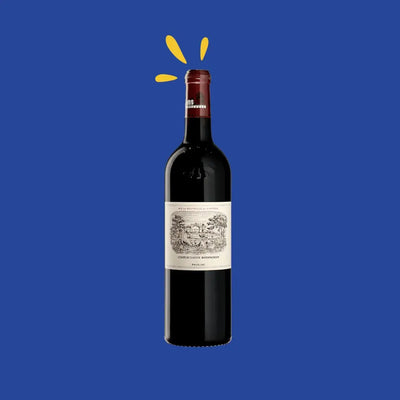
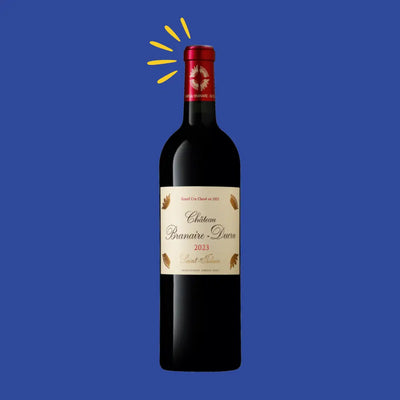
Worth tasting: Chateau Branaire-Ducru 2023 for the precision of a Saint-Julien, or Chateau Lafite Rothschild 2011 for the absolute benchmark.
See our Cabernet Sauvignon guide.
Merlot
Larger berry, thinner skin, early ripening. It likes cool, moist soils, clay and limestone.
In the glass: plum, black cherry, violet, then truffle and undergrowth with age. A round, fleshy texture and softer tannins than Cabernet.
Where: Pomerol and Saint-Emilion on Bordeaux's right bank, but it is also one of the most planted varieties in the world.
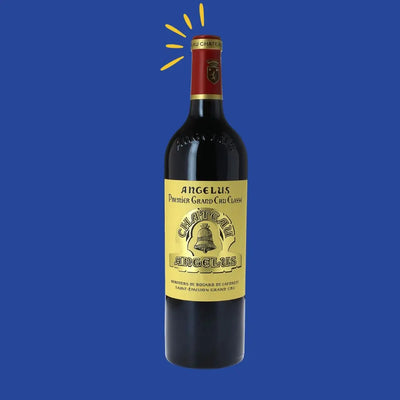
Worth tasting: Chateau Angelus 2019 for the top of the appellation, or Cheval Noir 2022 to discover the style without a large budget.
See our Merlot guide.
Pinot Noir
The most demanding and most temperamental variety. Thin skin, tight bunch, sensitive to everything.
In the glass: cherry, raspberry, rose, peony, then undergrowth, mushroom and leather as it ages. Little colour, fine tannins, lively acidity, and remarkable length when the terroir delivers.
Where: Burgundy above all, then Champagne, Alsace, Oregon and New Zealand.
Worth tasting: Chambolle-Musigny Les Amoureuses 2018, Robert Groffier, or Echezeaux Grand Cru 2015, Domaine Jacques Prieur.
See our Pinot Noir guide.
Syrah
Native to the northern Rhone valley, where it grows on very steep granite slopes.
In the glass: black pepper, violet, black olive, smoked bacon, black fruit. Dense colour, firm tannins, and a distinctive freshness when it is planted in the right place.
Where: Cote-Rotie, Hermitage, Cornas, Saint-Joseph, then the whole southern Rhone in blends, and Australia under the name Shiraz.
Worth tasting: Cote-Rotie Les Bonnivieres, Yves Cuilleron.
See our Syrah guide.
Grenache
The southern variety par excellence. Highly resistant to drought and wind, it easily reaches high alcohol.
In the glass: crushed strawberry, candied cherry, garrigue, liquorice. Little colour, few tannins, plenty of flesh and roundness.
Where: Chateauneuf-du-Pape, Gigondas, Vacqueyras, Languedoc, Roussillon, and Spain under the name Garnacha.
Worth tasting: Telegramme 2022, Chateauneuf-du-Pape, or Vacqueyras 2022, Famille Perrin.
See our Grenache guide.
Mourvedre
Very late ripening, it needs sun and the proximity of the sea to ripen fully.
In the glass: leather, black fruit, pepper, and an unapologetic animal note. Powerful tannins that need time.
Where: Bandol, Chateauneuf-du-Pape and the Languedoc in blends.
Worth tasting: Tete de Belier 2022, Chateau Puech-Haut.
See our Mourvedre guide.
Gamay
The Beaujolais variety, long underrated because of Beaujolais Nouveau, and now put back in its rightful place by the region's best growers.
In the glass: cherry, raspberry, peony, and a crushed-granite note on the crus. Few tannins, plenty of fruit, remarkable drinkability.
Worth tasting: Morgon 2024, Marcel Lapierre, the historic benchmark of natural Beaujolais.
Cabernet Franc
Parent of Cabernet Sauvignon, earlier ripening and more perfumed. Violet, raspberry, pencil lead, silky tannins.
It shines in Saint-Emilion on the warmest terroirs, and in the Loire at Chinon and Bourgueil.
See our Cabernet Franc guide.
The great white varieties
Chardonnay
The most malleable white variety in the world. It does not impose a taste, it translates a place and an ageing regime.
In the glass: citrus and gunflint in Chablis, hazelnut, butter and honey in Meursault, brioche and chalk in Champagne.
Worth tasting: Chablis 2023, Grand Regnard for tension, Meursault 2022, Louis Jadot for breadth, Montrachet Grand Cru 2015, Domaine Jacques Prieur for the summit.
In Champagne, Chardonnay on its own gives blanc de blancs: see Ruinart Blanc de Blancs.
See our Chardonnay guide.
Riesling
The most precise white variety there is. It transmits the soil with a clarity few others reach.
In the glass: lemon, green apple, white flowers, a razor-sharp acidity, and that petrol note that appears over the years and marks the great Rieslings.
Where: Alsace, the Mosel and Rheingau in Germany, Austria, and Clare Valley in Australia.
Worth tasting: Riesling Vieilles Vignes 2023, Trimbach, the benchmark house for dry Alsatian style.
See our Riesling guide.
Sauvignon Blanc
Instantly recognisable for its aromatic intensity.
In the glass: boxwood, blackcurrant bud, citrus, cut grass, and a mineral salinity on the limestone terroirs of the Loire.
Where: Sancerre, Pouilly-Fume, Menetou-Salon, Bordeaux blended with Semillon, and Marlborough in New Zealand.
Worth tasting: Menetou-Salon blanc Le Carroir, Henry Pelle, a neighbour of Sancerre at a far more reasonable price.
See our Sancerre and Pouilly-Fume guide.
Semillon
Thin skinned and prone to noble rot, which makes it the variety behind the great sweet wines.
In the glass: candied apricot, honey, beeswax, saffron when botrytis is present. Dry, it brings richness and body to the whites of Graves.
Worth tasting: Chateau d'Yquem 2023.
See our sweet wine guide.
Chenin
The most versatile variety in France. It gives taut dry wines, off-dry wines, sweet wines and sparkling wines, sometimes from the same plot depending on the year.
In the glass: quince, apple, chamomile, honey, and an acidity that gives it exceptional longevity.
See our Chenin guide.
The Rhone whites
Viognier for peach and apricot, Marsanne for richness, Roussanne for freshness and finesse. Three varieties that are often blended.
Worth tasting: Saint-Joseph Lyseras blanc, Yves Cuilleron.
See our Rhone whites guide.
Single variety or blend
Both approaches coexist in France, and they answer different ideas.
- Single variety: one grape, to express a terroir with as few filters as possible. That is the logic of Burgundy, Alsace and the northern Rhone.
- Blending: several complementary varieties, to build balance and smooth out the vintage. That is the logic of Bordeaux, Champagne and the southern Rhone.
A blended wine is not a lesser wine. The greatest Bordeaux and the greatest Champagnes are blends.
Recognising a variety blind
A few simple markers that work in the large majority of cases.
- Very dense colour and firm tannins: Cabernet Sauvignon, Syrah, Tannat, Malbec.
- Pale colour and floral perfume: Pinot Noir, Gamay, Grenache.
- Clear black pepper note: Syrah.
- Blackcurrant and cedar: Cabernet Sauvignon.
- Razor-sharp acidity on a white: Riesling, Sauvignon Blanc, Chenin.
- Broad, buttery white: barrel-aged Chardonnay.
See our blind tasting guide and our tasting vocabulary.
Frequently asked questions
Why is the grape variety not always on the label?
In France, appellations already guarantee which varieties are allowed. A Chablis is necessarily Chardonnay, a red Sancerre necessarily Pinot Noir. The label therefore states the place rather than the variety. See our guide to reading a wine label.
How many grape varieties are there?
Several thousand are recorded, but around twenty cover most of the world's vineyard. France grows about a hundred in any significant quantity, and the South West remains the region that preserves the most.
Does the same variety give the same wine everywhere?
No. Cabernet Sauvignon from the Medoc and from Napa have little in common beyond their structure. Climate, soil and winemaking style change everything.
Which variety should a beginner start with?
In red, Merlot or Gamay, which are immediately enjoyable. In white, Chardonnay or Riesling, two very different profiles that are easy to compare. See our bottles under 100 euros.
Ordering from Le Caveau des Pepites
We work directly with producers to guarantee the origin and traceability of every bottle. Storage in our climate-controlled, humidity-controlled warehouses in France, hand packing and wedging, and shipping from mainland France with tracked and insured transport. Free delivery from 300 euros. Customer service available 7 days a week, in French and in English.
To go further: our red wines, our white wines and our champagnes.