There is a British tradition of French wine, and it has a name: claret. Since the twelfth century, Bordeaux has been the default reference of English cellars, and it is an excellent reference. The trouble is that it takes up so much room that it hides four or five other wine-producing Frances, often cheaper and easier to drink young.
Here are five terroirs that deserve a place in a cellar already well stocked with Bordeaux, with what to understand about each and what to look for.
1. The Cote Chalonnaise: the Burgundy that stays affordable
South of the Cote de Beaune, the appellations of the Cote Chalonnaise work the same grapes as their famous neighbours, Pinot Noir and Chardonnay, on slopes that are more fragmented and far less celebrated. Rully, Mercurey, Givry, Bouzeron: the names do not make headlines, and neither do the prices, which is precisely the point.
The style is more direct than in the Cote de Nuits, with clean acidity and fine tannins. These are wines to drink between three and ten years old, which suits a domestic cellar without perfect storage conditions.
The benchmark to know: Domaine A. et P. de Villaine in Bouzeron, run by the family that co-directs Romanee-Conti. Same exacting standards, a different price bracket.
Our pick for this article
2. The Northern Rhone: Syrah at its most precise
Between Vienne and Valence, Syrah grows on granite slopes so steep they have to be worked by hand. The result bears no resemblance to the Australian Shiraz many British drinkers meet first: here Syrah gives pepper, violet, black olive, and an upright structure rather than jammy fruit.
Two ways in. Saint-Joseph is the suppler and more affordable of the two, drinkable from four or five years. Cote-Rotie is the summit, more perfumed, often blended with a touch of Viognier, and built for fifteen years.
To understand the style, the wines of Yves Cuilleron are a readable reference, from Saint-Joseph to the steepest parcels.
3. Alsace: the most underrated great dry whites in France
Alsace suffers from a stubborn misunderstanding in the UK: the fluted bottle suggests sweet German wine, when the vast majority of Alsace Rieslings are dry and built for the table.
Riesling there gives an almost saline mineral tension, Pinot Gris a smoky roundness, Gewurztraminer a rose and spice perfume that works wonders with spicy Asian cooking, familiar territory in London.
The house of Trimbach is the historic reference for the dry style, and its Clos Sainte-Hune is one of the world's great whites. Our full range of Alsace wines covers the grape varieties at prices that remain reasonable.
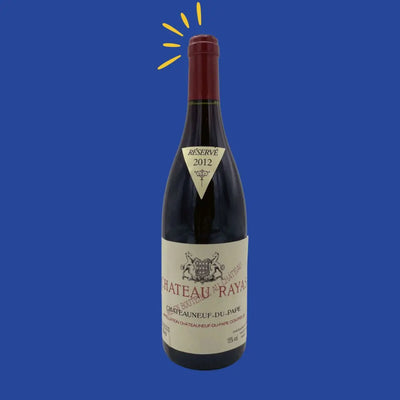
4. Chateauneuf-du-Pape: power that does not tire
In the southern Rhone, Grenache leads blends that may draw on as many as thirteen grape varieties. The rolled pebbles store the heat of the day and release it at night, which gives generous, spicy wines at around 14.5% or 15%.
It is the ideal profile for British winter cooking: game, lamb, slow-cooked dishes. And contrary to received wisdom, a good Chateauneuf-du-Pape ages remarkably well, twenty years without difficulty for the best cuvees.
Watch the strength, though: at 15% ABV, UK excise duty rises to about GBP 3.44 a bottle, against GBP 2.87 for a white at 12.5%. A detail that adds up over a case of twelve.
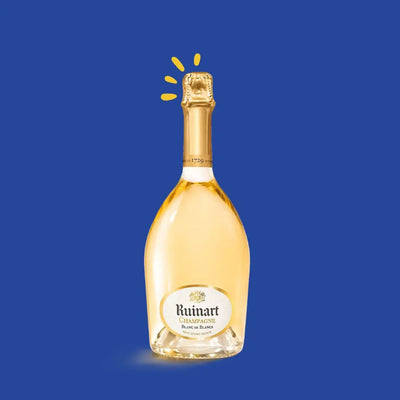
5. Grower Champagne and blanc de blancs
The United Kingdom is one of the world's leading Champagne markets, but consumption stays concentrated on a handful of grandes marques. Yet Champagne counts hundreds of houses and growers whose wines speak of a precise place rather than a house style.
Two routes out of the usual reflex. Blanc de blancs, 100% Chardonnay, offer a tension and precision that speak immediately to a lover of dry whites. Mid-sized houses such as Drappier or Deutz often deliver better value than the most heavily marketed brands.
The rest of our selection can be browsed in the champagnes category.
How to build a first exploration case
The most effective method is to make up a case of six bottles covering four terroirs rather than six identical bottles. The fixed costs of shipping and clearance are the same, and a direct comparison teaches more in one evening than six months of reading.
A split that works: two whites, one from Alsace and one from the Cote Chalonnaise; two Rhone reds, one northern and one southern; one Burgundy Pinot Noir; one Champagne. All of it is within reach in our selection under 100 euros.