
Serve a dry champagne, dosed between 17 and 32 g/l, or a demi-sec between 32 and 50 g/l if the foie gras is accompanied by chutney. The dosage matches the fat, the effervescence cleanses the palate, and the meal can continue after.
The problem with Sauternes
The foie gras and Sauternes pairing has become a reflex, but it poses two real difficulties. The first is saturation: a sweet wine often contains 120 to 150 g of sugar per liter, three to four times more than a demi-sec champagne. Combined with a food whose fat content approaches half its weight, it coats the palate and stays there. The second is the continuation of the meal: after two glasses of sweet wine, a dry wine seems lean and acidic, and the starter has condemned the main course.
Champagne solves both. Its effervescence and acidity cut through the fat instead of adding to it, and its dosage, even when high, remains far below that of a sweet wine. The palate is clean after each bite, which is exactly what is expected of a starter.
| Wine | Sugar per liter | Effect on the palate |
|---|---|---|
| Sauternes and sweet wines | 120 to 150 g/l | Saturation, the rest of the meal suffers |
| Demi-sec champagne | 32 to 50 g/l | Enough roundness, palate cleansed |
| Dry champagne | 17 to 32 g/l | The best balance with plain foie gras |
| Brut champagne | Up to 12 g/l | Too dry unless the cuvée is very mature |
Three ways to do it, depending on your foie gras
Plain semi-cooked foie gras, on toast
This is the most common and simplest case: a dry champagne, between 17 and 32 g/l, is enough. The sugar remains discreet, the acidity does its job and the fat does not settle in. Avoid brioche bread, which adds sugar and pushes the pairing towards heaviness: grilled country bread, or even walnut bread, gives more relief.
Foie gras with chutney, figs or gingerbread
As soon as the accompaniment is sweet, you need to increase the dosage of the wine to stay at least at the level of the plate. A demi-sec, between 32 and 50 g/l, then takes over. The rule is the same as for a dessert: the wine must never be less sweet than what it accompanies.
Pan-fried foie gras or hot escalope
Cooking adds grilled notes and a lot of melted fat. Here, a great mature champagne, even with low dosage, works remarkably: the density and oxidative notes hold the dish without sugar. It is the dry path, more demanding and more interesting.
Four bottles for the starter
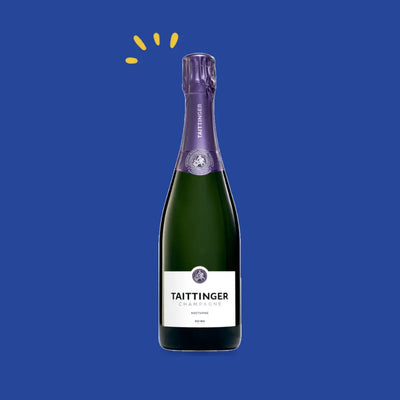
Taittinger Nocturne Sec Taittinger, from €54.90
Dosed in the dry range, between 17 and 32 g/l, with the typical house Chardonnay structure that prevents any syrupy effect. It is the best starting point for plain semi-cooked foie gras: enough roundness to match the fat, enough acidity to make the palate clean. Serve it at 9 to 10 °C. One bottle covers six diners for a starter.
Drappier Carte d'Or Demi-Sec Drappier, from €41.50
A demi-sec built on the Pinot Noir of the Côte des Bar, whose red fruit and breadcrumb notes get along very well with fig jam or onion chutney. It is the option to choose if your foie gras arrives accompanied. It will also serve later, on the bûche. Serve at 8 to 9 °C.
Deutz Demi-Sec Deutz, from €54.68
The house demi-sec from Aÿ, dosed between 32 and 50 g/l, with a thinner and more lemony mouthfeel than the category average. It is suitable for tables that find demi-secs too demonstrative: the sugar is there, but the finish remains fresh. On foie gras with gingerbread, it is a very safe pairing. Plan a small glass of 10 cl per person.
Krug Grande Cuvée Krug, from €255
The dry path. An assemblage of more than a hundred wines from at least ten years, aged for at least six years in the cellar, which opposes its density and dried fruit notes to the foie gras rather than sugar. It is the pairing to reserve for pan-fried foie gras or a whole semi-cooked lobe of very good quality. Serve it at 12 to 13 °C in a white wine glass, and keep the bottle for the dish that follows.
Temperature and cutting, two decisive details
A foie gras taken out of the refrigerator and sliced immediately gives nothing: the fat is frozen, the aromas are blocked and the mouthfeel remains pasty. Take it out 15 to 20 minutes before serving, for a tasting temperature around 10 to 12 °C. Slice using a blade passed under hot water and wiped between each cut, or with a thread, in slices of about 1 cm.
Count 50 to 60 g per person as a starter, 80 g if it is the main dish of a light meal. Fleur de sel is added at the last moment, in small quantities: too much salt brings exactly the same imbalance as a wine that is too dry.
| Element | Reference |
|---|---|
| Foie gras temperature | 10 to 12 °C, taken out 15 to 20 min before |
| Slice thickness | About 1 cm |
| Quantity per person | 50 to 60 g as a starter |
| Dry champagne temperature | 9 to 10 °C |
| Great cuvée temperature | 12 to 13 °C |
What does not work
A brut nature or an extra brut, first. Without dosage, the wine clashes with the fat and the finish becomes bitter. It is the only pairing of the New Year's Eve where the absence of sugar is frankly penalizing.
An ice-cold champagne, next. At 5 or 6 °C, the effervescence becomes stinging and the pairing boils down to a sensation of cold on fat. Turn it up to 9 °C at minimum.
Finally, the foie gras served after the oysters or smoked salmon in the same service. The fat of the liver crushes the marine starters that follow. If your menu includes both, start with the marine and follow with the foie gras with a change of glass. Our packages are carefully wrapped, with good protection to guarantee the condition of your bottles.
To go further
- Champagne and oysters: the right dosage changes everything
- Champagne and smoked salmon: the New Year's Eve pairing
- Prestige champagne: what justifies the price
Frequently asked questions
What champagne to serve with foie gras?
A dry one dosed between 17 and 32 g/l on plain foie gras, a demi-sec between 32 and 50 g/l if it is accompanied by chutney or gingerbread. A brut nature is to be avoided: without dosage, the finish becomes bitter.
Why avoid Sauternes?
A sweet wine contains 120 to 150 g of sugar per liter, three to four times more than a demi-sec. It saturates the palate and makes all the wines served afterwards lean. Champagne cleanses instead of adding.
Can a brut work?
Only if the cuvée is very mature and dense, for example a great cuvée with several years in the cellar. It is then the substance and the dried fruit notes that match the fat, and not the sugar. Serve it at 12 to 13 °C.
At what temperature to serve foie gras?
Between 10 and 12 °C, by taking it out of the refrigerator 15 to 20 minutes before. Slice about 1 cm thick with a blade passed under hot water, and count 50 to 60 g per person as a starter.
Foie gras deserves better than a sweet wine
Dry, demi-sec and mature great cuvées: the three paths that work on a party starter.
See all champagnesMore than +1,000 customers have already trusted us, with a rating of 4.9 out of 5. Shipping from France, payment in installments possible with Klarna.
The prices and availability mentioned are those observed at the date of publication and may change. The abuse of alcohol is dangerous for health, consume with moderation. Sale prohibited to minors.