Syrah is one of the most planted grape varieties in the world, and one of the most misunderstood. Depending on where it grows, it produces wines that have almost nothing in common.
Here is the complete guide. To see what is available, browse our red wines.
Where does syrah come from?
For a long time, legends attributed an Eastern origin to syrah, claiming it came from Persia or Syracuse. Genetic analyses conducted at the end of the 20th century settled the matter: syrah originated in southeastern France from the natural crossbreeding of two ancient grape varieties from the Rhône-Alpine region, Mondeuse blanche and Dureza.
In other words, it is a French grape variety, and more specifically one from the Rhône basin. Its historical home is where it still produces its best results.
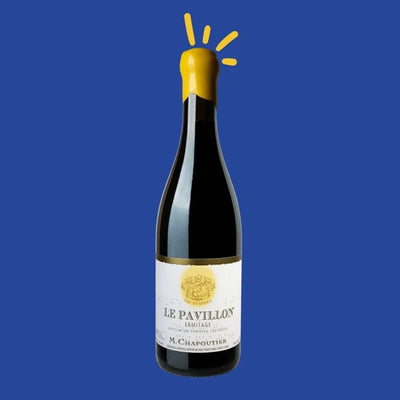
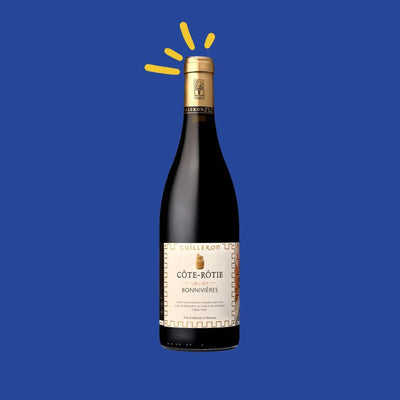
Our pick for this article
The aromas of syrah
The aromatic profile is very distinctive once you have identified it.
- Violet: the floral signature of syrah, particularly pronounced in Northern Rhône.
- Black pepper: linked to rotundone, a molecule naturally present in the grape variety. It is more pronounced in cooler climates and partially disappears in intense heat.
- Black fruits: blackberry, blackcurrant, black cherry.
- Black olive and tapenade: very typical of great Northern syrahs.
- Smoked bacon and leather: appear with age.
- Forest floor and truffle: in wines aged more than ten years.
Northern Rhône and Southern Rhône: two different worlds
Northern Rhône
Here, syrah reigns supreme, almost on its own. The appellations Côte-Rôtie, Hermitage, Cornas, Saint-Joseph, and Crozes-Hermitage are built entirely around it, on granite and schist terraces.
The climate is more continental, and ripening is slower. The result: tense, peppery, elegant wines with remarkable aromatic finesse and considerable aging potential.
See our Côte-Rôtie and Saint-Joseph.
Southern Rhône
Further south, syrah becomes a complementary grape variety. It complements Grenache in Châteauneuf-du-Pape, Gigondas, and Vacqueyras blends, where it provides the color, pepper, and tannic structure that Grenache lacks.
Its role is different: it no longer carries the wine, it supports it. See our Châteauneuf-du-Pape.
Syrah or Shiraz?
It is exactly the same grape variety. The name changes depending on the region and generally indicates a style.
- Syrah: used in France and by producers aiming for a tense, peppery European profile.
- Shiraz: used in Australia and English-speaking countries for wines that are generally riper, richer, fruitier, and often more oaked.
The name on the label is therefore an indication of style, not variety.
How to serve syrah
- Temperature: 15 to 16 degrees Celsius. This is important: above 18 degrees, the alcohol takes over and the pepper disappears.
- Decanter: one to two hours for a young Northern Rhône wine. Great syrahs are closed up upon opening.
- Glass: large and balloon-shaped. Syrah needs surface area to release its aromas.
- Aging: from three years for a fruit-forward syrah to twenty years for a great Northern Rhône lieu-dit.
Food pairings
Syrah loves pepper and herbs. Lamb with rosemary, peppered ribeye, game birds, pigeon, daube, tagine, charcuterie, and hard cheeses. With an aged wine, black truffle is magnificent.
Where to start
If you want to understand the grape variety, start simply. A syrah outside an appellation from a Côte-Rôtie producer provides the basic grammar of the grape variety at an affordable price, showcasing the expertise of a Northern Rhône estate.
Then, move up to an appellation: a Saint-Joseph, then a Côte-Rôtie. You will see exactly what the terroir adds.
Frequently asked questions
Why do some syrahs smell of pepper while others do not?
Because of rotundone, a molecule naturally present in the grape variety. Cooler climates and granite soils favor its expression; very hot climates reduce it.
Does syrah age well?
Very well. Great Northern Rhône syrahs last twenty years and develop remarkable notes of leather, truffle, and forest floor with age.
Should syrah always be decanted?
Yes, for a young Northern Rhône wine. These wines reveal almost nothing in the first hour and transform completely when exposed to air.
What is co-fermentation with Viognier?
A practice permitted in Côte-Rôtie, where a limited proportion of Viognier is fermented with syrah. It stabilizes the color and adds a floral dimension.
What glass should I use?
A large glass, such as a Burgundy glass. Narrow glasses stifle the violet aroma that gives the grape variety its appeal.
Order your syrahs from Le Caveau des Pépites
We work directly with producers to guarantee the origin and traceability of every bottle. Stored in our climate-controlled, humidity-regulated warehouses in France, hand-packed and carefully packaged, and shipped from mainland France via tracked and insured transport. Free delivery on orders over 300 euros. Customer service available seven days a week in French and English.
To learn more: the Jean-Michel Gerin estate and our guide to Côte-Rôtie lieux-dits.