Beaujolais has ten crus. They all produce Gamay, they are all located in the northern part of the vineyard, and yet each has its own identity.
Understanding these differences is the best way to buy the right wine. To see our selection, visit our red wines.
Why ten crus
The northern part of Beaujolais rests on an ancient granite bedrock, while the south is dominated by limestone and clay.
This geological difference is fundamental. Granite is remarkably suited to Gamay: it drains, it heats up, and it forces the vine to work. It is on this bedrock that the ten crus were delimited.
Our pick for this article
The ten crus, from lightest to most structured
Chiroubles
The highest altitude cru. Fine, floral, light wines, best enjoyed young. It is the most delicate of the ten.
Saint-Amour
The northernmost, on the border with the Mâconnais. Supple, fruity wines with a particular finesse. Its name has earned it commercial success independent of its qualities.
Régnié
The last classified cru, the most recent. Fruity and accessible wines, often the best value for money of the ten.
Brouilly
The largest in surface area, and therefore the most heterogeneous. Generally supple and fruity wines, with an approachable style.
Juliénas
A varied terroir that produces supple wines with good structure. Red fruits, vine peach, spices.
See the Juliénas Les Crots.
Fleurie
The most floral, as its name suggests. Violet, iris, red fruits. An elegant and highly sought-after cru.
Côte de Brouilly
On the slopes of Mount Brouilly, on a very distinctive bluish volcanic rock. More mineral and more concentrated than Brouilly.
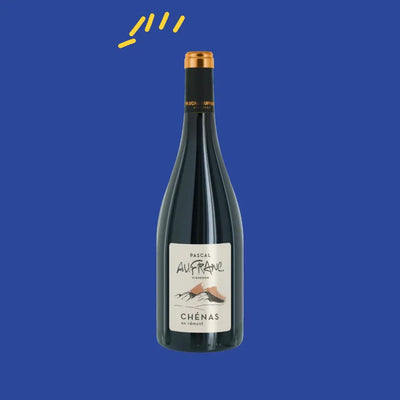
Chénas
The smallest cru. Structured, floral, and age-worthy. Often underestimated because it is rarely available.
See the Chénas En Rémont.
Morgon
The quintessential age-worthy cru, especially in the Côte du Py area, on decomposed ancient schist that local winegrowers call rotten rock. Dense wines that evolve beautifully.
Moulin-à-Vent
The most Burgundian of the crus. Powerful, tannic, and very long-lived. Manganese-rich granite soils.
See our article on the Château des Jacques.
How to choose for each occasion
- An aperitif, a terrace: Chiroubles, Saint-Amour, Brouilly.
- A charcuterie platter: Juliénas, Régnié, Fleurie.
- Poultry in sauce: Chénas, Côte de Brouilly.
- Game or red meat: Morgon, Moulin-à-Vent.
- For the cellar: Moulin-à-Vent, Morgon, Chénas.
- On a tight budget: Régnié, Brouilly.
The crus are not Beaujolais Nouveau
The most important point of this article.
Beaujolais Nouveau is a primeur wine, put on sale a few weeks after the harvest, produced exclusively under the Beaujolais and Beaujolais Villages appellations. The ten crus cannot be sold as primeur.
They are full-fledged appellations, with lower yields, often long vinification, and several months of aging.
Confusing the two is like confusing an Aligoté from Burgundy with a Montrachet simply because they come from the same region.
Service
- Temperature: 14 to 15 degrees, slightly cooler than a red Burgundy.
- Decanter: useful for young age-worthy crus.
- Glass: Burgundy glass.
- Aging: two years for the lighter crus and fifteen or more for a great Moulin-à-Vent.
Frequently Asked Questions
Which cru to start with?
Fleurie or Juliénas, which are immediately enjoyable and representative.
Which cru is best for aging?
Moulin-à-Vent, Morgon, and Chénas, in that order.
Is Gamay a minor grape variety?
On granite and in old vines, no. It produces very high-quality wines that have long been undervalued by the market.
Why is Beaujolais so affordable?
A legacy of the primeur image. The prices of the best crus are rising year after year as this image is corrected.
Order your Beaujolais crus from Le Caveau des Pépites
We work directly with producers to guarantee the origin and traceability of every bottle. Stored in our climate-controlled, humidity-regulated warehouses in France, hand-packed and wrapped, shipped from mainland France with tracked and insured transport. Free delivery on orders over 300 euros. Customer service available 7 days a week, in French and English.
To learn more: our Chénas and Juliénas comparison.