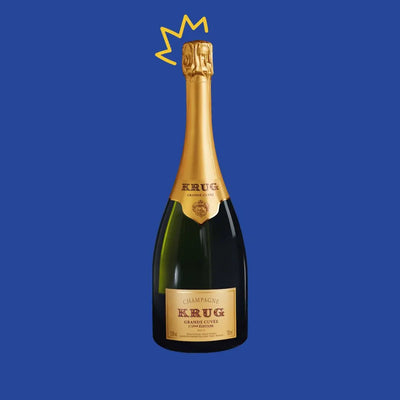
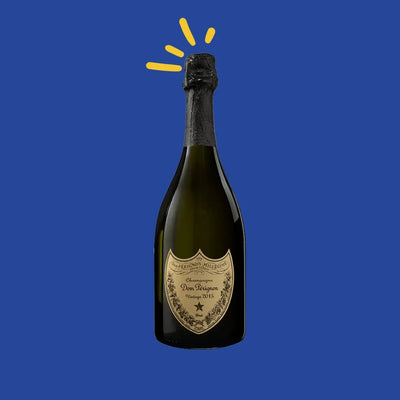
Short answer: crémant and champagne use the same method, the second fermentation in the bottle. The differences lie in the region, the grape varieties, the authorized yields, and the aging period: a minimum of nine months on the lees for a crémant, fifteen for a champagne. The champagne designation is reserved for the Champagne region.
To see our selection, visit our champagnes.
The method is the same
In both cases, it is known as the traditional method.
- A base wine is vinified dry.
- The tirage: yeast and sugar are added, and the wine is bottled.
- The second fermentation takes place in the bottle, creating carbon dioxide.
- Aging on the lees provides the aromas of brioche and the finesse of the bubbles.
- Riddling and disgorgement remove the sediment.
- Dosage completes the volume.
The Champagne method designation has been reserved for the Champagne region since 1994. Elsewhere, it is called the traditional method.
See our riddling and disgorgement guide.
Our pick for this article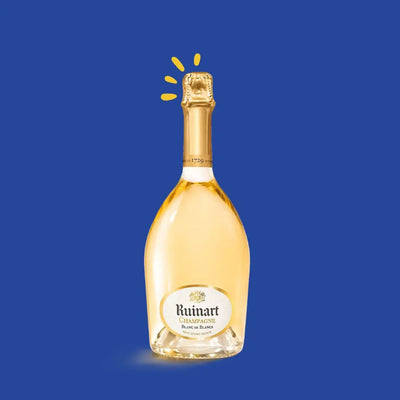
The real differences
Aging on the lees
- Crémant: minimum 9 months, 12 months in total before being marketed.
- Brut non-vintage champagne: minimum 15 months.
- Vintage champagne: minimum 36 months.
This is the most important difference in terms of taste: the time spent on the lees provides complexity and the finesse of the bubbles.
Many excellent crémants far exceed the minimum, and you can taste it.
The grape varieties
- Champagne: chardonnay, pinot noir, pinot meunier, plus a few old grape varieties.
- Crémant d'Alsace: pinot blanc, auxerrois, riesling, pinot gris, pinot noir.
- Crémant de Bourgogne: chardonnay and pinot noir, the same as in Champagne.
- Crémant de Loire: mainly chenin.
- Crémant de Limoux: mauzac, chardonnay, chenin.
- Crémant du Jura: chardonnay, savagnin, poulsard.
Terroir and climate
Champagne is France's northernmost vineyard, on a chalky subsoil. The natural acidity there is very high, which is ideal for an effervescent wine intended for aging.
The crémant regions are generally warmer, with riper and less tart base wines.
The eight French crémants
- Alsace: the most produced, fine and floral.
- Bourgogne: the closest to champagne in terms of grape varieties. The Eminent and Grand Eminent designations guarantee 24 and 36 months on the lees.
- Loire: chenin brings tension and notes of quince.
- Limoux: the oldest tradition of effervescent wine in France, documented as far back as the sixteenth century.
- Jura: original, with savagnin and poulsard.
- Bordeaux, Die and Savoie: more exclusive.
When to choose one or the other
- A large number of guests: crémant allows you to serve more people for the same budget.
- A reception or a small gathering: crémant for volume, champagne for the toast.
- A special occasion: champagne, for what it represents as much as for its taste.
- In cooking or cocktails: crémant, without hesitation.
- For aging: vintage champagne, whose potential is beyond comparison.
See our wedding champagne guide.
Other effervescent wines
- Prosecco: closed tank method, not in the bottle. Fruitier, coarser bubbles, to be drunk young.
- Cava: Spanish traditional method, local grape varieties.
- Pétillant naturel: a single fermentation, bottled before it is finished. Cloudy, lively, irregular.
- Blanquette de Limoux: dominant mauzac, a style of its own.
Service
- Temperature: 8 to 10 degrees for a crémant, 10 to 12 for a champagne.
- Glass: a white wine glass rather than a flute.
- Opening: hold the cork, turn the bottle.
See our opening guide.
Frequently asked questions
Can a crémant be as good as a champagne?
An excellent crémant aged for a long time easily surpasses an entry-level champagne. Compared to the great cuvées, the gap remains clear.
Why is champagne more expensive?
The price of grapes in Champagne, lower yields, longer aging, and worldwide recognition that supports the prices.
Can crémant be aged?
Two to four years for most. The cuvées aged for a long time last longer.
What is the difference with prosecco?
The method. Prosecco ferments in a closed tank, which gives coarser and less persistent bubbles, and a fruitier profile.
Ordering from Le Caveau des Pépites
We work directly to guarantee the origin and traceability of every bottle. Stored in our climate-controlled warehouses with controlled humidity in France, hand-packed and wrapped, shipped from mainland France via tracked and insured transport. Free delivery on orders over 300 euros. Customer service available 7 days a week, in French and English.
To learn more: the dosage of champagne.