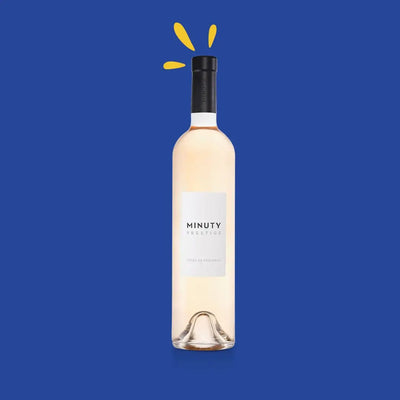
Rosé is the wine people talk about the most and understand the least. Let's start by debunking the most widespread misconception.
To see our selection, visit our rosé wines.
No, it's not red wine mixed with white
Mixing red and white wine to make rosé is prohibited in the European Union for still wines.
The only notable exception is rosé champagne, for historical reasons related to the specific nature of the traditional method. See our rosé champagne guide.
Our pick for this article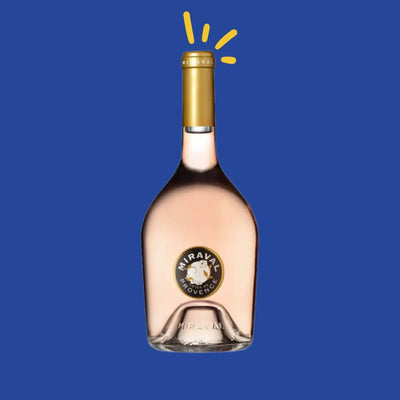
Where the color comes from
Essential starting point: the juice of almost all grapes is colorless, including black grapes.
The color comes exclusively from the skin, in the form of pigments called anthocyanins. It is the duration of contact between the juice and the skins that determines the color of the wine.
- No contact: white wine, even from black grapes. This is the principle of blanc de noirs in Champagne.
- A few hours: rosé.
- Several days or weeks: red wine.
The two methods of making rosé
Direct pressing
The dominant method in Provence, and the one that produces the palest rosés.
Black grapes are pressed as soon as they arrive at the winery, just as they would be for white wine. The brief contact between the juice and the skins during pressing is enough to extract a light color.
- The result: pale, delicate, aromatic wines, with little tannic structure.
- The requirement: the grapes must be harvested early, often at night, and arrive intact and cold at the winery.
- The risk: oxidation, because the juice is highly exposed. Hence the use of cold and inert gases.
Saignée
The historical method, still used in the Rhône, Languedoc, and Southwest.
The grapes are placed in a tank as they would be for red wine. After a few hours of maceration, some of the juice is drawn off and vinified separately as rosé.
- The result: darker, more structured, more winey rosés.
- The secondary advantage: the remaining red wine is more concentrated, since juice was removed without removing the skins.
- The criticism: when rosé is merely a byproduct of red wine, the quality suffers.
The best saignée rosés are those where the tank is designed for rosé from the outset.
Winery work
A modern rosé is a technical wine, far more than its summery image suggests.
- Night harvesting: so that the grapes arrive fresh and oxidation is limited.
- Gentle pressing: to avoid extracting bitterness and vegetal notes from the skins and seeds.
- Settling: the particles are allowed to settle before fermentation.
- Low-temperature fermentation: between 14 and 18 degrees, to preserve the aromas.
- Protection from oxygen: inert gases, closed tanks, minimal handling.
Each step aims for the same goal: to preserve the aromatic freshness, which is the whole point of the wine.
What the color says, and does not say
What it says
The duration of contact with the skins, and therefore partly the method used. A very pale rosé probably comes from direct pressing.
What it does not say
- Sugar: a dark rosé is not sweeter. Sugar depends on fermentation, not color.
- Quality: there are excellent dark rosés and pale rosés with no appeal.
- Alcohol content: no correlation.
The trend of very pale rosé is a commercial construct of the last thirty years, led by Provence. It has pulled the entire world's production in its wake.
The grape varieties of rosé
- Cinsault: the most delicate, with delicate red fruits.
- Grenache: roundness and body. See our guide to Grenache.
- Syrah: color and spices.
- Mourvèdre: structure, especially in Bandol.
- Rolle or vermentino: tension and salinity.
- Tibouren: an old Provençal grape variety, rare and highly distinctive.
See the Miraval Rosé.
Frequently asked questions
Is rosé a second-tier wine?
No. Technically, it is one of the most delicate wines to make successfully, because it has neither the tannins of red nor the high acidity of a northern white to mask flaws.
Can rosé be made with white grapes?
No, there would be no pigment. Rosé always comes from black grapes.
Why harvest at night?
So that the grapes arrive cold at the winery, which limits oxidation and preserves the aromas.
What is the difference with a clairet?
Bordeaux clairet is a very dark and structured saignée rosé, close to a light red.
Order your rosé from Le Caveau des Pépites
We work directly to guarantee the origin and traceability of every bottle. Stored in our climate-controlled, humidity-controlled warehouses in France, hand-packed and wrapped, shipped from mainland France with tracked and insured transport. Free delivery on orders over 300 euros. Customer service available 7 days a week, in French and English.
To learn more: our guide to Provence rosé.