Cognac is one of the best-selling spirits in the world and one of the least understood by those who drink it.
To see our selection, visit our spirits.
Where does cognac come from?
From a defined area around the town of Cognac, in Charente and Charente-Maritime, on the Atlantic coast.
The region originally produced light white wines exported to Northern Europe. As these wines did not travel well, they began to be distilled to concentrate them, with the idea of rehydrating them upon arrival.
It soon became apparent that the distilled product, stored in barrels during transport, was much better as it was. Cognac was born.
Our pick for this article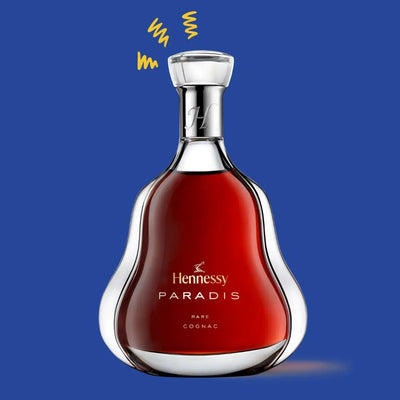
The grape variety
Ugni blanc accounts for almost the entire vineyard.
Its characteristics make it a poor table wine and an excellent distilling wine: very acidic, low in alcohol, aromatically neutral, and productive.
- Acidity protects the wine from oxidation before distillation, without the addition of sulfur.
- Low alcohol content requires distilling a lot of wine to obtain a small amount of eau-de-vie, which concentrates the aromas.
- Neutrality allows the wood and time to express themselves.
The six crus
The classification is based entirely on the nature of the soil, and more specifically on its limestone content.
- Grande Champagne: soft Cretaceous chalk. The finest and most suitable eau-de-vies for very long aging. They require the most time.
- Petite Champagne: slightly harder chalk. Also very fine, opening a little faster.
- Borderies: the smallest cru, on flinty clay. Roundness, violet, hazelnut. Highly sought after for blending.
- Fins Bois: the largest. Fruity, supple eau-de-vies that age quickly.
- Bons Bois: more rustic, maritime influence.
- Bois à Terroirs: on the edge, sandy soils.
The word Champagne has no connection here with the wine region in the northeast: it comes from the Latin campania, which designates a plain, and refers to the chalky soils.
Double distillation
It is mandatory, in a Charentais copper pot still heated with an open flame.
The first distillation
The wine is heated, the alcohol vapors rise, condense and produce an opaque liquid with a strength of around 30 degrees, called brouillis.
The second distillation
The brouillis is re-distilled. This is the decisive operation: the distiller separates the heads, the heart, and the tails.
- The heads: the first vapors, too volatile and aggressive. Discarded.
- The heart: the noble fraction, around 70 degrees. This is the future cognac.
- The tails: the end of the distillation, heavy and vegetal. Discarded or recycled.
The precise timing of the cuts is a matter of the distiller's expertise and largely determines the house's style.
Aging
In French oak barrels, from Limousin for a wide-grained wood that gives up its tannins quickly, or from Tronçais for a fine grain and slower extraction.
What the wood brings
- Color: an eau-de-vie comes out colorless from the still.
- Tannins: they structure and give body.
- Aromas: vanilla, spices, precious woods, coconut depending on the distillations.
- Slow oxygenation: it softens the alcohol and creates tertiary aromas.
The angels' share
Several percent of the volume evaporates every year through the wood. Over several decades, most of the barrel thus disappears. This is the main reason for the price of old eau-de-vies.
Age statements
- VS: eau-de-vie at least two years younger.
- VSOP: at least four years.
- Napoléon: at least six years.
- XO: at least ten years.
- XXO: at least fourteen years.
- Hors d'âge and prestige cuvées: without a strict regulatory definition, they practically designate much older blends.
Essential reminder: the statement indicates the age of the youngest eau-de-vie, not the average of the blend.
See the Hennessy Paradis.
How to drink it
- Tulip glass with a stem, never a balloon.
- Room temperature, without heating the glass.
- Two to three centiliters.
- Without ice on a prestige cuvée.
- Standing up for storage, away from light.
Frequently asked questions
Cognac or armagnac?
Cognac is distilled twice and generally finer. Armagnac, distilled once, is more powerful and more rustic, often vintage.
Why do we talk about Champagne in Charente?
The word comes from the Latin campania and designates the chalky soils. No connection with the Champagne region.
Can a cognac be vintage?
Yes, but it is rare and very strictly regulated. The vast majority of cognacs are blends.
Which cognac to start with?
A VSOP from a good house, which already shows the balance between fruit and wood without requiring a big budget.
Order your cognac from Le Caveau des Pépites
We work directly to guarantee the origin and traceability of each bottle. Storage in our climate-controlled warehouses with controlled humidity in France, hand-packing and wrapping, shipping from mainland France with tracked and insured transport. Free delivery from 300 euros. Customer service available 7 days a week, in French and English.