Two great crus from the Côte de Nuits, separated by a few kilometers, and two wines that could never be confused. Here is what sets them apart.
To see what is available, visit the Robert Groffier collection.
Bonnes-Mares
A vineyard spanning two villages
Bonnes-Mares has an interesting geographical feature: it extends across two communes, with the majority in Chambolle-Musigny and the rest in Morey-Saint-Denis.
This is no trivial detail, as the soils change along the length of the vineyard. In the north, on the Morey side, the soils are redder and more clay-like. In the south, on the Chambolle side, they are whiter and more limestone-rich.
Producers commonly refer to red soils and white soils, and the wines from these two areas have distinct characters.
The profile
Bonnes-Mares is the exception in Chambolle. Where the village is renowned for its delicacy, this grand cru produces structured, dense wines with firm tannins.
On the nose, black fruits rather than red, spices, forest floor, and a more earthy dimension. On the palate, a compact texture, firm tannins, and a long, deep finish.
It is a demanding wine for aging that requires time. Aging potential: fifteen to twenty-five years.
See the Bonnes-Mares Grand Cru 2018.
Our pick for this article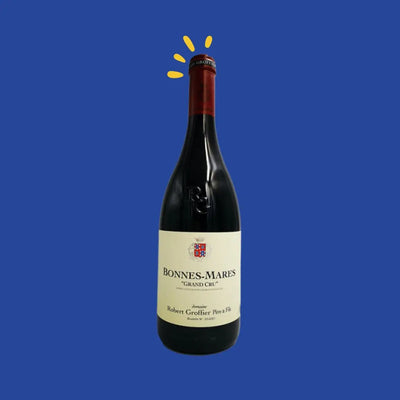
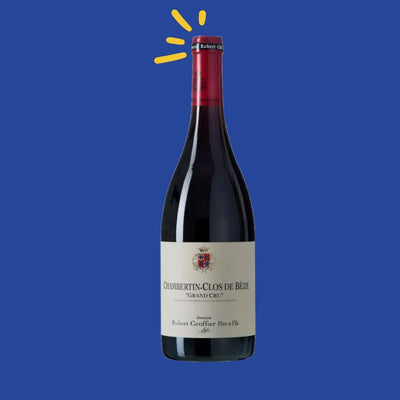
Chambertin-Clos de Bèze
Monastic origins
This vineyard is one of the earliest documented in Burgundy. Its origins date back to the Early Middle Ages, when monks from a local abbey cleared and planted this plot.
This is where the name comes from: the enclosed vineyard of the Bèze abbey. According to tradition, neighboring Chambertin owes its very existence to it, as a winemaker named Bertin planted his vineyard next to the monks' enclosed vineyard.
A regulatory peculiarity
Here is a fact few people know: Chambertin-Clos de Bèze can legally be marketed simply as Chambertin.
The reverse is not true: a Chambertin cannot be sold as Clos de Bèze.
This is an implicit recognition of the enclosed vineyard's antiquity and prestige. In practice, producers almost always mention Clos de Bèze, as the name carries greater value.
The profile
It is the style of Gevrey at its most refined: power, structure, depth.
On the nose, black fruits, black cherry, forest floor, spices, and with age, leather, truffle, and mushroom. On the palate, a broad start, a dense texture, significant tannins that provide structure, and a considerably long finish.
Aging potential: fifteen to thirty years in great vintages.
See the Chambertin Clos de Bèze 2018.
The two side by side
- Bonnes-Mares: dense and earthy, between the finesse of Chambolle and the structure of Morey. A hybrid personality.
- Clos de Bèze: the architecture of Gevrey, deeper and more imposing, with greater aging potential.
Both require time and dishes worthy of them, unlike the more delicate vineyards of Chambolle such as Les Amoureuses.
Service and aging
- Temperature: 15 to 16 degrees.
- Decanting: one to two hours for a young vintage. For a wine over ten years old, stand the bottle upright 24 hours beforehand and decant carefully.
- Glass: large Burgundy glass.
- Food pairings: game birds, pigeon, beef, truffle, aged cheeses. These two grand crus can stand up to dishes that more delicate vineyards could not.
- Storage: laid flat, between 12 and 14 degrees, in darkness and away from vibrations.
The 2018 vintage
A warm and sunny year with generous yields. The wines are rich and ripe, with soft tannins and slightly lower acidity than average.
On naturally structured vineyards such as these, this profile makes the wines accessible earlier than usual while retaining significant aging potential.
Frequently asked questions
Why is Bonnes-Mares so different from the rest of Chambolle?
Because of its soils, which are more clay-like and deeper than those in the rest of the village. Geology takes precedence over administrative boundaries.
Should you prefer Chambertin or Clos de Bèze?
The two vineyards are neighbors and comparable in quality, with nuances that only very discerning connoisseurs can distinguish. The producer's name matters more than choosing between the two.
How many years should you wait?
At least ten years for both, and longer for great vintages. Opened young, they require two hours in a decanter and will only reveal a fraction of what they will become.
Why are these wines so rare?
The vineyard areas are very small and divided among many owners. Each estate produces only a few hundred or thousand bottles per year.
Order your grand cru from Le Caveau des Pépites
For this type of bottle, traceability and storage conditions are essential. We work directly with producers to guarantee the origin of every bottle. Stored in our climate-controlled, humidity-regulated warehouses in France, each bottle is hand-packed in reinforced packaging and shipped from mainland France via tracked and insured transport. Free delivery on orders over 300 euros. Customer service is available seven days a week in French and English.
To learn more: our guide to Gevrey grand crus and Domaine Robert Groffier.