




Peat is the most divisive subject among whisky lovers. Some swear by it, while others find it overpowering. In both cases, few people know exactly where it comes from and how it gets into the glass.
Here is the complete guide. To see what is available, check out our whiskies.
What is peat
Peat is organic matter formed by the very slow decomposition of plants, mosses, and heather, mainly, in waterlogged and oxygen-poor soils.
The process takes thousands of years. A one-metre layer of peat represents about a millennium of accumulation. It is, in a way, coal at a very early stage of formation.
Cut into briquettes and dried, it was long used as fuel in deforested regions, notably in Scotland and Ireland. It was from this domestic use that peated whisky was born.
Our pick for this article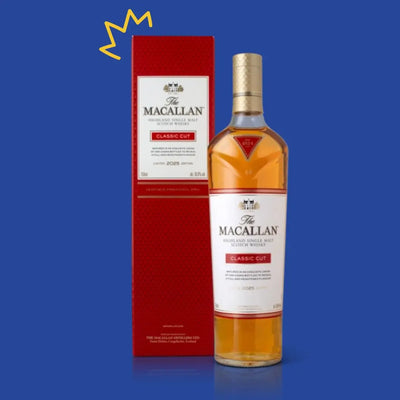
How peat gets into whisky
This is the most often misunderstood point: peat only comes into play at one stage, and it has nothing to do with the soil where the barley grows or with the water used.
The process is as follows. The barley is soaked and then allowed to germinate, which converts its starches into fermentable sugars. This germination must then be stopped, and this is done by drying.
If the drying takes place over a peat fire, the smoke infuses the damp grain with phenolic compounds. These compounds survive fermentation and distillation, and end up in the glass.
In other words: it all comes down to a few hours of drying, at the very beginning of the process.
PPM, and what they don't tell you
The peat level is measured in parts per million of phenols. Here are a few benchmarks.
- 0 ppm: unpeated. The vast majority of Scottish whiskies.
- 5 to 15 ppm: lightly peated. A subtle smoke in the background.
- 20 to 40 ppm: distinctly peated.
- 40 ppm and above: very peated. The register of distilleries on the south coast of Islay.
Beware of a common trap: the stated figure generally refers to the malted barley, not the finished whisky. A significant portion of the phenols disappears during fermentation, distillation, and ageing.
A whisky stated at 50 ppm in the barley may contain much less once bottled. The figure is therefore an indicator, not a measure of what you will taste.
What peat gives in the glass
The word smoky is reductive. Depending on the origin of the peat and the distillery, you will find very different registers.
- Medicinal: iodine, bandage, antiseptic. Typical of the south coast of Islay.
- Marine: seaweed, sea spray, salinity. Linked to the proximity of the ocean.
- Wood fire: cold ash, barbecue, burnt wood.
- Earthy: humus, wet earth, moss.
- Soft smoke: smoked bacon, smoked tea, leather.
Islay peat, formed by the sea with seaweed and marine plants, gives this very particular iodine and medicinal character. Highland peat, more terrestrial, gives a more vegetal profile.
The regions of peated whisky
Islay
The worldwide benchmark. The south coast of the island concentrates the most peated whiskies on the planet, with a very pronounced iodine character. See our Ardbeg and our Lagavulin.
The Islands
Skye, Orkney and the other islands produce peated whiskies but generally more moderate ones, often with a peppery or honeyed dimension. See our Highland Park.
The Highlands and Speyside
Mostly unpeated, even if some distilleries produce occasional peated bottlings.
How to taste a peated whisky
- The glass: tulip with a narrow rim. This is essential to concentrate the aromas.
- The temperature: room temperature. Cold completely closes the peat.
- Time: this is the most important advice. A very peated whisky is dominated by smoke in the first few minutes. Let it rest for ten minutes and the fruit, malt, and spices will appear.
- Water: a few drops at a high temperature can open up masked aromas. Always try it neat first.
- The pace: the palate saturates quickly. Drink slowly.
Pairings
Oysters and shellfish, smoked salmon, blue cheeses, very cacao-forward dark chocolate, smoked meats. The pairing with oysters is one of the most successful in the spirits world: iodine answers iodine.
Frequently asked questions
Can you get used to peat?
Yes, it is very common. Many enthusiasts find peated whiskies aggressive at first and then end up drinking nothing else. Start with a moderate profile.
Does peat come from the soil where the barley grows?
No. This is the most widespread mistake. It comes solely from the drying of the malted barley over a peat fire.
Is an old peated whisky less smoky?
Yes. The phenolic compounds fade with years in the cask. A very old Islay whisky keeps its peat but it becomes a background rather than a foreground.
Are the stated ppm reliable?
They generally measure the malted barley, not the finished whisky. It is an indicator of the producer's intention, not of what you will perceive.
What peated whisky to start with?
A moderate expression rather than an extreme bottling. And give it ten minutes in the glass before judging.
Order your whisky from Le Caveau des Pépites
We work directly to guarantee the origin and traceability of each bottle. Stored in our climate-controlled warehouses with controlled humidity in France, hand-padded and packed, shipped from mainland France with tracked and insured transport. Free delivery from 300 euros. Customer service available 7 days a week, in French and English.
To learn more: the Ardbeg distillery and The Macallan, the other school of Scottish whisky.





