Buying a Dom Pérignon raises three questions in succession: white or rosé, which vintage, and is an artist edition necessary? Each has an answer depending on what you intend to do with the bottle.
Here is the guide. To see what is available, visit the Dom Pérignon collection.
Question 1: white or rosé?
The White Vintage
The classic expression of the cuvée: tension, minerality, citrus, white flowers, a very fine bubble, and that saline, slightly bitter finish that is the house's signature.
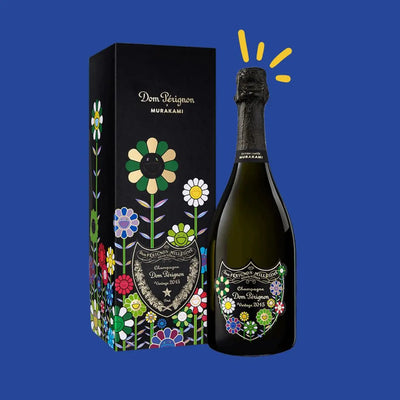
It is the choice for a fish course, a top-tier aperitif, or a bottle you want to keep for a few years. See the Dom Pérignon Vintage 2015.
The Rosé
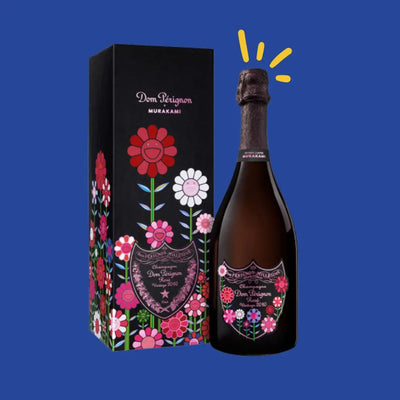
A cuvée produced in much smaller quantities and significantly more complex to make. The profile changes completely: fresh red fruits, orange peel, a more wine-like structure, and a very fine tannin on the finish.
This is not an aperitif. It is a table champagne that requires a dish: pigeon, duck, fish in a red sauce, or truffle-infused poultry. Also see our rosé champagnes.
Our pick for this article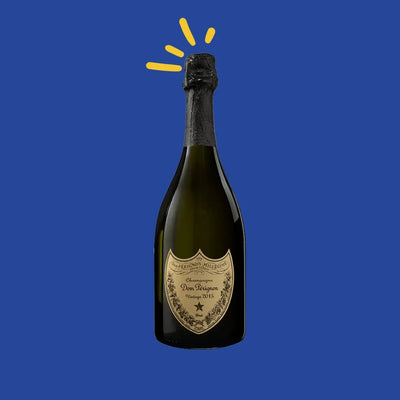
Question 2: which vintage?
Dom Pérignon is only available in vintage, and the cuvée is only produced in years deemed worthy. Each vintage therefore has its own personality.
2015
A sunny vintage in Champagne, with generous ripeness, which produces a fuller and more immediately appealing version of the cuvée. A good choice for a first approach or to open in the coming years.
2018
A warm vintage, with comfortable volumes. The wine is rich and accessible, while retaining the house's characteristic tension.
Old vintages in rosé
The available 2006, 2008, and 2010 rosés are already showing patina. At this stage, the red fruit gives way to notes of candied fruit, spices, and forest floor, with a creamier texture. These are bottles for tasting.
Question 3: standard or artist edition?
An essential point: in the vast majority of cases, the wine is identical. What changes is the packaging, the box, and sometimes the bottle.
- Choose a standard edition if you are buying it to drink. You are paying for the wine, not the object.
- Choose an artist edition if you are giving it as a gift, if you collect them, or if the object matters as much as the contents.
The available editions cover three very different worlds: Murakami Vintage 2015 and Murakami Rosé 2010; Lady Gaga Rosé 2008 and Lady Gaga Rosé 2006 Luminous; Damien Hirst Vintage 2018 and Damien Hirst Rosé 2010.
For details, see our article on artist editions.
Choosing according to the occasion
A gourmet meal
The White Vintage, served at 12 degrees in a wine glass. You can pair an entire fish menu with this single bottle.
A white meat dinner
A Rosé. Its wine-like structure allows for pairings that a white would not hold up to.
An important gift
An artist edition. The object makes the gift even before it is opened. See our gift ideas.
An evening event
A Luminous bottle, equipped with integrated lighting, designed exactly for this.
A collector's cellar
Limited editions of old vintages, particularly in rosé. They combine two forms of rarity. See our limited editions.
A birthday or wedding anniversary
The vintage corresponding to the year, if the cuvée was produced that year. It is one of the most memorable champagne gifts there is.
The service, which changes everything
- Temperature: 11 to 12 degrees. This is the decisive point. At 7 degrees, you are paying for a prestigious cuvée to drink a cold bubble.
- Glass: a wide white wine glass. Never a flute, which stifles the aromatic complexity, never a coupe, which lets the bubble escape.
- Opening: open gently while holding the cork. The noise adds nothing and the loss of gas hurts the wine.
- Patience: ten minutes in the glass. The cuvée changes significantly between the first and third sip.
Frequently asked questions
Should a Dom Pérignon be decanted?
No for a recent vintage. For a very old vintage with tired bubbles, a quick pass can help, but it is a delicate exercise.
How long does the bottle last?
Fifteen to twenty-five years after the vintage in good conditions, more in a magnum. The wine is nevertheless marketed ready to drink.
How to check authenticity?
Buy from a seller capable of documenting their supply chain. It is one of the most counterfeited brands in the world, and an abnormally low price is a warning.
Is an old vintage necessarily better?
No, it is different. A recent vintage offers more tension and freshness, an old vintage more tertiary complexity. It is a matter of taste and timing.
Buy your Dom Pérignon at Le Caveau des Pépites
We work directly to guarantee the origin and traceability of each bottle. Stored in our climate-controlled warehouses with controlled humidity in France, hand-packed and wrapped, shipped from mainland France via tracked and insured transport. Free delivery from 300 euros. Customer service available 7 days a week, in French and English.
To go further: the history of Dom Pérignon and our champagnes.