Languedoc is a vast wine region, and its reputation has long suffered from the mass production that dominated it in the twentieth century.
A few appellations have broken free from this image. Faugères is one of them, and it owes this to its subsoil. To see what is available, visit our Faugères wines.
The setting
The appellation covers seven communes in Hérault, north of Béziers, where the coastal plain meets the foothills of the Cévennes.
The vineyards are situated at an altitude of approximately 200 to 400 metres, on south-facing slopes cooled by altitude and mountain influences.
Our pick for this article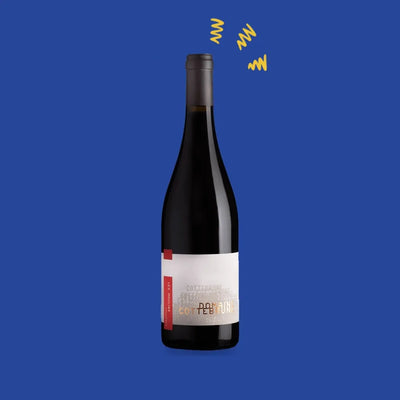
Schist
This is the defining factor: Faugères is almost entirely grown on schist, which is rare and clearly defines the appellation.
What is schist?
A metamorphic rock, meaning a rock that has been transformed. Originally, it was clay deposited on the floor of an ancient sea. Subjected to enormous pressure and temperatures during the formation of the mountain ranges, it recrystallised into layers.
The result is a rock that splits into plates and fractures vertically.
How this affects the vines
- Deep root systems: the roots follow the fissures between the layers, sometimes for several metres.
- Drought resistance: this deep root system gives access to moisture that shallow soils do not have. This is crucial in a Mediterranean climate.
- Poor soils: little organic matter, resulting in naturally low yields and concentrated grapes.
- Heat: the dark rock absorbs solar energy and releases it at night.
The character of schist
Wine tasters regularly describe a smoky, graphite-like, sometimes almost saline sensation in schist wines.
This signature can also be found in Banyuls, Collioure, in the schist areas of Côte-Rôtie, and in Portugal's Douro. The exact link between the rock and this perception has not been scientifically proven, but the consistency of the observation is striking.
The appellation's grape varieties
- Syrah: it expresses itself remarkably on schist, with its peppery and floral character.
- Mourvèdre: it provides structure and longevity.
- Grenache: ripe fruit and roundness.
- Carignan: long dismissed, it produces fresh, distinctive wines from old vines.
- Cinsault: used sparingly to add finesse.
The appellation also produces whites, made from Roussanne, Marsanne, Vermentino and Grenache Blanc, but in very small quantities.
The style of the reds
On the nose
Black fruits, blackberry, blackcurrant, black olive. Garrigue: thyme, rosemary, bay leaf. Pepper. And that recurring smoky note.
On the palate
A fresher start than the Languedoc average, firm but fine tannins, and a mineral, persistent finish.
These are wines that benefit from waiting a few years, which is not the case for all Languedoc wines.
See the Faugères Les Moulins 2021.
Faugères and its neighbours
- Saint-Chinian: right next door, with one part on schist and another on limestone. More varied.
- Minervois: further west, on terraces and limestone. Softer wines.
- Pic Saint-Loup: further east, at altitude on limestone. Very fresh and floral wines.
- Corbières: further south, very large and very varied.
See our complete guide to Languedoc.
Serving
- Temperature: 16 degrees, never more.
- Decanting: one hour for a young wine.
- Ageing: five to twelve years for the good cuvées.
- Glass: large.
Frequently asked questions
Is Faugères good value for money?
Yes, it is one of the best in Languedoc, because the appellation is less famous than the quality of its terroir.
What is the difference with Saint-Chinian?
Faugères is entirely on schist, while Saint-Chinian is split between schist and limestone. Faugères is therefore more consistent.
Are the whites worth trying?
They are rare but interesting, with a broad character and beautiful mineral freshness. See our white wines.
Should these wines be aged?
They benefit clearly from three to five years, especially the cuvées rich in Mourvèdre.
Order your Faugères from Le Caveau des Pépites
We work directly with producers to guarantee the origin and traceability of every bottle. Stored in our climate-controlled, humidity-regulated warehouses in France, hand-packed and wrapped, and shipped from mainland France via tracked and insured transport. Free delivery on orders over 300 euros. Customer service available seven days a week, in French and English.
To learn more: Domaine Cottebrune.