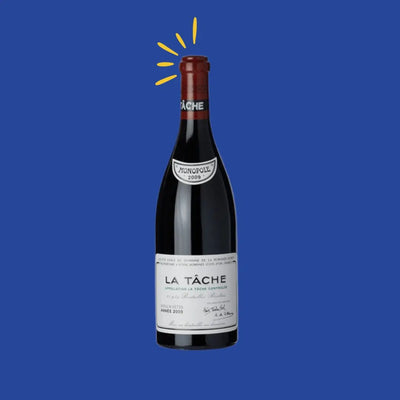
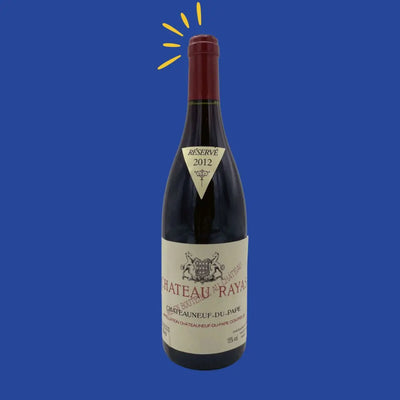
Fine wine auctions attract more and more collectors, enthusiasts and investors. They give access to rare bottles, old vintages, prestigious grands crus and lots from private cellars.
But buying wine at auction requires a good understanding of the market's rules. Between estimates, expert assessment, provenance, reserve prices, hammer price and fees, each step can influence the final price and the real interest of a lot.
Estimating a wine before the sale
Before being offered at auction, a wine is usually given an estimate.
This estimate takes several criteria into account: the estate, vintage, rarity, demand, the bottle's condition, its provenance and previous sale results.
It gives an indication of value, but it does not necessarily match the final price.
Depending on how many buyers are interested, the lot may sell above or below the announced range.
Our pick for this article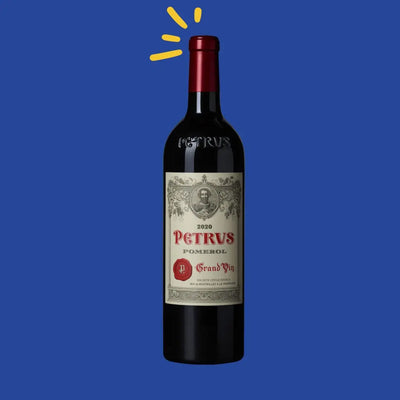
Expert assessment, an essential step
Before a fine wine auction, bottles are usually examined carefully.
The assessment checks their general condition and spots any anomalies.
The fill level, the condition of the label, capsule or cork may all be inspected.
For old vintages, these details are particularly important.
A prestigious but poorly stored bottle can lose much of its value on the secondary market.
Why provenance matters so much
Provenance is the bottle's history.
It may include where it was bought, its previous owners, its storage conditions and sometimes evidence that traces its journey.
A bottle with clear provenance generally inspires more confidence.
Conversely, an incomplete history can reduce buyers' interest.
Two bottles identical on paper can therefore fetch different prices simply because of their storage and traceability.
How are lots put together?
At a sale, a bottle may be offered alone or grouped with others.
A lot may contain several bottles from the same estate, vintage or appellation.
Some sales also offer full cases or large formats.
The catalogue generally specifies the lot's contents, estimate, condition and available information on provenance.
Reading this description carefully is essential before bidding.
The reserve price
The reserve price is the minimum amount the seller will accept.
If bidding does not reach this threshold, the lot may go unsold.
The reserve price should therefore not be confused with the estimate.
The estimate serves as a guide.
The reserve protects the seller.
The hammer price is the amount reached when bidding ends.
How to take part in an auction
Today, there are several ways to bid.
Depending on the auction house, you can take part in the room, online, by phone or with an absentee bid.
A maximum bid can also be placed.
The buyer then states the maximum amount they are willing to pay.
The system automatically raises the bid when necessary, without exceeding that limit.
This lets you take part without following the whole sale live.
What is the hammer price?
When no one wants to bid higher, the lot is knocked down.
The bidder with the highest offer becomes the successful buyer.
The amount reached is the hammer price.
But this amount is not always the final cost.
Buyer's fees usually need to be added.
Buyer's fees to anticipate
Auction fees can have a major impact on the real price.
They are added to the hammer price.
Depending on the auction house, the commission can represent a significant share of the total cost.
Transport, insurance, delivery or storage costs may sometimes be added too.
For an investor, these expenses should always be factored in before setting a maximum bid.
Seller's fees
The seller may also have to pay a commission.
The amount actually received after the sale can therefore be lower than the hammer price.
Before selling wine at auction, it is important to read the terms of sale and calculate the expected net result.
This helps avoid unpleasant surprises.
Why look at auction results?
Sale results let you track the prices the market actually accepts.
This is essential.
A bottle can be listed at a very high price without ever finding a buyer.
Conversely, several transactions completed at similar levels give a much more reliable indication of its real value.
To analyse the secondary wine market, hammer prices are therefore particularly useful.
Rarity is not always enough
A rare bottle is not automatically a good opportunity.
To gain value, it must also be sought after.
The estate's reputation, the vintage, international demand and the number of transactions all play a role.
A wine produced in very small quantities but in little demand can remain hard to resell.
Liquidity is therefore an important criterion for investors.
Storage directly affects value
A fine wine must be stored in good conditions.
Stable temperature, suitable humidity, little exposure to light and careful transport are all important.
Poor storage can reduce a bottle's appeal, even from a prestigious estate.
For old vintages, the fill level is also watched.
It can give clues about how the wine has evolved and been stored.
Buying wine at auction to invest
Auctions can offer real opportunities.
But avoid being guided solely by the prestige of a name.
Before buying, it is best to compare several sale results, study the lot's provenance and check demand on the secondary market.
Set your maximum price in advance.
This limit should include auction fees and any additional costs.
Don't get carried away by the competition
Auctions easily create a competitive effect.
Two buyers interested in the same bottle can quickly push the price above its usual value.
That is why it is important to set a limit before the sale.
Winning an auction does not necessarily mean getting a good deal.
The real goal is to buy at a price consistent with the market.
Fine wine auctions: a market worth understanding
A fine wine auction ultimately rests on several steps: estimate, expert assessment, provenance, lot composition, reserve price, bidding, hammer and payment.
For buyers and sellers alike, market knowledge remains essential.
Past results, the bottles' condition, fees and demand help you better understand a wine's real value.
Auctions can thus be an excellent way to buy or sell collectible bottles, provided you do not look only at the estate's name.
On the secondary market, the value of a fine wine depends as much on its reputation as on its provenance, its condition and the price buyers are really willing to pay.