The market for exceptional wines has once again shown its strength.
At an auction held this weekend, a bottle of Romanée-Conti 1945 sold for $812,500, setting a new record and confirming the enduring appeal of the rarest grands crus.
Beyond its spectacular nature, this event is part of a broader dynamic that is redefining the balance of the wine market.
An intensely contested auction
From the opening of the bidding, interest in this bottle was clear. Several international buyers quickly took positions, driving prices up fast.
This kind of situation is significant. It illustrates a now well-identified phenomenon: the rarest wines are no longer simply sought after, they are actively fought over.
In this context, the final price reflects a tension between:
- extremely limited availability
- structured global demand
- strong symbolic value
Crossing the $800,000 mark at this sale confirms the trend.
Our pick for this article
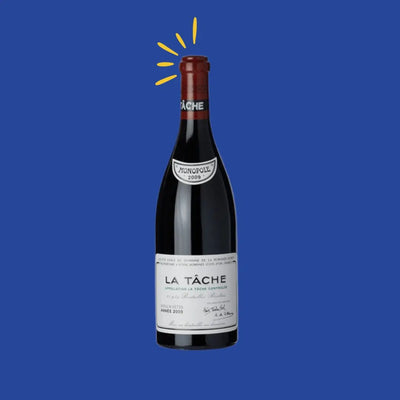
A wine with unique status
Romanée-Conti 1945 holds a special place in the wine world.
From a pivotal year at the end of the Second World War, this vintage was the last produced before the vineyard was completely replanted. The vines were then pulled up, making this production particularly limited.
An estimated 600 or so bottles were produced, making it one of the rarest wines on the market.
But its value goes far beyond that figure.
It rests on a combination of factors:
- a powerful history
- a prestigious origin
- an image associated with excellence
This combination gives each bottle a unique heritage dimension.
A market being reshaped
This sale comes at a time of significant change in the wine market.
Some categories are adjusting, notably because of changing drinking habits.
Yet exceptional wines continue to progress.
This contrast highlights a structural transformation: value is increasingly concentrated on the rarest and most iconic products.
The market is not weakening. It is reorganising around new standards.
The rise of wine as a tangible asset
The $812,500 transaction confirms an underlying trend: wine is gradually establishing itself as a sought-after tangible asset.
Beyond drinking, some bottles are now bought with a long-term wealth perspective.
Investors see several advantages:
- intrinsic rarity
- international recognition
- appreciation potential
In an uncertain economic environment, these characteristics strengthen the appeal of exceptional wine.
Demand driven by international buyers
The profile of buyers has changed profoundly in recent years.
Today, auctions attract participants from all over the world.
The United States, Asia and the Middle East play a growing role in these transactions, bringing significant investment capacity.
This international openness increases competition and contributes to rising prices for the rarest wines.
Auctions as a catalyst for value
Auctions do not merely reflect the market; they actively help shape it.
Each record acts as a benchmark, influencing investors' perceptions and strategies.
This weekend's $812,500 sale fits this logic.
It redefines valuation levels and strengthens the appeal of the exceptional wine segment.
What this record reveals
Several lessons can be drawn from this event.
First, demand for iconic wines remains particularly strong.
Second, the market is becoming increasingly selective, concentrating value on a small number of references.
Finally, this sale confirms that wine now holds a special place among alternative assets.
Conclusion
The sale of a Romanée-Conti 1945 for $812,500 marks a new step in the evolution of the wine market.
It illustrates a profound transformation in which rarity, history and prestige are becoming the main drivers of value.
In this context, the market no longer follows a uniform logic.
It is segmenting, specialising and moving upmarket.
And it is precisely these changes that open the way to new opportunities.
To go further: explore our Domaine de la Romanée-Conti selection, our limited editions and rare bottles and our Burgundy wines.