Investing in wine is not simply buying a bottle today to sell it for more tomorrow. Between the purchase price and the resale price, several costs can significantly reduce real performance.
Storage, insurance, transport, commissions, transaction fees and tax must be taken into account from the start.
To know whether a bottle is really profitable, you must therefore think in terms of net gain, not just increase in value.
The purchase price determines much of the potential
The first element to watch is the entry price.
A very prestigious bottle can be interesting, but if it is bought too expensively, its growth potential becomes smaller.
Compare prices available on the secondary market, specialist platforms and at auction.
The right product bought at the wrong price can become a bad investment.
Our pick for this article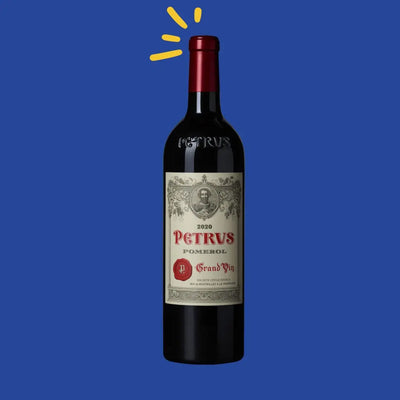
Transaction fees at purchase
Depending on the channel chosen, fees can be added to the bottle's price.
Platforms, brokers or intermediaries may charge a commission.
These fees immediately increase the real acquisition cost.
Always look at the final amount paid, not just the listed price.
The higher the entry costs, the more the bottle must rise to become profitable.
Professional storage
Wine is a physical asset.
It must be kept in good conditions.
Stable temperature, controlled humidity, no light and limited vibration are essential.
Professional storage protects the bottle, but it is an annual cost.
Over several years, this expense can become significant.
It must therefore be included in the return calculation.
Storage also protects value
Storage does not only preserve the wine's quality.
It also affects resale.
A bottle with clear provenance and a serious storage history can inspire more confidence.
Conversely, a badly stored bottle may be discounted.
A damaged label, a spoiled capsule or an abnormally low fill level can reduce buyer interest.
Insurance
A valuable collection may require specific insurance.
It covers certain risks such as breakage, theft or disaster.
The cost generally depends on the total value of the portfolio.
The more the cellar is worth, the more seriously this expense must be taken.
Insurance protects capital, but it also slightly reduces net return.
Transport and delivery
Transport is another important item.
A high-value bottle must be packed properly.
Secure transport may be necessary.
Costs rise further when bottles are shipped abroad.
They can apply both at purchase and at resale.
They must therefore be included over the whole life of the investment.
Commissions at resale
Resale is rarely free.
Auction houses, brokers and specialist platforms may take a commission.
The publicly displayed price therefore does not necessarily match the amount the seller actually receives.
A wine sold for 1,000 euros may bring in noticeably less once fees are deducted.
This difference is fundamental.
The hammer price is not the net gain
Auction records often attract attention.
But a hammer price remains a gross price.
Commissions, transport or other fees may still need to be deducted.
An isolated record also does not mean every identical bottle can be resold at the same level.
Several transactions must be observed before estimating a true market value.
The role of provenance
Provenance plays a major role in wine investment.
Collectors want to know where the bottle was bought and how it was stored.
Invoices, certificates and storage history provide reassurance.
A bottle of uncertain origin can be harder to sell.
Traceability must therefore be preserved from the moment of purchase.
The original case
For some references, the original wooden case can increase a lot's appeal.
It can make traceability easier and strengthen buyer confidence.
Full cases are sometimes particularly sought after.
But they take up more space and can lead to higher storage costs.
This must therefore be built into the overall cost.
Liquidity
Profitability does not depend on value alone.
You also need to be able to find a buyer.
Liquidity measures how easily a bottle can be resold.
A very rare but little-sought reference can stay on the market for a long time.
Meanwhile, storage and insurance keep costing money.
Good liquidity can therefore be as important as a strong price rise.
The investment horizon
The longer a bottle is kept, the more costs accumulate.
A ten-year investment bears more costs than a three-year one.
Appreciation potential must therefore be large enough to offset this duration.
The long term can be attractive, but it is never free.
Tax
Depending on the country, the transaction amount and the seller's status, tax may apply.
Taxes, duties or reporting obligations can reduce the final capital gain.
It is therefore important to find out before reselling.
Gross and net gains can be very different.
An example of real profitability
A bottle is bought for 800 euros.
A few years later, it is sold for 1,100 euros.
The gross rise is 300 euros.
But after storage, insurance, transport and resale commission, the real gain can be much lower.
This is why a price rise should never be confused with a return.
Net return as the true reference
The most useful calculation is simple:
net resale price
minus purchase price
minus storage
minus insurance
minus transport
minus commissions
minus any tax.
The result reflects real performance much more accurately.
Investing in wine requires an overall view
Investing in a bottle is therefore not just about the estate's prestige or the vintage's potential.
Entry price, transaction fees, storage, insurance, provenance, liquidity and resale costs are just as important.
The best bottle is not necessarily the one showing the biggest rise.
It is the one that keeps real demand and, after all costs, generates a sound net return.