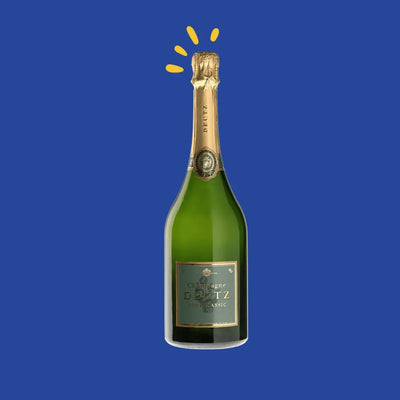
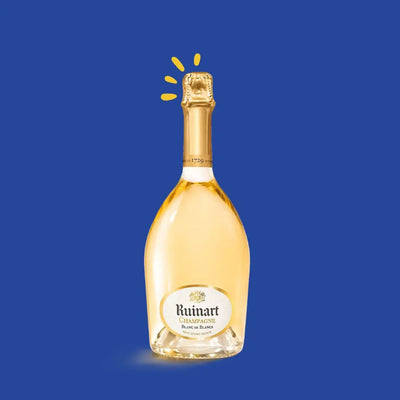
Brut, Extra-Brut, Brut Nature, Sec or Demi-Sec: these terms regularly appear on bottles of Champagne. They refer to the champagne's dosage, an essential step that influences the balance and final style of the cuvée. The amount of sugar makes it possible to distinguish several categories, from very dry champagne to much richer expressions.
Understanding these differences is particularly useful for choosing a bottle to suit your taste, and for successful food pairings.
What is champagne dosage?
Dosage takes place in the final stages of champagne making. After the second fermentation and ageing in the bottle, the sediment is gradually moved towards the neck before being removed during disgorgement.
The producer can then add the liqueur d'expédition, also called the dosage liqueur. Usually made of wine and sugar, it is used to fine-tune the balance of the cuvée.
The amount of sugar present after this step determines the champagne's category.
Our pick for this article
Brut Nature: less than 3 g/L
Brut Nature champagne contains less than 3 grams of sugar per litre, with no added sugar. It may also be labelled "zero dosage" or "non dosé".
This style generally offers a very dry, fresh expression. With minimal dosage, acidity, terroir and the character of the wine take centre stage.
Brut Nature is particularly popular with enthusiasts looking for tension, freshness and precision.
Extra-Brut: up to 6 g/L
Extra-Brut champagne contains between 0 and 6 grams of sugar per litre. It remains very lightly dosed but can show slightly more roundness than a Brut Nature.
Its balance between acidity and low dosage makes it an interesting champagne for aperitifs. It also pairs very well with seafood, shellfish and some fish.
Extra-Brut has steadily won over consumers looking for dry champagnes with little sweetness.
Brut: less than 12 g/L
Brut champagne is now one of the most common categories. It contains less than 12 grams of sugar per litre.
This dosage generally achieves a balance between freshness, acidity and roundness. That versatility explains its success: a Brut can be enjoyed as an aperitif, with a meal or at a celebration.
There is, however, great diversity among Brut champagnes. Terroir, grape varieties, ageing and blending also play a major role in the final taste.
Extra-Dry and Sec: more roundness
Contrary to what its name suggests, Extra-Dry champagne is sweeter than a Brut. It contains between 12 and 17 grams of sugar per litre.
Sec champagne sits higher still, with 17 to 32 grams per litre. These two categories offer progressively more sweetness and roundness.
They can suit people who find Brut champagnes too dry, and they open up different food pairings.
Demi-Sec: an indulgent champagne
Demi-Sec champagne contains between 32 and 50 grams of sugar per litre. The sweetness becomes clearly noticeable.
This type of champagne is particularly interesting with certain desserts or sweet and savoury dishes. Its sugar content does not mean it lacks freshness: the aim is still to keep a balance between sugar and acidity.
Demi-Sec is therefore a more indulgent expression of champagne.
Doux: more than 50 g/L
Doux champagne contains more than 50 grams of sugar per litre. It is the most heavily dosed category.
Relatively rare today, this style reminds us that drinking habits have changed over time. More heavily dosed champagnes were once far more common.
Its rich, sweet profile is mainly aimed at lovers of indulgent sparkling wines and at certain dessert pairings.
How to choose the right dosage
The choice depends above all on personal preference. For a dry, lively champagne, Brut Nature or Extra-Brut are particularly suitable. Brut is a more versatile option, with a balance that appeals to many palates.
Extra-Dry and Sec bring more roundness, while Demi-Sec and Doux offer a more indulgent experience.
Bear in mind, however, that dosage alone does not determine the taste of a champagne. Acidity, grape varieties such as Chardonnay, Pinot Noir or Meunier, terroir, vintage and ageing all contribute to a cuvée's identity.
From Brut Nature to Doux, each dosage corresponds to a particular style. Understanding these categories helps you read labels, choose your bottles and discover the full diversity of champagne.