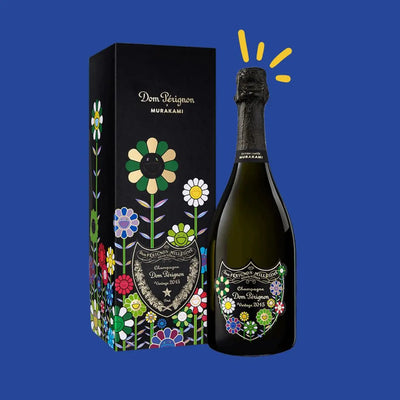
Dom Pérignon is today one of the best-known names in Champagne. Behind this reputation lies an old story, linked to the Abbey of Hautvillers, to Dom Pierre Pérignon and to a very precise vision of blending, vintage and time.
The house has built its identity around a simple principle: each cuvée must express a particular year while keeping the Dom Pérignon signature.
Dom Pierre Pérignon and Hautvillers
The story begins in 1668, when Dom Pierre Pérignon became cellarer of the Abbey of Hautvillers, near Épernay.
The Benedictine monk oversaw the abbey's vines, harvest and wine production.
Contrary to a still widespread legend, Dom Pierre Pérignon did not invent champagne on his own. His role was mainly in improving winemaking methods and mastering blending.
He understood in particular that several wines from different crus could be combined to achieve greater balance and harmony.
This idea of blending would later become one of the foundations of Dom Pérignon.
Our pick for this article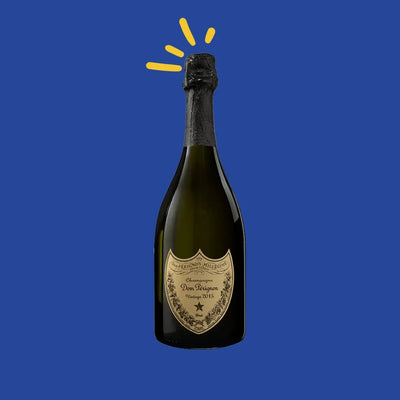
The birth of Dom Pérignon champagne
Pierre Pérignon's name truly became that of a great cuvée in the 20th century.
The first Dom Pérignon vintage was 1921. It was released a few years later and marked the beginning of a new story.
Today, Dom Pérignon belongs to Moët Hennessy, the wine and spirits division of the LVMH group.
The house nevertheless keeps one strong particularity: it only produces vintage champagnes.
Each Dom Pérignon is therefore made from grapes from one and the same year.
The vintage as a starting point
At Dom Pérignon, the vintage is essential.
Each year has its own weather, harvest and grape profile. The cellar master must then interpret these characteristics to create a champagne that reflects the vintage while remaining true to the house style.
Not every year gives rise to a Dom Pérignon.
If conditions do not allow the desired balance, the house can choose not to declare a vintage.
This exacting standard explains the importance of the word Vintage in the Dom Pérignon universe.
Chardonnay, Pinot Noir and blending
Chardonnay and Pinot Noir are at the heart of Dom Pérignon's blends.
The grapes come from different crus, and each plot brings its own characteristics.
The cellar master's role is to select these different wines and find the right balance between freshness, power, structure and complexity.
There is therefore no fixed recipe reproduced identically each year.
The blend must adapt to the vintage.
This constant search for harmony is one of the house's signatures.
Time as an element of creation
Time also plays a fundamental role at Dom Pérignon.
After winemaking and bottling, the champagnes spend several years in the cellars before release.
This long maturation on the lees allows the wine to gain complexity and gradually develop new aromas.
A Dom Pérignon Vintage takes several years to make before it is offered for tasting.
Dom Pérignon Rosé requires even more patience, while the Plénitude cuvées extend maturation for many more years.
Ageing thus becomes a true creative tool.
Dom Pérignon Vintage, Rosé and Plénitude
Dom Pérignon offers several expressions of its know-how.
Dom Pérignon Vintage is the main interpretation of a vintage.
Dom Pérignon Rosé highlights the structure and power of Pinot Noir while keeping the house's finesse.
The Plénitude cuvées, notably P2, rely on extended maturation.
The idea is that the same champagne can reach different phases of expression over time.
A bottle can thus evolve towards greater depth, intensity and complexity without losing its original identity.
Vincent Chaperon, cellar master
Since 2018, Vincent Chaperon has been Dom Pérignon's cellar master.
His role is central to the creation of new vintages.
He follows the harvest, selects the wines, designs the blends and accompanies their evolution during the long years of maturation.
His work consists of respecting Dom Pérignon's historic identity while letting each year express its particularities.
A Champagne icon built on time
Dom Pérignon owes much of its identity to a combination of elements: the history of Hautvillers, the work of Dom Pierre Pérignon, vintage selection, the blending of Chardonnay and Pinot Noir and long cellar maturation.
The house does not simply seek to produce an identical champagne from one year to the next.
Each Vintage must tell the story of its own year.
It is this balance between tradition, creation and time that has made Dom Pérignon one of the most iconic references in Champagne.