




Dom Pérignon is one of the most iconic names in champagne. Associated with French luxury and great celebrations, this legendary cuvée appeals to enthusiasts and collectors alike. Behind every bottle lie a single vintage, a blend of Chardonnay and Pinot Noir, and long ageing designed to reveal its full aromatic complexity.
Did Pierre Pérignon invent champagne?
The story of Dom Pérignon begins with Pierre Pérignon, a 17th-century Benedictine monk. In 1668, he became cellar master and treasurer of the Abbey of Hautvillers, in the heart of Champagne. He is often presented as the inventor of champagne, but that claim belongs mostly to legend.
Pierre Pérignon did not create sparkling wine on his own. He did, however, help improve the production methods of his time. His work focused on grape selection, harvest quality and the art of blending. He sought to bring different crus together to obtain more balanced, finer and more consistent wines.
Our pick for this article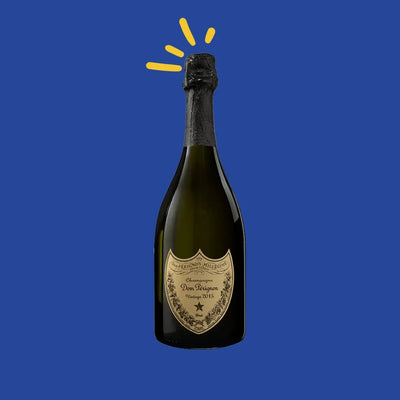
The birth of the Dom Pérignon cuvée
The Dom Pérignon cuvée was created by Moët & Chandon in the 20th century. The first vintage released was 1921, launched several years later after a long stay in the cellar. From the start, the Dom Pérignon bottle stood out for its prestigious positioning.
Dom Pérignon is always a vintage champagne, so the grapes come from a single year. The cuvée is only produced when the harvest reaches the required level of quality. Each vintage therefore has its own character, shaped by the climate, the ripeness of the grapes and the choices made during winemaking.
Chardonnay, Pinot Noir and blending
Dom Pérignon is mainly a blend of Chardonnay and Pinot Noir, in proportions that vary with the vintage. Chardonnay generally brings freshness, finesse and mineral tension. Pinot Noir adds structure, depth and aromatic power.
The aim is not to reproduce exactly the same taste every year, but to interpret each vintage while keeping the Dom Pérignon style. Over time, the aromas can evolve towards ripe fruit, citrus, white flowers, brioche, dried fruit, spices or toasty notes.
The Dom Pérignon Plénitudes
Ageing plays an essential role in Dom Pérignon's identity. The term "Plénitude" refers to the different stages of evolution of the same vintage.
The first Plénitude, sometimes called P1, is the initial release of the cuvée after several years on the lees. The second, Dom Pérignon P2, is released after an extended stay in the cellar. The champagne then gains intensity, depth and complexity.
The third Plénitude, P3, concerns bottles kept for several decades. They develop a rarer expression and are particularly sought after by collectors of fine wine.
Why is Dom Pérignon so prestigious?
Dom Pérignon's prestige rests on exclusively vintage production, rigorous grape selection, precise blending, long ageing and significant ageing potential. The rarity of certain vintages also adds to the value of the bottles.
Years such as 1990, 1996, 2004 and 2008 are regularly cited among the great Dom Pérignon vintages. Their evolution, however, depends on storage conditions. A bottle should be kept away from light, vibration and large temperature swings.
Dom Pérignon is often chosen for a wedding, a birthday, a gastronomic dinner or a prestigious gift. It pairs well with scallops, caviar, fine fish, shellfish or certain poultry dishes.
An exceptional champagne
Dom Pérignon is more than a luxurious bottle. The cuvée embodies a vision of champagne built on time, blending and the interpretation of a particular year. From Pierre Pérignon to Moët & Chandon, its story links the heritage of Champagne to a constant pursuit of excellence.
Each vintage tells a different story. This combination of rarity, expertise, ageing and complexity makes Dom Pérignon one of the best-known prestige champagnes in the world.





