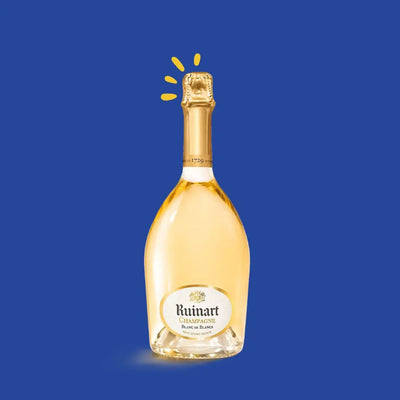
Blanc de Blancs champagne appeals through its freshness, finesse, minerality and delicate bubbles. Made from white grapes, it is most often associated with Chardonnay, the emblematic grape of the Côte des Blancs. Behind this elegant style lies a precise production process based on the traditional Champagne method: harvest, pressing, fermentation, blending, tirage, second fermentation, ageing on the lees, riddling, disgorgement and dosage.
Chardonnay at the heart of Blanc de Blancs
A Blanc de Blancs champagne is made only from white grapes. In most cases, Chardonnay takes centre stage.
This grape is particularly prized for its freshness, natural acidity, finesse and ability to express terroir. In Champagne's chalky soils, notably on the Côte des Blancs, it gives taut, elegant wines often marked by fine minerality.
In tasting, there are frequently aromas of citrus, lemon, white flowers and white fruit. Over time, the wine can develop greater complexity.
Our pick for this article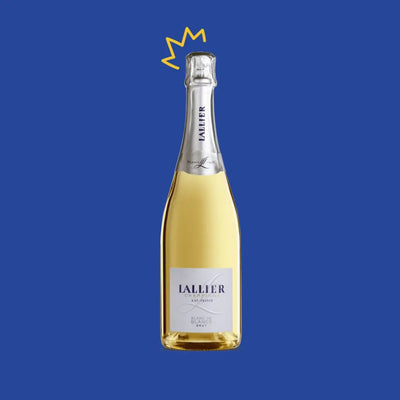
Harvest and pressing
Production begins with the harvest. The grapes are picked carefully to preserve their freshness and balance.
They are then sent to the press. Pressing must be gentle enough to obtain a clear, precise must. This step is essential to preserve Chardonnay's aromatic finesse.
After pressing, the juice rests so that solid particles settle. This settling stage produces a cleaner must before fermentation begins.
The first fermentation
The clarified juice then undergoes alcoholic fermentation.
Yeasts convert the sugar naturally present in the grapes into alcohol. At this stage, the wine has no bubbles yet. It is a still white wine that will serve as the base for the future champagne.
Depending on the desired style, this fermentation can take place in stainless steel tanks or sometimes in barrels. The choice of vessel can influence the wine's texture, aromas and complexity.
Blending the wines
Once the first fermentation is complete, it is time for blending.
The cellar master can combine several wines from different plots, crus or years to achieve the desired profile. For some vintage cuvées, only wines from a single year are used.
In a Blanc de Blancs, the aim is generally to preserve Chardonnay's freshness, finesse, acidity and minerality.
The terroirs of the Côte des Blancs and certain Grands Crus are particularly prized for their tension and elegance.
Tirage and second fermentation in bottle
After blending, the wine is bottled with a liqueur de tirage containing sugar and yeast.
A second fermentation then begins directly in the bottle. The yeasts consume the sugar and produce alcohol and carbon dioxide.
As the gas cannot escape, it dissolves into the wine. This is the prise de mousse.
This step of the traditional method creates champagne's bubbles and the characteristic effervescence of Blanc de Blancs.
Ageing on the lees
When the second fermentation is over, the yeasts gradually form a deposit called the lees.
The bottles stay in contact with these lees for a shorter or longer period. This ageing adds complexity and allows the aromas to evolve.
To the initial notes of citrus, white flowers and white fruit, aromas of brioche, biscuit, hazelnut or toast can gradually be added.
Ageing on the lees also contributes to the evolution of the texture and the finesse of the bubbles.
Riddling and disgorgement
At the end of maturation, the deposit must be removed.
Riddling consists of gradually turning the bottles so the lees move down towards the neck. This can be done by hand or mechanically.
Next comes disgorgement. The deposit collected in the neck is expelled to obtain a perfectly clear champagne.
This step marks the end of the long work carried out with the yeasts.
Champagne dosage
After disgorgement, a dosage liqueur can be added.
Its quantity influences the final sugar level and therefore the style. A champagne can be Brut Nature, Extra Brut, Brut or belong to another category.
For a Blanc de Blancs, the dosage is often set with precision to keep the balance between freshness, acidity, finesse and roundness.
What does Blanc de Blancs champagne taste like?
Blanc de Blancs champagne is generally appreciated for its lively, elegant profile.
When young, it can reveal notes of lemon, grapefruit, apple, white flowers and a mineral sensation. The palate is often taut, fresh and precise.
With age, the wine becomes more complex. Brioche, hazelnut, dried fruit and biscuit can accompany Chardonnay's fresher aromas.
This evolution allows Blanc de Blancs to keep its elegance while gaining depth.
Why choose a Blanc de Blancs?
Blanc de Blancs champagne offers a particularly pure expression of Chardonnay. Its freshness, minerality, acidity and fine bubbles make it a very popular style both as an aperitif and at the table.
Its production follows a precise sequence: harvest, pressing, fermentation, blending, tirage, second fermentation, ageing on the lees, riddling, disgorgement and dosage.
This traditional method transforms a still white wine into a complex, elegant champagne, able to express all the finesse of Chardonnay and the richness of the Côte des Blancs terroirs.