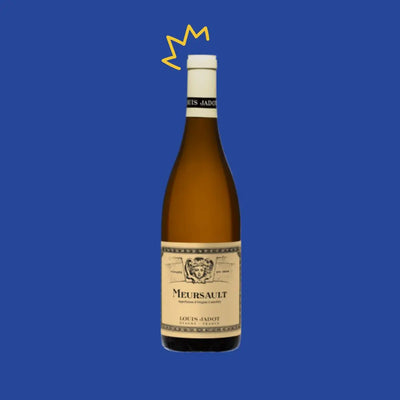
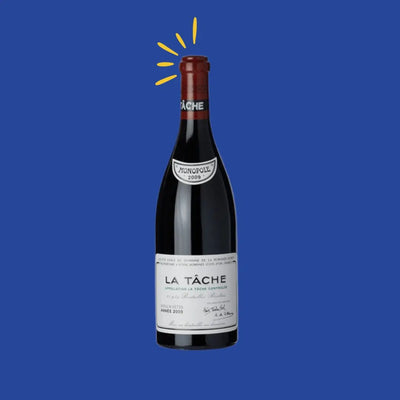
Bordeaux and Burgundy are two pillars of French wine. Both regions produce some of the most prestigious wines in the world, but they rest on very different philosophies. Bordeaux often favours blending, structure and great châteaux, while Burgundy puts terroir, the individual plot and single grape varieties first. This Bordeaux versus Burgundy rivalry has long fascinated wine lovers.
Bordeaux: the strength of blending
In Bordeaux, red wines are generally made from several grape varieties.
Cabernet Sauvignon brings structure, tannin, power and ageing potential. Merlot adds roundness and fruit. Cabernet Franc can reinforce freshness and finesse.
This blending approach allows the châteaux to adapt their wines to each vintage and terroir.
On the Left Bank, notably in the Médoc, Cabernet Sauvignon often dominates. Pauillac, Margaux and Saint-Estèphe are known for structured wines capable of long ageing.
On the Right Bank, Saint-Émilion and Pomerol give Merlot a more prominent role.
Our pick for this article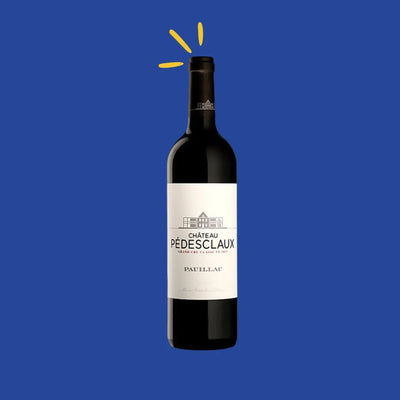
Burgundy: terroir above all
In Burgundy, the philosophy is very different.
Pinot Noir dominates the reds and Chardonnay the whites. Here, the grape serves above all to reveal the terroir.
The notion of climat is essential. It refers to a precisely delimited plot with its own soil, exposure and microclimate.
Two neighbouring plots can produce very different wines, even when they use exactly the same Pinot Noir.
This approach explains why Burgundy is so often associated with finesse, elegance, precision and minerality.
Cabernet Sauvignon versus Pinot Noir
The Bordeaux vs Burgundy duel also plays out in the grapes.
Cabernet Sauvignon generally gives more tannic wines, with aromas of blackcurrant, blackberry, black fruit, spice or cedar.
Pinot Noir often offers a more delicate profile, marked by cherry, strawberry, raspberry and red fruit.
With age, both can gain complexity. Bordeaux can develop notes of tobacco, leather or undergrowth, while great Burgundies can evolve towards truffle, spice and earthy aromas.
Château or domaine: two different cultures
In Bordeaux, the name of the château is often central.
Some properties farm several dozen hectares and produce large volumes.
In Burgundy, people speak of domaines. Plots are often small and highly fragmented.
The same Grand Cru can be shared by several producers, each offering their own interpretation of the terroir.
This fragmentation contributes to the rarity of some Burgundy wines.
Very different classifications
Bordeaux and Burgundy do not classify their wines in the same way.
In Bordeaux, the 1855 classification notably ranks several Médoc properties as Grands Crus Classés. Other systems exist too, particularly in Saint-Émilion.
In Burgundy, the hierarchy is based more on terroir: regional appellation, Village, Premier Cru and then Grand Cru.
A Burgundy Grand Cru therefore refers to a specific plot or terroir, whereas a Bordeaux Grand Cru Classé historically refers to a property.
Power or finesse?
This contrast often comes up in tastings.
Bordeaux wines are frequently associated with power, tannin and black fruit.
Burgundy wines are more closely linked to finesse, red fruit and elegance.
But this comparison is a simplification. Some Bordeaux can be very fine, while some Burgundies can be powerful and structured.
The vintage, the terroir and the producer remain decisive.
And the white wines?
Burgundy also has a major advantage with Chardonnay.
Chablis can produce very fresh, mineral wines. Meursault often offers more roundness, while Puligny-Montrachet is associated with finesse and tension.
Bordeaux also produces great white wines, notably from Sauvignon Blanc and Sémillon, but Burgundy remains especially famous for its great Chardonnays.
Two regions of great age-worthy wines
Bordeaux and Burgundy both produce wines capable of ageing for several decades.
In Bordeaux, ageing potential is often linked to tannin, structure and concentration.
In Burgundy, the finesse of Pinot Noir does not prevent some Grands Crus from evolving for a very long time.
In both cases, the vintage and storage conditions play an essential role.
Bordeaux or Burgundy: do you have to choose?
The Bordeaux vs Burgundy rivalry is above all a contrast between two styles.
Bordeaux appeals through its blends, its châteaux, Cabernet Sauvignon, Merlot and its Grands Crus Classés.
Burgundy fascinates with its climats, its domaines, its Pinot Noir and Chardonnay and the precision of its terroirs.
Rather than looking for a winner, it is more interesting to see these two regions as two complementary visions of French wine.
Bordeaux often highlights the art of blending. Burgundy seeks to express a single plot as fully as possible. Two very different philosophies, both of which have contributed to the worldwide prestige of French wine.