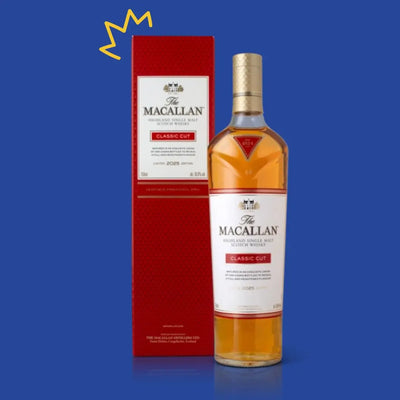
Short answer: the cask is generally estimated to contribute between half and 70 percent of a whisky's aromas. Former bourbon casks give vanilla, caramel, and coconut. Oloroso sherry casks give candied orange, dried fruit, and chocolate. Pedro Ximénez casks give raisin, fig, and sweetness.
To see our selection, visit our whiskies.
Why the cask matters so much
A distillate coming out of the still is colourless and aromatically simple. Everything that gives it colour, roundness, and much of its bouquet comes from the wood and time.
The three mechanisms
- Extraction: the wood gives up its compounds to the liquid. Vanillin, tannins, lactones, and sugars caramelised by the heating of the cask.
- Subtraction: the charcoal on the inner wall, created by heating, absorbs the sulphurous and aggressive compounds of the distillate.
- Interaction: oxygen slowly passes through the wood and transforms the compounds, creating aromas that existed neither in the distillate nor in the wood.

The bourbon cask
It is the most widely used cask in the world of Scotch whisky, and the reason is regulatory.
US law requires bourbon to be aged in new, charred American white oak casks. Each cask is therefore only used once for bourbon, which releases a considerable volume of used casks every year.
These casks go to Scotland, Ireland, Japan, Mexico, and the Caribbean.
What they bring
- Vanilla: American oak is very rich in vanillin.
- Coconut: linked to the lactones of American oak.
- Caramel and honey: from the charring.
- A light golden colour.
Sherry casks
Much rarer and much more expensive. A quality sherry cask can cost ten times the price of a bourbon cask.
Oloroso
A sherry aged in contact with the air, without a yeast blanket. Rich, deep, with notes of nuts and dried fruit.
In whisky: candied orange, raisin, fig, chocolate, sweet spices. It is the most widely used sherry cask for balanced finishes.
Pedro Ximénez
A very sweet sherry, made from sun-dried grapes. The casks give whisky a pronounced sweetness, with notes of raisin, date, and molasses.
Very popular with the general public, but it can mask the distillery's character if it is too prominent.
Amontillado and fino
Rarer. They give a drier profile, with notes of nuts and salinity.
Other finishes
- Port: notes of red fruit, cherry, and a pinkish hue.
- Sauternes: honey, apricot, a delicate sweetness.
- Red wine: black fruit, sometimes bitterness if the finish is too long.
- Rum: cane, banana, spices.
- Madeira: dried fruit, caramelised, a hint of acidity.
- Japanese mizunara oak: highly sought after, with notes of incense and sandalwood. The wood is porous and difficult to work, which explains its price.
What is a finish?
The term refers to a second, shorter ageing period in a different cask from the first.
A whisky can spend ten years in a bourbon cask and then eighteen months in a sherry cask. The first cask builds the foundation, the second adds an extra layer of aroma.
The difference with full ageing
A whisky aged entirely in a sherry cask for twelve years does not have the same profile as a twelve-year-old whisky finished in sherry for six months. The first is more integrated, the second more demonstrative.
The terms sherry cask matured and sherry cask finished therefore do not mean the same thing.
Climate and the angel's share
In Scotland, with its cool, damp climate, annual evaporation is around 2 percent of the volume. A 25-year-old whisky has lost a large part of its cask.
In the tropics, this evaporation can exceed 8 percent per year. This is why an 8-year-old rum or Indian whisky can seem as developed as a 20-year-old Scotch.
Frequently asked questions
Is an older whisky better?
Not necessarily. Beyond a certain point, the wood dominates and overwhelms the distillate. Balance matters more than age.
Why are some whiskies very dark?
Either from a long period in a sherry cask, or from the addition of colouring caramel, which is permitted in Scotland and indicated by the E150a designation on some labels.
What is a first fill?
A cask used for whisky for the first time after its original use. It gives up far more compounds than a refill.
How can you tell which cask was used?
Distilleries generally indicate this on the label or counter-label. This is the most useful information for anticipating the profile.
Order your whisky from Le Caveau des Pépites
We work directly to guarantee the origin and traceability of every bottle. Stored in our climate-controlled, humidity-regulated warehouses in France, hand-packed and wrapped, shipped from mainland France via tracked and insured transport. Free delivery on orders over 300 euros. Customer service available 7 days a week, in French and English.
To learn more: the regions of Scotch whisky.