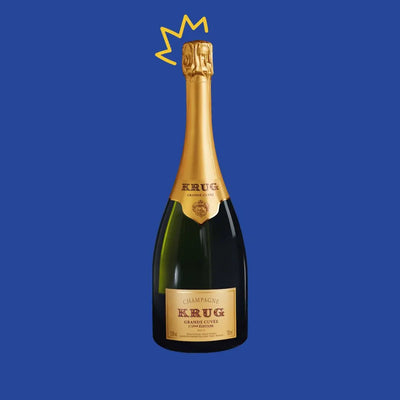
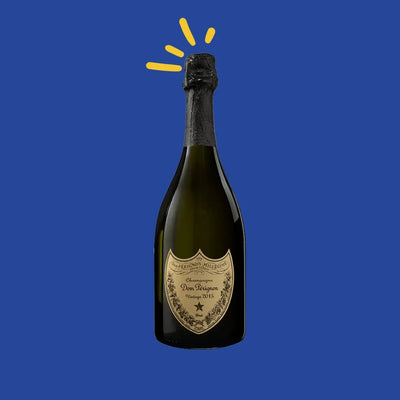
A clear champagne seems like a given today. Yet it took more than a century to achieve.
Here are the steps that transform a cloudy bottle into a ready-to-drink champagne. To see our selection, visit our champagnes.
Where does the sediment come from?
Champagne undergoes two fermentations.
The first transforms the grape juice into still wine, in tanks or barrels. The second takes place in the bottle: a mixture of sugar and yeast, called the tirage liqueur, is added to the wine, and then the bottle is sealed.
The yeast consume this sugar, producing alcohol and carbon dioxide. The gas, trapped, dissolves in the wine: that's the bubble.
Once their work is done, the yeast die and fall to the bottom. This is the sediment that must be removed.
Our pick for this article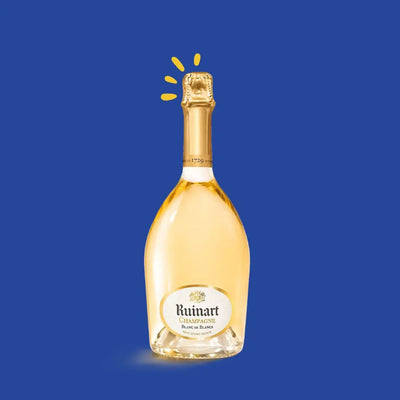
Aging on the lees
Before removing it, it is deliberately left in place, sometimes for years.
The dead yeast slowly break down, a phenomenon called autolysis. They release compounds that give champagne its aromas of brioche, hazelnut, and bread dough, and that refine the bubble.
Regulations require a minimum of fifteen months for a non-vintage brut and three years for a vintage. The great houses go far beyond.
Riddling
The traditional method
The bottles are placed neck-down in a riddling rack, a wooden board with angled holes.
Every day, a riddler grabs each bottle, turns it a quarter turn, shakes it slightly, and gradually increases its angle.
The operation takes several weeks. An experienced riddler handles several tens of thousands of bottles a day.
At the end of the process, the bottle is almost vertical, neck-down, and all the sediment is gathered against the capsule.
The gyropalette
Since the 1970s, most houses have used gyropalettes: metal crates containing several hundred bottles, operated automatically.
The result is identical and the operation takes a few days instead of several weeks. Manual riddling persists mainly for prestige cuvées and large formats.
Disgorgement
By ice
The standard method. The neck of the bottle is plunged into a refrigerated bath at around minus twenty-five degrees.
The sediment and a few centiliters of wine freeze, forming an ice cube. The bottle is turned upside down, the capsule is removed, and the internal pressure expels the ice cube at once.
By hand
The old method, without freezing. The disgorgement tool opens the bottle held neck-down and lets the pressure chase out the sediment, then immediately straightens it.
This requires real know-how and causes more losses. A few houses still practice it on certain cuvées, considering that it is less harsh on the wine.
Dosage
The volume lost during disgorgement is topped up with the dosage liqueur: a mixture of wine and, most often, cane sugar.
It is this dosage that determines the category of the champagne.
- Brut nature or non-dosage: no sugar added.
- Extra-brut: up to six grams per liter.
- Brut: up to twelve grams. The most common category.
- Extra-dry, dry, demi-sec, sweet: increasing dosages.
See our complete dosage guide.
Why the disgorgement date matters
Some houses indicate it on the back label, and it is valuable information.
Champagne evolves differently before and after disgorgement. On the lees, it ages very slowly, protected by the lees. Once disgorged, it comes into contact with a little oxygen and begins a new phase.
A recently disgorged champagne will be livelier and more tense. The same wine disgorged five years earlier will be rounder and more evolved.
Frequently asked questions
Is manual riddling better?
Technically, the result is identical. It persists mainly for large formats and out of attachment to tradition.
What is a non-dosage champagne?
A champagne without the addition of sugar after disgorgement. It is sharper and requires excellent grape maturity.
How long after disgorgement should you wait?
At least a few months for the wine and the liqueur to harmonize. Most houses wait before shipping.
Why does my champagne have sediment?
It is very rare after disgorgement. A light sediment can appear on a very old bottle, without the wine being defective.
Order your champagne from Le Caveau des Pépites
We work directly to guarantee the origin and traceability of each bottle. Storage in our climate-controlled warehouses with controlled humidity in France, hand-cushioning and packaging, shipping from mainland France with tracked and insured transport. Free delivery from 300 euros. Customer service available 7 days a week, in French and English.
To learn more: the house of Veuve Clicquot.