Bordeaux wines hold an unavoidable place in the world of great French wine. Yet their international reputation owes a great deal to a history that reaches far beyond the boundaries of the Bordeaux vineyard.
As early as the Middle Ages, England became one of the principal markets for Bordeaux wines. Between a royal marriage, maritime trade and a passion for the famous claret, the relationship between the two territories helped turn Bordeaux into a prestigious wine region.
But how exactly did the English contribute to that global renown?
Eleanor of Aquitaine: a marriage that changed the history of wine
It all begins in 1152, when Eleanor of Aquitaine married Henry Plantagenet, the future King Henry II of England.
When he came to the throne in 1154, Aquitaine found itself under the authority of the English crown, opening a period of privileged trade.
The Bordeaux vineyard benefited in particular.
Merchants were able to build up their exports to England, where demand for wine was steadily rising.
That royal marriage became one of the major events in the history of the European wine trade.
Without knowing it, Eleanor of Aquitaine helped lay the foundations of a commercial relationship that would shape the reputation of Bordeaux wines for centuries.
Our pick for this article
Bordeaux, an ideal port for exporting wine
Geography also played an essential part in the success of Bordeaux wines.
Sitting on the Garonne, close to the Gironde estuary, Bordeaux enjoys privileged access to the Atlantic.
In the Middle Ages, wines travelled in barrels loaded onto merchant ships bound for English ports.
Trade multiplied, allowing the Bordeaux vineyard to expand its production.
The privileges granted to merchants further strengthened the appeal of Bordeaux wines on the British market.
Step by step, the city became a major centre of European maritime trade.
That prosperity helped build a genuine wine economy geared towards export.
Claret: the Bordeaux wine that won the English over
In the Middle Ages, the red wines of Bordeaux bore little resemblance to the grands crus we know today.
They were often lighter, pale in colour and meant to be drunk young.
The English were particularly fond of that style, which they nicknamed claret.
The term, derived from the idea of a light colour, gradually became attached to the wines of Bordeaux.
Claret took hold in British drinking habits and contributed enormously to the commercial success of the vineyard.
Its influence was so great that the word is still used in England for the red wines of Bordeaux, even though their style has changed profoundly.
How English taste shaped the grands crus
British influence was not limited to export volumes.
Over the centuries, consumer preferences evolved and some drinkers began to look for wines that were more complex, more structured and able to age.
From the seventeenth century onwards, Bordeaux estates developed wines that answered those new expectations.
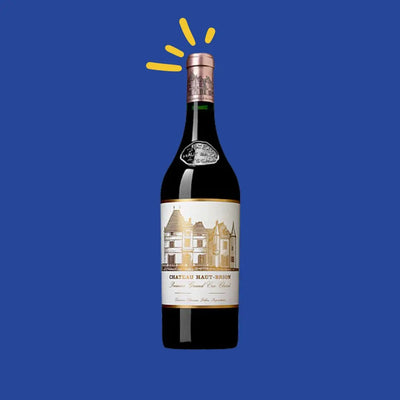
Chateau Haut-Brion is among the properties whose reputation was built in large part with English customers.
That shift contributed to the emergence of the great wines of Bordeaux, which gradually set themselves apart from everyday production.
The name of the chateau, the provenance and the quality became important factors in buying decisions.
British customers therefore helped reinforce the prestige of the Bordeaux grands crus.
The end of English rule over Bordeaux
In 1453, the Battle of Castillon marked the end of English rule over Aquitaine.
Bordeaux returned to French authority, bringing significant political and commercial change.
Trade with England became more complicated, not least because of new tax conditions.
Several centuries of commerce had nonetheless established lasting habits.
English consumers went on taking an interest in the wines of Bordeaux, while Bordeaux gradually opened up new commercial outlets.
Over time, the vineyard built its reputation in other European countries too.
England nevertheless keeps a particular place in its history.
Bordeaux Claret 2026: a return to the origins
More than eight centuries after Eleanor of Aquitaine's marriage, claret is back at the centre of wine news.
In 2026, the term Bordeaux Claret was officially brought into the Bordeaux appellation to designate a style of light red wine.
The move draws on the wines historically favoured by British drinkers.
It allows producers to make the most of lighter, fruitier wines suited to new drinking habits.
That return speaks to the richness of the Bordeaux heritage and its ability to evolve while keeping its identity.
Conclusion: a story between two countries and a vineyard
The popularity of Bordeaux wines in England owes nothing to chance.
It is the result of several centuries of political ties, maritime trade and changing taste.
From Eleanor of Aquitaine's marriage to the success of claret, the English played a major part in the development of the Bordeaux vineyard.
Today Bordeaux remains a global benchmark thanks to its terroirs, its craft and its grands crus.
A history that reminds us that the reputation of a wine is built as much in the vineyards as in the exchanges between peoples.