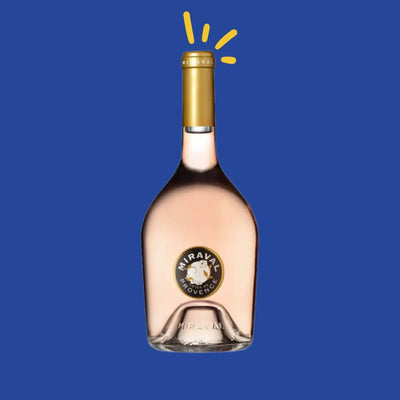
Few rosés have done as much for Provence's international reputation as this one. In just a few years, it has become one of the region's most sought-after bottles.
Behind this fame is a real estate and genuine expertise. To see what is available, visit the Miraval collection.
The estate
Miraval is located in Correns, a village in the Var department renowned for being one of the first French municipalities to switch entirely to organic farming.
The property is situated in a deep valley at an altitude above the average of Provence's vineyards, surrounded by wooded hills.
What altitude changes
- Cool nights: the temperature range preserves acidity and aromas, which is crucial for a rosé.
- Slower ripening: the grapes reach maturity without a sugar spike.
- Moderate alcohol levels: a rosé should remain refreshing, not overpowering.
- Favorable sanitary conditions: air circulation in the valley limits stagnant humidity.
Working with the Perrin family
The estate is operated in partnership with the Perrin family, one of the great families of southern Rhône, owners of Château de Beaucastel in Châteauneuf-du-Pape, among others.
This partnership brings technical expertise and experience in Mediterranean winemaking to the project that few projects of this type can claim.
See our article on the Perrin family.
The grape varieties
A rosé from Provence is almost always a blend.
- Cinsault: finesse, delicate red fruit, freshness. It is the quintessential rosé grape variety.
- Grenache: roundness and body.
- Syrah: color and a spicy note, in small proportions.
- Rolle, called vermentino in Italy: it brings tension, citrus, and a saline finish.
Rolle is the signature of great Provençal rosés: it is what prevents the wine from feeling flat.
The style of the wine
The color
Very pale, with pink petal tones. This paleness is sought after and results from extremely brief contact between the juice and the skins.
On the nose
Wild strawberry, white peach, citrus, a floral note, and sometimes a hint of anise.
On the palate
A crisp attack, a fruit-forward mid-palate, and a fresh, slightly saline finish. The wine is dry, with no perceived sweetness.
See the Miraval Rosé and our tasting guide.
Serving
- Temperature: 8 to 10 degrees. Colder, and the aromas disappear.
- Glass: a standard-sized white wine glass, never a flute.
- The bucket: water, ice, and coarse salt, twenty minutes.
- When to drink: within two years of the vintage.
Food pairings
- Provençal cuisine: tapenade, anchovade, ratatouille, grilled vegetables.
- Grilled fish: sea bream, sea bass, red mullet.
- Shellfish: plancha-grilled prawns, shrimp.
- Asian cuisine: the freshness pairs well with chili.
- Mixed salads and summer cuisine.
- Fresh goat cheeses.
Frequently asked questions
Why are Provençal rosés so pale?
Because the contact between the juice and the skins is very brief. See our guide to rosé winemaking.
Can a rosé be aged?
Generally two years. A few prestige cuvées last longer, but they are exceptions.
What is rolle?
A Mediterranean white grape variety, called vermentino in Italy, which brings tension and salinity to Provençal rosés.
Pale rosé or dark rosé?
The color says nothing about the quality or the sugar. It only indicates the duration of contact with the skins. See our guide to Provençal rosé.
Order your Miraval from Le Caveau des Pépites
We work directly to guarantee the origin and traceability of every bottle. Stored in our climate-controlled, humidity-regulated warehouses in France, hand-packed and wrapped, shipped from mainland France with tracked and insured transport. Free delivery on orders over 300 euros. Customer service available 7 days a week, in French and English.
To learn more: our rosé wines.