The words grand cru immediately suggest four-figure prices. That is true in the Côte de Nuits, and far less so elsewhere. Four regions let you buy a genuine grand cru under 200 euros, sometimes well under.
Why the price gap is so violent
Grand cru is not a single national label. Every region has its own definition and its own number of classified sites.
In Burgundy, the grands crus account for around 1 % of production on tiny surfaces, which drives extreme prices. In Alsace, 51 named sites carry the grand cru mention, which leaves far more volume available. In Saint-Émilion, Grand Cru is an appellation in its own right, distinct from the classification of grands crus classés.
The result: the same words on a label cover realities and prices that have nothing in common.
Our pick for this article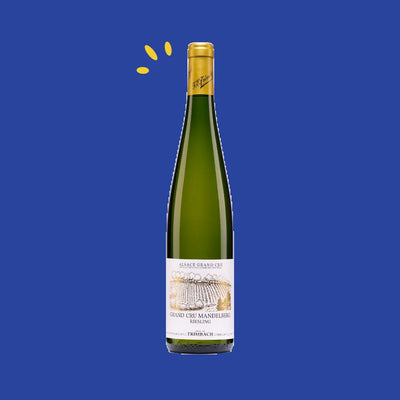
Alsace, the best hunting ground
This is the region where the gap between quality and price is most favourable. Alsatian grand cru rieslings offer precision and ageing potential comparable to far more expensive whites.
- Riesling Grand Cru Mandelberg 2021, Trimbach, around 70.60 €.
- Riesling Grand Cru Brand 2021, Trimbach, around 75 €.
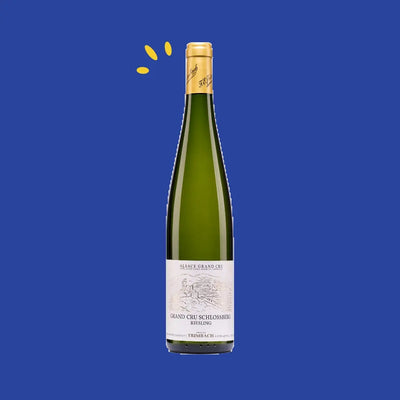
- Riesling Grand Cru Schlossberg 2021, Trimbach, around 82 €.
- Riesling Grand Cru Geisberg 2019, Trimbach, around 99 €.
These rieslings are dry, not sweet, and easily last fifteen years. See the full Trimbach range and our Alsace wines.
Saint-Émilion Grand Cru, the most accessible way in
The Saint-Émilion Grand Cru appellation covers a wide range of properties, which makes it possible to find genuinely good wines at gentle prices.
- Relais de La Dominique 2019, around 34.50 €.
- Château Croix Cardinale 2019, around 43.50 €.
Mind the distinction: Saint-Émilion Grand Cru is an appellation, Saint-Émilion Grand Cru Classé is a classification, and the prices are unrelated. See the Saint-Émilion Grand Cru collection.
Burgundy, through Corton
Corton is the largest grand cru of the Côte de Beaune, and that surface makes all the difference to the price. It is the only realistic way into a Burgundian grand cru under 200 euros.
- Corton Grand Cru 2019, Olivier Leflaive, around 180 €.
Beyond that, the other grands crus of the Côte de Beaune generally start above 250 euros.
Grand cru champagne
In Champagne, the grand cru mention refers to the 17 villages rated 100 % on the scale of crus. It remains very accessible.
- Lallier 2016 Grand Cru vintage, around 59 €.
- Taittinger Prélude Grands Crus, around 62.90 €.
Three habits for buying well
- Check what the mention actually covers. Grand cru in Alsace, in Saint-Émilion and in Burgundy do not mean the same thing.
- Look at the producer before the appellation. An excellent grower on a premier cru beats an average producer on a grand cru.
- Be open to whites. It is on the great whites that the price gaps work most in the buyer's favour.
The prices quoted are today's. The full selection is on the grands crus page, and the bottles under 100 euros round out the search.
Frequently asked questions
Can you really buy a grand cru for under 200 euros?
Yes, in several regions. An Alsace grand cru starts at around 70 euros, a Saint-Émilion Grand Cru at around 35 euros, a grand cru champagne at around 59 euros, and a Corton in Burgundy at around 180 euros.
Why does a Burgundy grand cru cost so much?
Because the surfaces are tiny and account for around 1 % of regional production. With equal international demand, a very small supply pushes the price up. Corton, the largest, is logically the most accessible.
Are Saint-Émilion Grand Cru and Grand Cru Classé the same thing?
No. Saint-Émilion Grand Cru is an appellation that many properties can claim. Grand Cru Classé is a periodically revised classification, far more selective, with clearly higher prices.
Are Alsace grands crus sweet?
The vast majority of grand cru rieslings are dry. It is a persistent misunderstanding tied to the bottle shape, which recalls that of sweet German wines.
How long should you keep a grand cru at this price level?
An Alsace grand cru riesling easily lasts fifteen years, a Corton ten to twenty years, a Saint-Émilion Grand Cru eight to fifteen years depending on the vintage and the producer.